Convict Conditioning by Paul “Coach” Wade – A Brutal Blueprint for Real Strength
In a world obsessed with commercial gyms, shiny machines, and instant fitness hacks, convict conditioning stands apart as a raw, uncompromising philosophy of physical mastery. Written by Paul “Coach” Wade, a man who claims to have learned strength the hard way inside prison walls, this book is not merely about exercise—it is about survival, discipline, and self-reliance.
Unlike conventional fitness manuals, Convict Conditioning rejects comfort. It champions bodyweight mastery forged under extreme constraints, where equipment is nonexistent and weakness is dangerous. The system has attracted millions worldwide—praised as revolutionary by some, dismissed as exaggerated by others. Yet, its influence on modern calisthenics is undeniable.
This in-depth review explores convict conditioning from every serious angle: philosophy, exercises, progression, benefits, criticisms, and long-term value.

The Philosophy Behind Convict Conditioning
At its core, convict conditioning is built on one radical idea:
true strength comes from mastering your own body.
Coach Wade argues that modern fitness has drifted away from functional power. Machines isolate muscles, weights inflate egos, and shortcuts weaken joints. In contrast, prison training demands slow, controlled, full-range movements that build tendon strength, joint resilience, and neurological control.
The philosophy rests on three pillars:
-
Simplicity over sophistication
-
Progression over intensity
-
Longevity over aesthetics
This is not a programme for vanity muscles. It is a system designed to last decades.
The Six Core Exercises of Convict Conditioning
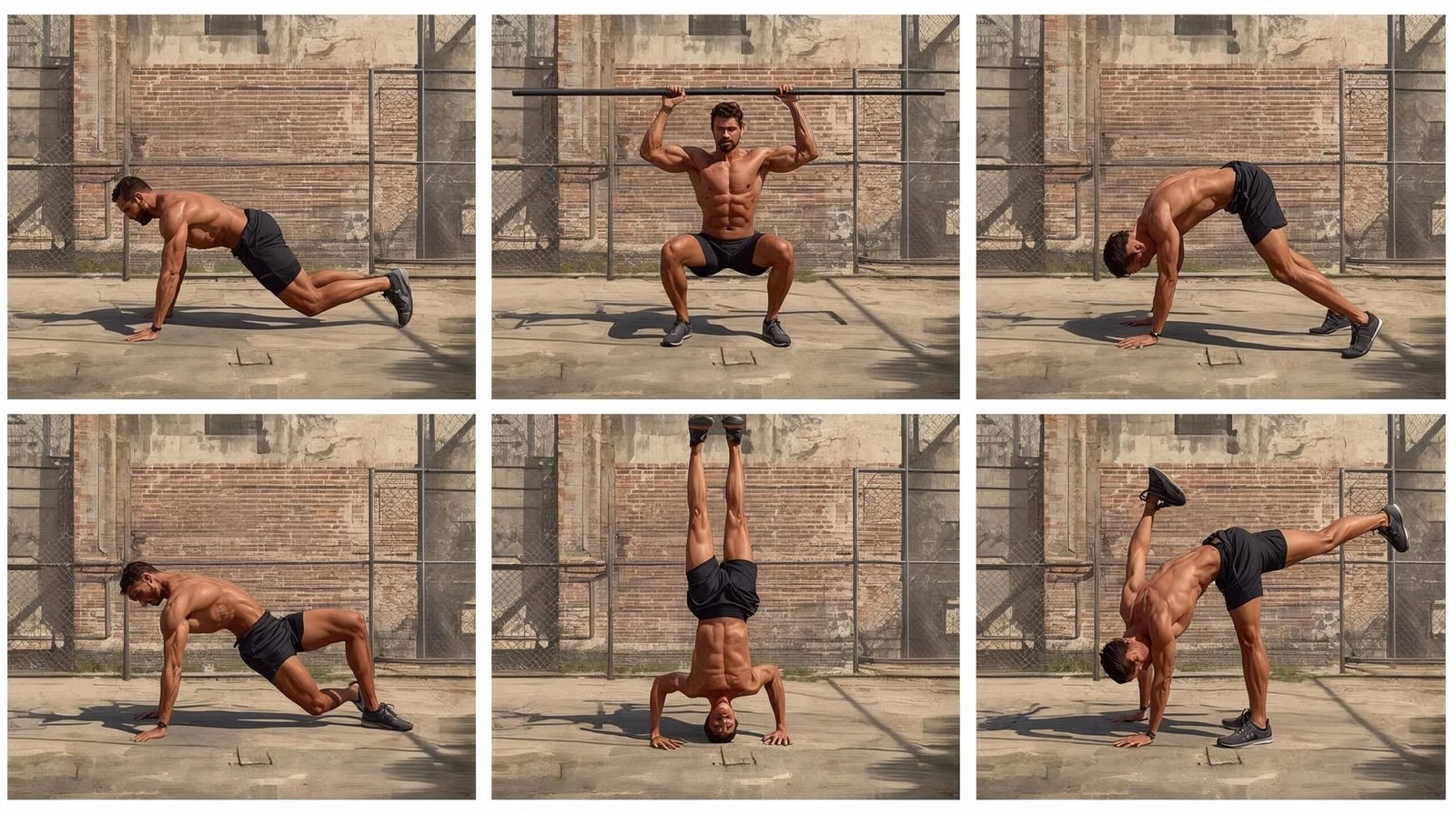
The entire convict conditioning system revolves around six foundational bodyweight movements—referred to as the Big Six:
-
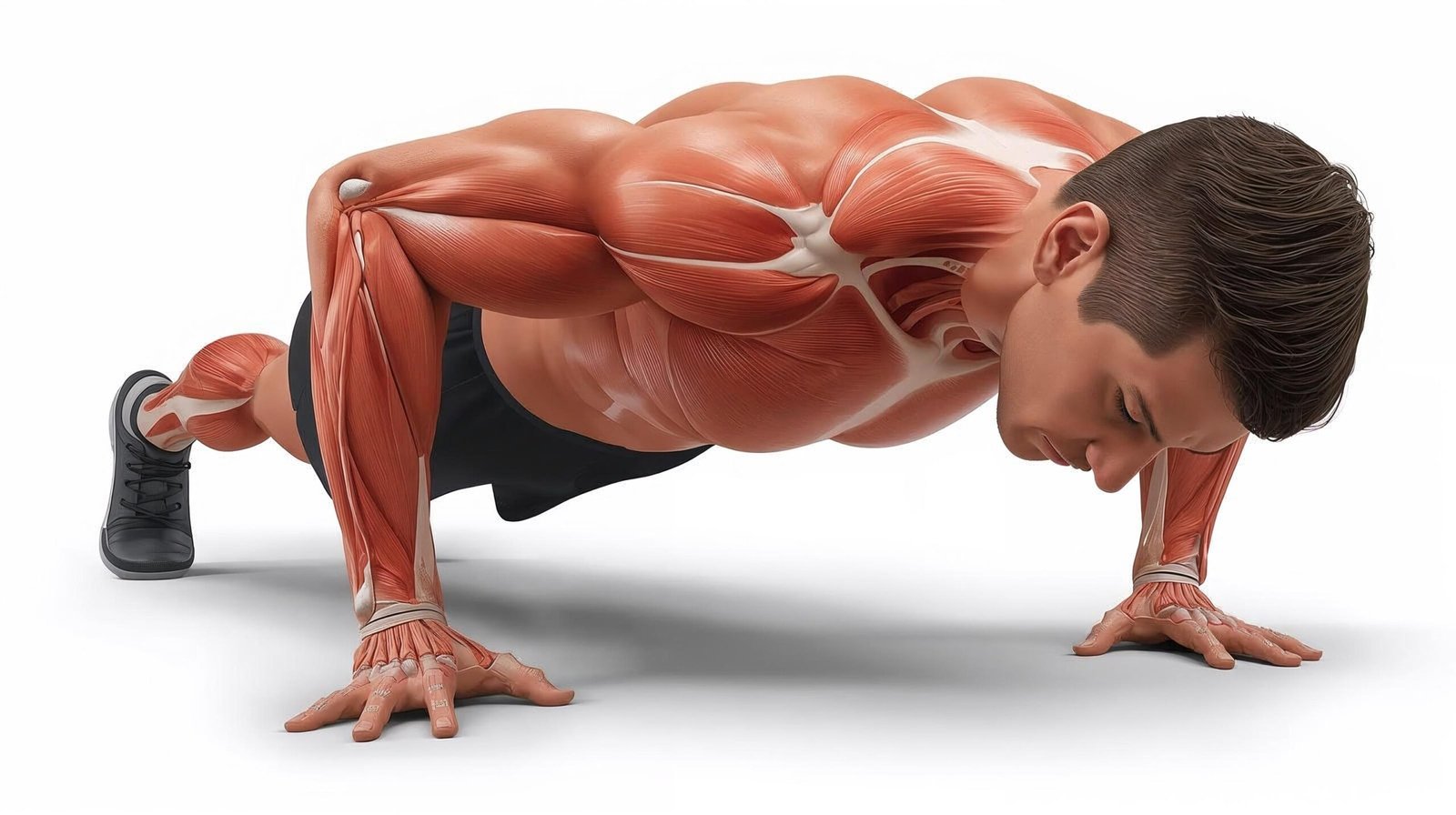
Pushups
-
Squats
-
Pullups
-
Leg Raises
-
Bridges
-
Handstand Pushups
Each movement is broken down into ten progressive steps, starting from extremely basic variations and culminating in near-mythical feats of strength.
This structured progression is the heart of convict conditioning, ensuring gradual adaptation rather than injury.
Progressive Mastery: The Step System Explained
What separates convict conditioning from generic bodyweight workouts is its meticulous progression model.
For example, pushups evolve as follows:
-
Wall pushups
-
Incline pushups
-
Knee pushups
-
Full pushups
-
One-arm pushups
Each step must be mastered before advancing. Coach Wade insists that skipping steps leads to weak links—particularly in joints and connective tissue.
This slow approach may frustrate impatient readers, but it is precisely why convict conditioning is praised for joint health and durability.
Strength Without Weights: Myth or Reality?
One of the most controversial claims of convict conditioning is that weights are unnecessary—even harmful.
Coach Wade argues that barbells compress the spine unnaturally and place excessive stress on joints. Bodyweight movements, by contrast, follow natural biomechanics.
While sports science does not fully endorse this extreme stance, there is truth in the idea that controlled calisthenics build:
-
Functional strength
-
Balance and coordination
-
Tendon resilience
-
Core stability
Many athletes successfully combine weights and convict conditioning, using the latter as a foundation rather than a replacement.
Mental Toughness and Prison Discipline
Beyond physical training, convict conditioning is a manifesto on mental resilience.
Prison, as Wade describes it, is an unforgiving environment. Consistency is not optional. Laziness invites consequences. This environment shaped a mindset where discipline became survival.
Readers often report that the greatest takeaway from convict conditioning is not muscle, but mindset:
-
Patience
-
Self-control
-
Respect for gradual growth
In this sense, the book functions as a psychological training manual disguised as fitness literature.
The Role of Breathing, Tension, and Control
Unlike mainstream workout guides, convict conditioning places enormous emphasis on:
-
Controlled breathing
-
Full-body tension
-
Slow repetitions
Momentum is discouraged. Cheating is condemned. Every repetition must be earned.
This emphasis protects joints and maximises muscular recruitment. The result is strength that feels dense, not inflated.
Criticisms of Convict Conditioning
No serious review of convict conditioning is complete without acknowledging its criticisms.
1. Questionable Prison Narrative
Some critics argue that Coach Wade’s prison backstory lacks verification.
2. Limited Scientific Citations
The book relies more on anecdotal wisdom than peer-reviewed research.
3. Extreme Final Progressions
Exercises like one-arm handstand pushups are unrealistic for most trainees.
Despite these concerns, even critics admit that convict conditioning popularised structured calisthenics long before it became mainstream.
Who Should Follow Convict Conditioning?
Convict conditioning is ideal for:
-
Beginners seeking a safe entry into strength training
-
People without gym access
-
Those recovering from joint issues
-
Minimalists who value simplicity
It may not suit:
-
Competitive bodybuilders
-
Powerlifters chasing maximal numbers
-
Those seeking rapid aesthetic transformation
This system rewards patience, not ego.
Convict Conditioning vs Modern Calisthenics
Modern calisthenics athletes often perform explosive movements, weighted skills, and high-volume routines. Convict conditioning, by contrast, prioritises:
-
Low volume
-
High control
-
Long rest periods
It is less flashy—but more sustainable.
Many elite athletes quietly credit convict conditioning as their foundational training philosophy.
Long-Term Benefits of Convict Conditioning
Practised consistently, convict conditioning can deliver:
-
Stronger joints and ligaments
-
Improved posture
-
Reduced injury risk
-
Lifelong functional strength
Unlike fad programmes, this system grows with you—even into old age.
The Historical Roots of Bodyweight Training
Long before commercial gyms emerged, human beings relied exclusively on their own bodies to develop strength, endurance, and resilience. Ancient Greek wrestlers, Roman soldiers, Indian akharas, and Shaolin monks all cultivated formidable physiques without barbells or machines. Their training methods emphasised repetition, control, and mastery over movement—principles echoed throughout this book.
What modern readers often forget is that mechanical resistance is a relatively recent invention. For thousands of years, survival itself functioned as resistance. Lifting one’s body, climbing, pushing, squatting, and bracing against gravity were daily necessities. This historical continuity lends credibility to the philosophy outlined in the text, grounding it in human biomechanics rather than commercial innovation.
Joint Integrity and Connective Tissue Strength
One of the most underrated aspects of body-controlled training is its profound impact on connective tissues. Muscles adapt quickly, but tendons and ligaments require slow, consistent loading to strengthen safely. Rapid increases in external resistance often exceed their adaptive capacity, leading to chronic injuries.
The slow tempo and incremental difficulty advocated in this system allow joints to strengthen organically. Over time, practitioners often report reduced knee pain, improved shoulder stability, and greater spinal awareness. This makes the approach especially valuable for ageing individuals or those recovering from years of improper training.
Rather than chasing short-term gains, the emphasis remains on structural longevity—a principle that resonates deeply with those seeking lifelong fitness rather than fleeting performance peaks.
Neurological Efficiency and Muscle Control
Strength is not merely a function of muscle size; it is equally dependent on neural efficiency. Coordinating multiple muscle groups through controlled movement improves motor unit recruitment and intermuscular coordination.
Exercises performed without external load require the nervous system to stabilise the body dynamically. This leads to heightened proprioception, balance, and reflexive strength. The result is a type of power that feels deeply integrated rather than isolated.
Such neuromuscular adaptations often transfer effectively into sports, manual labour, and everyday movement, making the training method remarkably practical beyond aesthetic considerations.
The Role of Patience in Physical Mastery
In an era driven by instant gratification, patience has become a rare virtue. This book unapologetically demands it. Progress is measured in months and years, not weeks. Advancement is earned through consistency, not shortcuts.
This philosophy teaches an invaluable life lesson: meaningful growth cannot be rushed. Many readers find that the discipline cultivated through training gradually extends into other areas—career, relationships, and personal development.
The refusal to inflate progress artificially fosters humility. Each achievement feels earned, reinforcing intrinsic motivation rather than external validation.
Training in Limited Spaces and Harsh Conditions
One of the most compelling aspects of the system is its adaptability. Exercises can be performed in confined spaces, on uneven surfaces, and without ideal conditions. This makes it particularly suitable for:
-
Travellers
-
Military personnel
-
Students
-
Individuals in densely populated urban environments
By removing dependence on equipment, the practitioner regains autonomy. Training becomes an act of self-discipline rather than a logistical challenge.
This independence aligns strongly with minimalist philosophies and appeals to those who value self-sufficiency over convenience.
Psychological Resilience Through Physical Discipline
Consistent physical challenge strengthens not only the body but also the mind. Structured progression builds confidence through repeated small victories. Each completed step reinforces belief in one’s ability to overcome difficulty.
Over time, discomfort becomes familiar rather than intimidating. This psychological adaptation is especially powerful in modern life, where many challenges are abstract rather than physical.
The deliberate exposure to controlled strain fosters emotional regulation, stress tolerance, and mental clarity—benefits often overlooked in traditional fitness discourse.
Misinterpretation and Overzealous Application
While the principles are sound, misapplication can lead to problems. Some readers attempt to accelerate progress prematurely, ignoring mastery requirements. Others adopt an unnecessarily rigid interpretation, dismissing complementary practices such as mobility work or cardiovascular conditioning.
It is essential to understand that the system functions best when applied intelligently. Flexibility, recovery, and individual variation must be respected. No method, however robust, should override personal physical feedback.
Used as a foundation rather than a dogma, the approach remains both effective and sustainable.
Integration with Modern Training Approaches
Many experienced athletes successfully integrate body-controlled training with contemporary methods. Combining it with:
-
Mobility drills
-
Sprint work
-
Light external resistance
-
Recreational sports
can create a well-rounded regimen that addresses strength, endurance, and coordination simultaneously.
Rather than positioning this system as an alternative to all other forms of training, it is more productive to view it as a structural base upon which other skills can be layered.
Such integration preserves the original philosophy while adapting it to modern lifestyles.
Age, Recovery, and Sustainable Progress
One of the most compelling advantages of gradual progression is its suitability across age groups. Older practitioners often find that reduced volume and controlled movement allow them to continue training without aggravating joints.
Recovery becomes more predictable. Sessions feel restorative rather than draining. This encourages long-term adherence—an often-neglected component of fitness success.
The emphasis on listening to one’s body fosters maturity in training decisions, replacing ego-driven behaviour with self-awareness.

Cultural Impact and Global Influence
Since its publication, the book has influenced countless trainers, athletes, and enthusiasts worldwide. Online communities, instructional videos, and training programmes often trace their lineage back to its principles.
Despite controversy, its impact on the resurgence of minimalist training is undeniable. It challenged industry norms and reminded readers that strength is a skill, not a commodity.
This cultural influence continues to shape conversations around accessibility, sustainability, and authenticity in fitness.
Ethical Considerations and Self-Responsibility
The system places responsibility squarely on the individual. There are no memberships, certifications, or proprietary tools. Progress depends solely on effort and discipline.
This ethical stance empowers readers but also demands accountability. There is no external structure to enforce consistency. Success requires intrinsic motivation—a quality increasingly rare yet deeply valuable.
By embracing responsibility, practitioners reclaim agency over their physical development.
Discipline Over Motivation: A Sustainable Training Ethic
One of the most enduring lessons conveyed through this training philosophy is the clear distinction between motivation and discipline. Motivation is fleeting, often dependent on mood, external validation, or novelty. Discipline, on the other hand, is cultivated through routine, commitment, and acceptance of discomfort.
By prescribing structured progressions and modest training volumes, the system encourages consistency rather than emotional intensity. Practitioners are not urged to exhaust themselves daily but to show up repeatedly, even when enthusiasm is absent. This quiet persistence becomes a transferable life skill, influencing productivity, decision-making, and personal integrity.
Over time, discipline replaces reliance on excitement, ensuring continuity regardless of circumstances.
The Importance of Humility in Physical Development
Another subtle yet powerful theme is humility. The early stages of each movement may appear deceptively simple, yet they expose weaknesses in balance, coordination, and control. Advanced trainees often find themselves humbled when returning to foundational variations performed with strict form.
This enforced humility protects against ego-driven training errors and cultivates respect for fundamentals. Strength is reframed as precision rather than dominance. Such a mindset reduces the likelihood of injury and fosters a healthier relationship with physical effort.
Humility also encourages patience, reminding practitioners that mastery is a process rather than a destination.
Minimalism as a Path to Consistency
The absence of equipment, complex programming, or external dependencies removes common barriers to adherence. Training no longer requires travel, financial investment, or ideal conditions. As a result, consistency becomes achievable even during periods of stress, travel, or limited resources.
This minimalist approach aligns well with modern lifestyles burdened by time constraints and cognitive overload. By reducing decision fatigue, it simplifies daily routines and increases the likelihood of long-term engagement.
Simplicity, in this context, is not a limitation but a strategic advantage.
Redefining Strength for Modern Life
In contemporary culture, strength is often equated with appearance or numerical benchmarks. This book challenges that narrative by redefining strength as capability, control, and durability. The ability to move efficiently, remain injury-free, and adapt to physical challenges is prioritised over spectacle.
Such a redefinition is particularly relevant as individuals age or transition away from competitive pursuits. Strength becomes a tool for independence rather than comparison.
This broader perspective ensures that physical training remains meaningful across all stages of life.

Closing Reflection on Long-Term Physical Wisdom
True strength is not defined by spectacle or comparison. It is revealed in control, resilience, and adaptability. The philosophy presented in this book invites readers to reconsider what it means to be strong—not just in appearance, but in capability.
For those willing to commit to steady, disciplined effort, the rewards extend far beyond physical transformation. The body becomes capable, the mind disciplined, and the individual self-reliant.
Such qualities remain relevant regardless of trends, technology, or environment—making this approach timeless rather than fashionable.
FAQs on Convict Conditioning
1. Is convict conditioning suitable for beginners?
Yes. The step-by-step progressions make convict conditioning one of the safest systems for beginners.
2. Can convict conditioning build muscle?
Yes, especially for beginners and intermediates, though hypertrophy is not its primary goal.
3. How long does convict conditioning take to show results?
Most practitioners notice strength and control improvements within 4–6 weeks.
4. Is convict conditioning better than gym workouts?
It depends on goals. Convict conditioning excels in functional strength and longevity.
5. Can women follow convict conditioning?
Absolutely. The progressions are scalable and gender-neutral.
Final Verdict: Is Convict Conditioning Worth Reading?
Convict conditioning is not a comfortable book. It challenges modern fitness culture, rejects shortcuts, and demands humility. But within its raw pages lies a timeless truth: strength is earned slowly, not purchased quickly.
Whether or not every claim is factual, the system itself is profoundly effective when practised with intelligence.
For readers seeking discipline, durability, and independence from gym culture, Convict Conditioning remains one of the most influential bodyweight training manuals ever written.
If you value real strength over fragile aesthetics, this book deserves a place on your shelf.
For more evidence-based book reviews, disciplined self-improvement insights, and long-form analysis, visit shubhanshuinsights.com—where strength begins with understanding.
Ultimately, the enduring value of this training philosophy lies in its insistence on responsibility, patience, and self-mastery. It reminds readers that authentic physical development is not a product of trends, but a lifelong practice shaped by discipline, restraint, and unwavering consistency.