Born to Run Book Summary: A Definitive and Scholarly Review of Christopher McDougall’s Revolutionary Running Manifesto
The born to run book summary is far more than a literary recounting of a popular sports narrative; it is an audacious intellectual challenge to modern assumptions about human movement, endurance, footwear, and civilisation itself. Authored by journalist and endurance runner Christopher McDougall, Born to Run is a compelling fusion of anthropology, biomechanics, evolutionary biology, and narrative journalism.
Published in 2009, the book rapidly attained cult status among runners, fitness professionals, and evolutionary thinkers. This born to run book summary explores not only what McDougall argues, but why the book continues to provoke admiration, controversy, and profound behavioural change more than a decade later.

The Central Question of Born to Run
At the heart of the born to run book summary lies a deceptively simple question:
Why does running injure so many modern humans when our ancestors appeared to run effortlessly for extreme distances?
McDougall embarks on a global investigative journey to uncover whether pain, injury, and dependency on expensive footwear are inevitable or artificial constructs of modern culture.
The Tarahumara (Rarámuri): The Runners Who Should Not Exist
One of the most unforgettable elements in any born to run book summary is McDougall’s encounter with the Tarahumara tribe of Mexico’s Copper Canyons.
These indigenous people:
-
Run 100+ miles routinely
-
Wear minimal sandals (huaraches)
-
Suffer virtually no chronic running injuries
-
Treat running as a communal, joyful ritual rather than a competitive obsession
This discovery alone destabilises the modern running paradigm.
Evolutionary Biology and the “Born to Run” Hypothesis
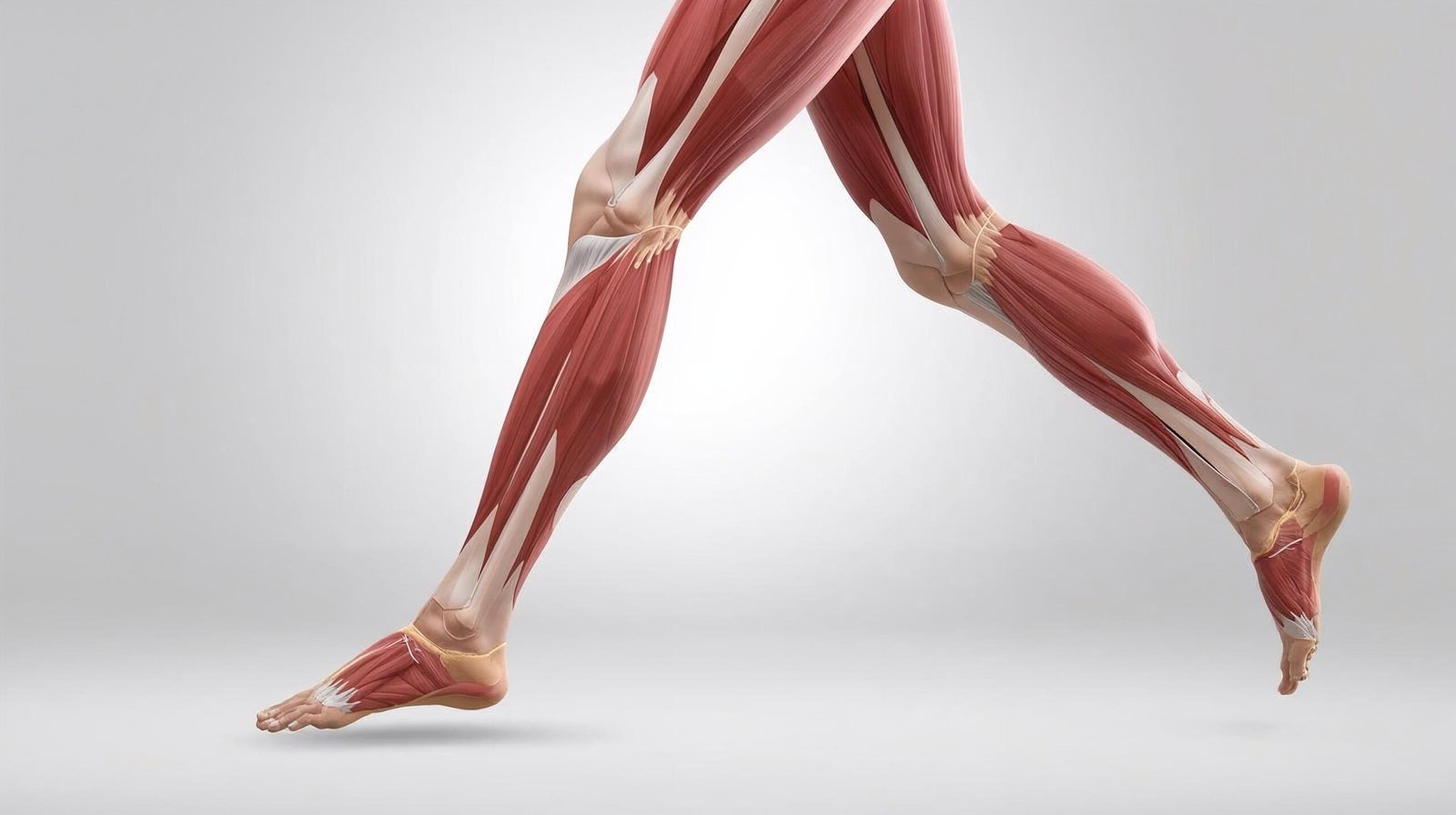
A scholarly born to run book summary must highlight McDougall’s engagement with evolutionary scientists such as Dr. Daniel Lieberman of Harvard, who posits that humans are evolutionarily designed for endurance running.
Key evolutionary advantages discussed include:
-
Spring-like Achilles tendons
-
Large gluteal muscles for stabilisation
-
Sweating mechanisms superior to fur-covered predators
-
Elastic foot arches acting as natural shock absorbers
Running, McDougall suggests, is not an exercise—we are biologically engineered for it.
Barefoot Running and the Minimalist Footwear Revolution
No born to run book summary is complete without addressing the book’s most controversial legacy: the barefoot and minimalist running movement.
McDougall presents evidence suggesting that:
-
Cushioned shoes may encourage harmful heel-striking
-
Barefoot or minimal running promotes natural forefoot landing
-
Many injuries arise from over-engineered footwear
The book famously contributed to the rise of minimalist brands such as Vibram FiveFingers, permanently altering the sports footwear industry.
The Pain Paradox: Why Modern Runners Suffer
A central philosophical thread in the born to run book summary is the paradox of progress.
Despite:
-
Advanced shoe technology
-
Scientific training plans
-
Sports medicine innovations
Modern runners are more injured than ever.
McDougall argues that:
Comfort has replaced competence, and technology has replaced intuition.
Ultramarathons: Where Human Limits Are Rewritten
The born to run book summary reaches its narrative crescendo with the legendary Copper Canyon Ultramarathon, where elite American ultrarunners face off against the Tarahumara.
This section is both:
-
Electrifying storytelling
-
A case study in mental resilience, joy, and humility
Victory, McDougall suggests, belongs not to the strongest or fastest—but to those who run with happiness.
Running as Joy, Not Punishment
One of the most emotionally resonant insights in the born to run book summary is McDougall’s assertion that modern society has transformed running into a form of self-punishment.
The Tarahumara run because:
-
It strengthens community
-
It celebrates life
-
It produces laughter and storytelling
Modern runners, by contrast, often run to atone, punish, or escape.
Scientific Criticism and Balanced Perspective
An intellectually honest born to run book summary must acknowledge criticism.
Some sports scientists argue:
-
Injury reduction evidence is anecdotal
-
Barefoot running carries transition risks
-
Genetics and environment matter greatly
Yet even critics concede that McDougall successfully exposed uncomfortable gaps in conventional running dogma.

Cultural Impact of Born to Run
The influence of Born to Run extends far beyond running.
It has reshaped conversations around:
-
Evolutionary fitness
-
Natural movement
-
Minimalism
-
Lifestyle health
Few sports books have triggered such widespread behavioural experimentation.
Who Should Read Born to Run?
This born to run book summary strongly recommends the book to:
-
Distance runners and ultrarunners
-
Fitness trainers and coaches
-
Anthropologists and evolutionary thinkers
-
Anyone questioning modern health conventions
Key Lessons from Born to Run
Summarising the born to run book summary, the book teaches us that:
-
Humans are designed for endurance
-
Pain is often a cultural invention
-
Joy enhances performance
-
Simplicity frequently outperforms complexity
-
Movement is a birthright, not a chore
The Psychological Architecture of Endurance Running
A deeper reading of Born to Run reveals that Christopher McDougall is not merely concerned with biomechanics or footwear; he is profoundly invested in the psychology of endurance. One of the most overlooked aspects of the born to run book summary is its exploration of how mental frameworks determine physical longevity.
Elite endurance, according to McDougall, is rarely constrained by muscle capacity alone. Instead, it is governed by fear, boredom, self-doubt, and the cultural narratives imposed upon physical exertion. The Tarahumara runners display an almost radical psychological freedom: they do not conceptualise distance as suffering, nor do they associate exhaustion with failure.
Modern runners, conversely, are conditioned to anticipate pain. This anticipation becomes self-fulfilling. McDougall subtly dismantles this psychological trap, suggesting that when running is reframed as play rather than punishment, the body adapts with astonishing generosity.
Community, Ritual, and the Lost Social Dimension of Running
Another profound layer often understated in any born to run book summary is the book’s emphasis on collective movement. For the Tarahumara, running is not an isolating, headphone-driven activity. It is communal, ceremonial, and embedded within social rhythm.
McDougall contrasts this with modern urban running culture, where:
-
Performance metrics replace storytelling
-
Solitude replaces shared effort
-
Competition overshadows celebration
Anthropologically, this shift is significant. Humans evolved as social endurance hunters, running not alone, but together—sharing direction, pace, and purpose. The book implicitly argues that the erosion of communal movement has not only increased injury rates, but also diminished joy.
The Myth of Progress in Sports Science
A critical section of the born to run book summary is McDougall’s challenge to the assumption that newer always means better. He raises uncomfortable questions about the sports science industry, particularly its financial entanglement with consumerism.
McDougall does not reject science; rather, he questions its selective application. Why, he asks, are ancient movement patterns dismissed while expensive interventions are marketed as indispensable? Why is pain treated as an inevitability instead of a diagnostic signal?
The book’s most unsettling proposition is that progress has, in some respects, made runners weaker—less adaptive, less intuitive, and more dependent.
Injury as Information, Not Interruption
One of the most intellectually mature insights in the born to run book summary is the redefinition of injury. Rather than viewing injury as a disruption to training schedules, McDougall encourages readers to see it as biological communication.
Pain, in this framework, is not the enemy. It is feedback.
The Tarahumara do not “train through pain.” They alter pace, terrain, or rest intuitively. This adaptability stands in stark contrast to rigid training programmes that prioritise mileage targets over bodily intelligence.
The Role of Terrain and Natural Variability
Modern runners often confine themselves to uniform surfaces—treadmills, asphalt, synthetic tracks. A subtle but crucial element of the born to run book summary is the argument that such uniformity weakens natural stabilisation systems.
The Tarahumara run across:
-
Uneven canyon floors
-
Rocky inclines
-
Irregular trails
This constant variability strengthens connective tissue, proprioception, and balance. McDougall implies that the body thrives on unpredictability, and that overly controlled environments may paradoxically increase fragility.
Running, Ageing, and Longevity
Another compelling dimension of the born to run book summary is its challenge to age-related decline narratives. McDougall documents elderly Tarahumara runners who maintain endurance well into advanced age, contradicting modern assumptions about inevitable physical deterioration.
The implication is not that ageing ceases, but that movement quality determines ageing trajectory. When running remains joyful, moderate, and socially reinforced, longevity follows naturally.
The Ethics of Competition
Competition in Born to Run is portrayed not as domination, but as mutual elevation. This philosophical stance, often missed in a superficial born to run book summary, redefines athletic excellence.
The Copper Canyon race is not about humiliation or conquest. It is about mutual respect, endurance shared across cultures, and the celebration of human capacity. Victory is secondary to participation without ego.
Minimalism as a Philosophy, Not a Trend
While minimalist footwear became a commercial phenomenon, McDougall’s underlying message is philosophical minimalism. The born to run book summary demonstrates that simplicity in movement mirrors simplicity in life.
This extends beyond running:
-
Fewer tools, more skill
-
Less control, more awareness
-
Reduced obsession, increased enjoyment
Minimalism here is not deprivation; it is refinement.
Relevance in a Sedentary Digital Age
In today’s screen-dominated existence, the born to run book summary feels increasingly prophetic. Sedentary lifestyles, algorithm-driven attention, and artificial comfort have distanced humans from physical intuition.
McDougall’s work functions as a countercultural manifesto, urging readers to reclaim movement not as fitness, but as identity.
Educational and Institutional Implications
An often-overlooked implication of the born to run book summary is its relevance to education and public health policy. If humans are biologically inclined toward endurance movement, then current schooling systems—which minimise physical activity—are fundamentally misaligned with human nature.
The book implicitly advocates for:
-
Movement-integrated education
-
Play-based physical development
-
Reduced early specialisation in sports
The Literary Craft of Born to Run
Beyond its content, Born to Run deserves recognition for its narrative craftsmanship. Another refined layer of the born to run book summary is McDougall’s ability to blend journalism, science, memoir, and myth without diluting intellectual integrity.
This literary hybridity makes complex scientific ideas accessible without trivialisation—a rare achievement in sports literature.

A Book That Redefines Success
Ultimately, the born to run book summary reveals that McDougall is less interested in running faster than in living better. Success is not defined by podium finishes, but by sustainability, joy, and physical autonomy.
The book asks readers to reconsider:
-
Why they move
-
How they measure progress
-
What kind of relationship they wish to have with their bodies
The Philosophical Undercurrent: What Born to Run Ultimately Teaches Humanity
Beyond anthropology, endurance science, and running culture, Born to Run carries a deeper philosophical undercurrent that elevates it above conventional sports literature. At its core, the book is a meditation on human authenticity—a critique of how modern civilisation consistently distances individuals from their innate design.
One of the most subtle but enduring lessons emerging from the born to run book summary is the idea that discomfort has been mislabelled as dysfunction. McDougall illustrates that physical challenge, when approached organically and without coercion, is not a threat but a catalyst. The human body, he argues, was shaped by necessity, variation, and movement—not by ergonomic optimisation or artificial ease.
This philosophy extends beyond running. It applies equally to how people work, sit, eat, and rest. The book implicitly questions the modern obsession with convenience, suggesting that excessive comfort may erode resilience at both physical and psychological levels.
Technology Versus Wisdom
Another dimension worth deeper consideration is the tension between technological dependence and embodied wisdom. McDougall does not reject technology outright, but he exposes the danger of allowing external tools to override internal awareness.
Modern runners often outsource decision-making to devices—heart rate monitors, GPS watches, algorithm-driven training plans—while ignoring fatigue signals, posture feedback, or emotional readiness. The Tarahumara, by contrast, operate without metrics, yet display remarkable efficiency and longevity.
This contrast reinforces a powerful insight: measurement does not automatically produce mastery. Sometimes, instinct refined through experience outperforms data interpreted without context.
Running as Cultural Expression
Running, in Born to Run, is not merely locomotion; it is a cultural expression. The Tarahumara embed running into music, celebration, and storytelling. Movement becomes narrative, identity, and continuity across generations.
In modern societies, running is frequently stripped of symbolism and reduced to calorie expenditure. McDougall’s work urges a reclamation of meaning—suggesting that when movement carries purpose, adherence becomes effortless and sustainable.
This cultural framing explains why many modern fitness initiatives fail. They address mechanics but neglect meaning.
Why Born to Run Continues to Polarise
Even years after publication, Born to Run remains divisive. Some readers embrace it as liberation; others dismiss it as romanticism. Yet this polarisation is precisely why the book endures.
Works that merely confirm existing beliefs fade quickly. Works that disrupt comfort zones provoke dialogue—and progress. The born to run book summary reveals that McDougall never intended to provide a universal template. Instead, he offered a lens through which readers might question inherited assumptions.
Enduring Relevance in a Post-Pandemic World
In a world reshaped by isolation, sedentary habits, and digital saturation, the message of Born to Run feels unusually urgent. The reconnection with natural movement, outdoor environments, and communal activity is no longer a lifestyle preference—it is a public health necessity.
The book’s advocacy for simplicity, adaptability, and joy aligns seamlessly with emerging conversations around mental health, burnout, and sustainable living.
Closing Perspective
Ultimately, Born to Run is not about rejecting modernity, but about remembering humanity. It challenges readers to ask a deceptively simple question: What if the body already knows what it needs?
That question alone ensures the book’s lasting intellectual and cultural significance—and secures its place as one of the most thought-provoking works ever written on human movement.

Final Reflection
The enduring power of the born to run book summary lies in its refusal to offer rigid prescriptions. Instead, it invites inquiry. It provokes discomfort. It encourages experimentation grounded in respect for human design.
In an era obsessed with optimisation, Born to Run reminds us that we were never broken to begin with.
FAQs – Born to Run Book Summary
Q1. Is Born to Run scientifically accurate?
While some claims are debated, the born to run book summary reflects a solid evolutionary and anthropological foundation.
Q2. Does Born to Run promote barefoot running for everyone?
No. The book encourages natural movement awareness, not reckless abandonment of footwear.
Q3. Is this book only for runners?
Absolutely not. The born to run book summary appeals to anyone interested in human potential and natural living.
Q4. What is the main philosophy of Born to Run?
That humans thrive when movement is joyful, instinctive, and socially connected.
Q5. Is Born to Run still relevant today?
More than ever. Sedentary lifestyles make its message increasingly urgent.
Conclusion: Why Born to Run Still Matters Today
This born to run book summary reveals Born to Run as more than a sports book—it is a manifesto against artificial living. Christopher McDougall reminds us that health, endurance, and happiness were never meant to be outsourced to technology.
In a world obsessed with optimisation, Born to Run dares us to trust our bodies again.
For readers seeking deep, scholarly, and transformative book insights, visit shubhanshuinsights.com, where literature meets logic, endurance meets intellect, and reading still matters.
Ultimately, Born to Run endures as a reminder that human potential flourishes when movement is joyful, instinctive, communal, and guided by wisdom rather than excess.