Advanced Marathoning by Pete Pfitzinger & Scott Douglas – A Definitive Review
In the rarefied world of serious distance running, very few books achieve the status of an enduring training authority. Advanced Marathoning by Pete Pfitzinger and Scott Douglas is one such seminal work. First published decades ago and repeatedly updated to reflect modern sports science, this book has become the uncompromising manual for runners who are no longer content with merely finishing marathons. It is written for those who wish to master the event.
At its core, advanced marathoning is not a motivational manifesto. It is a scientific, physiological, and brutally honest exposition of what it truly takes to run faster over 42.195 kilometres. The authors assume discipline, patience, and intellectual seriousness from the reader. Those seeking shortcuts or superficial inspiration will find little comfort here.
The Philosophy Behind Advanced Marathoning
The philosophy of advanced marathoning rests on a single, uncompromising premise: improvement occurs only when training stress is applied intelligently, consistently, and progressively. Pfitzinger, an accomplished exercise physiologist and elite marathoner, combines empirical research with decades of coaching experience to dismantle myths surrounding marathon preparation.
Unlike generic running manuals, Advanced Marathoning does not romanticise suffering. Instead, it explains it. The reader is taught why certain workouts work, how adaptations occur at the cellular level, and when training stress becomes counterproductive.
This intellectual depth is precisely what separates advanced marathoning from conventional running books.
Physiological Foundations of Elite Marathon Performance
One of the most valuable contributions of advanced marathoning lies in its meticulous explanation of endurance physiology. Concepts such as VO₂ max, lactate threshold, glycogen depletion, and running economy are not merely defined but contextualised within marathon performance.
The authors explain how mitochondrial density, capillary development, and neuromuscular efficiency evolve through structured training. This scientific grounding ensures that the runner does not train blindly but with purpose.
By understanding these principles, practitioners of advanced marathoning learn to respect recovery as much as workload—an insight often ignored by ambitious runners.
Training Structure and Periodisation
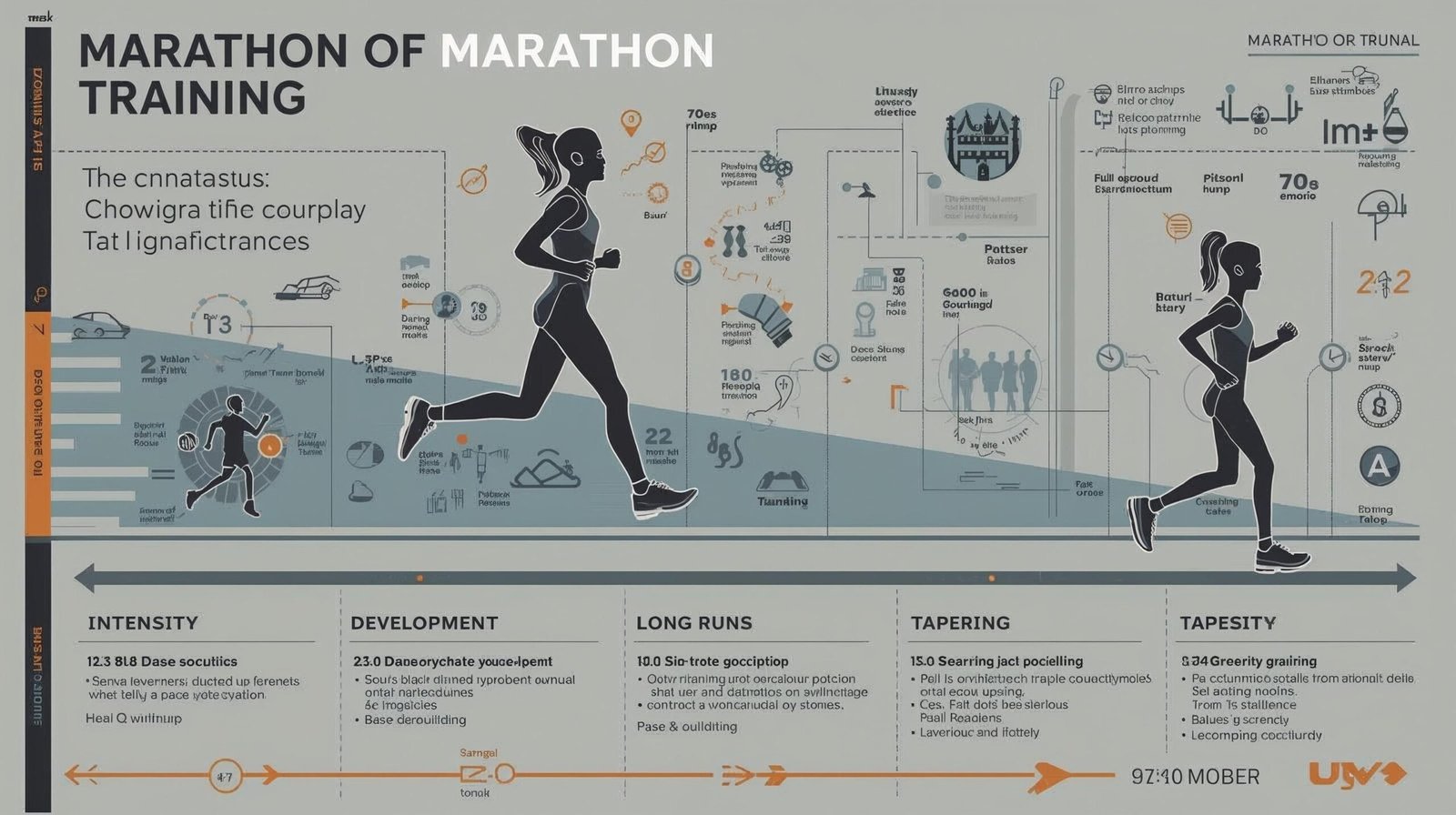
Periodisation forms the backbone of advanced marathoning. The book divides marathon preparation into carefully sequenced phases: base training, lactate threshold development, marathon-specific endurance, sharpening, and tapering.
Each phase serves a distinct physiological purpose. Mileage is increased not recklessly but methodically. Workouts are arranged to minimise injury risk while maximising adaptation.
The structured training plans—ranging from 55 miles per week to over 100—are not aspirational fantasies. They are precision instruments designed for runners with specific goals and capabilities. In this respect, advanced marathoning functions as both textbook and tactical manual.
Long Runs: The Cornerstone of Marathon Mastery
In Advanced Marathoning, the long run is elevated from a mere endurance exercise to a strategic training tool. The authors explore variations such as progression long runs, marathon-pace long runs, and fast-finish long runs.
These sessions simulate race-day fatigue and teach the body to perform under glycogen-depleted conditions. For adherents of advanced marathoning, the long run is not about distance alone but about controlled intensity and psychological conditioning.
This nuanced approach is one of the book’s most influential contributions to modern marathon training.
Lactate Threshold Training Explained
Lactate threshold development receives significant attention in advanced marathoning, and rightly so. The authors argue convincingly that threshold pace is more predictive of marathon success than raw speed.
Tempo runs, cruise intervals, and steady-state efforts are prescribed with clinical precision. The reader is taught how to identify threshold pace through race performances and physiological markers rather than guesswork.
Such clarity ensures that advanced marathoning practitioners train at intensities that produce adaptation without excessive fatigue.
Recovery: The Hidden Weapon
Perhaps the most counterintuitive lesson of advanced marathoning is the emphasis placed on recovery. Easy days are genuinely easy. Rest is framed not as weakness but as strategic restraint.
Pfitzinger and Douglas highlight the dangers of chronic fatigue, hormonal imbalance, and overtraining syndrome. The message is clear: consistent performance arises from intelligent oscillation between stress and recovery.
This philosophy distinguishes advanced marathoning from the reckless “more is better” mentality prevalent among amateur runners.
Nutrition, Hydration, and Body Composition
While not a nutrition textbook, Advanced Marathoning offers pragmatic guidance on fueling strategies. Carbohydrate availability, race-day hydration, and body composition are discussed with restraint and scientific grounding.
The authors avoid dietary extremism, instead advocating balance and experimentation. For the serious runner, this complements the broader framework of advanced marathoning by aligning physiological preparation with metabolic demands.

Mental Toughness and Race Execution
Mental resilience is addressed not through platitudes but through preparation. According to advanced marathoning, confidence emerges from accumulated training evidence.
Pacing strategy, course analysis, and contingency planning are explored in detail. The runner is trained to think like a tactician rather than a gambler.
By race day, the athlete following advanced marathoning principles arrives not hopeful, but prepared.
Who Should Read Advanced Marathoning?
This book is not intended for beginners. It is designed for runners with several years of experience, consistent mileage, and a desire for structured improvement.
Those seeking comfort will find it demanding. Those seeking excellence will find it indispensable. In this sense, advanced marathoning is both a challenge and an invitation.
Strengths of Advanced Marathoning
The enduring strength of advanced marathoning lies in its intellectual honesty. It neither flatters nor deceives. Every recommendation is justified through research or empirical observation.
The clarity of writing, despite the technical subject matter, makes complex ideas accessible without dilution. This balance of rigour and readability is rare.
Limitations and Criticisms
No book is without limitations. Some critics argue that advanced marathoning prioritises mileage excessively for recreational runners with limited recovery capacity. Others note that strength training and mobility receive less emphasis than modern trends suggest.
However, these criticisms do little to diminish the book’s foundational authority.
The Evolution of Marathon Training Methodology
Distance running, particularly at the marathon level, has undergone a profound methodological transformation over the last half-century. Early marathon preparation relied heavily on intuition, folklore, and heroic mileage with little scientific justification. Training programmes were often copied from elite athletes without consideration for individual physiology, recovery capacity, or lifestyle constraints.
What distinguishes the Pfitzinger–Douglas framework is its role in formalising a research-driven approach. The book represents a bridge between anecdotal coaching wisdom and applied exercise science. It synthesises laboratory findings with real-world performance outcomes, thereby offering a systematic blueprint rather than a collection of isolated workouts.
This evolution is crucial because it reframes marathon preparation as a long-term developmental process rather than a short-term gamble.
Mileage: Quantity with Purpose
High mileage has always been associated with marathon success, but blind accumulation of distance has historically led to burnout and injury. The authors carefully dismantle the misconception that mileage alone guarantees progress.
Instead, weekly distance is treated as a variable that must align with intensity distribution, recovery cycles, and cumulative fatigue. Medium-long runs, secondary long runs, and aerobic support sessions are deliberately positioned to create layered adaptations.
This philosophy teaches runners to view mileage not as a badge of honour, but as a functional stimulus that must be earned and sustained intelligently.
Intensity Discipline and Training Restraint
One of the most underappreciated elements of elite endurance preparation is restraint. Many runners sabotage progress by training too hard on easy days and too easy on hard days.
The book addresses this problem directly by emphasising strict adherence to effort zones. Aerobic runs are deliberately slow. Quality sessions are executed with precision. This separation prevents physiological confusion and allows each workout to fulfil its intended role.
Such discipline is mentally challenging, particularly for competitive personalities. However, the long-term benefits of controlled intensity far outweigh the short-term satisfaction of aggressive training.

Injury Prevention Through Structure
Injury is the silent antagonist of every ambitious runner. Rather than offering generic advice, the authors address injury prevention indirectly through programme design.
Gradual progression, consistent training rhythms, and strategic recovery weeks reduce biomechanical stress accumulation. The emphasis on consistent form under fatigue further protects connective tissues and neuromuscular coordination.
By embedding prevention into the training architecture itself, the system reduces reliance on reactive measures such as prolonged rest or medical intervention.
Adaptation Over Time: The Cumulative Effect
One of the book’s most valuable lessons is patience. Physiological adaptations do not occur in isolation but accumulate over months and years of uninterrupted training.
Aerobic enzymes, capillary networks, and fatigue resistance develop slowly. Short-term setbacks are contextualised as part of a larger trajectory rather than failures.
This long-view perspective encourages sustainable ambition and discourages destructive training cycles driven by impatience or ego.
Race-Specific Conditioning
Marathon success depends not merely on general fitness, but on specificity. The authors devote substantial attention to teaching the body to perform efficiently at goal pace under fatigue.
Sessions that simulate late-race conditions train fuel utilisation, neuromuscular resilience, and psychological tolerance. These workouts serve as rehearsals, reducing uncertainty and anxiety on race day.
The result is a runner who does not rely on adrenaline or hope, but on rehearsed competence.
Environmental and Course Considerations
Another notable strength of the book is its attention to environmental variables. Temperature, humidity, elevation, and course profile are addressed not as afterthoughts, but as strategic factors.
Runners are encouraged to adapt pacing strategies, hydration plans, and expectations based on conditions rather than rigid targets. This pragmatic approach reduces the likelihood of catastrophic pacing errors and enhances decision-making under pressure.
Such situational awareness separates experienced competitors from novices.
Psychological Endurance and Identity
Mental endurance is presented not as abstract toughness, but as a byproduct of preparation. Confidence arises from accumulated evidence, not affirmations.
The authors subtly reshape the reader’s identity—from someone attempting a marathon to someone systematically prepared for it. This shift has profound psychological implications, particularly during the latter stages of competition when doubt becomes pervasive.
By the time the starting line is reached, uncertainty has already been addressed through methodical preparation.
The Role of Consistency in Long-Term Success
Talent is often overemphasised in endurance sports. The book counters this narrative by demonstrating that consistency outweighs genetic advantage over extended periods.
Moderately talented athletes who train uninterrupted for years frequently outperform naturally gifted runners with erratic habits. This message is both sobering and empowering.
It places responsibility squarely on behaviour rather than biology.
Integrating Training with Real Life
Unlike idealised programmes that ignore practical constraints, the authors acknowledge real-world responsibilities. Adjustments for work stress, travel, family obligations, and sleep deprivation are discussed with realism.
This flexibility prevents the common trap of all-or-nothing thinking. Training becomes adaptable rather than fragile, increasing the likelihood of long-term adherence.
Such realism is essential for non-professional athletes seeking high performance.

The Book’s Influence on Modern Coaching
The methodologies presented have profoundly influenced contemporary coaching frameworks. Many modern training systems borrow heavily from its principles, even when they do not explicitly acknowledge their source.
Concepts such as polarised intensity distribution, structured progression, and marathon-specific conditioning owe much to this foundational work.
Its legacy is visible not only in personal training plans, but in coaching certifications and academic curricula.
Ethical Training and Athlete Longevity
A subtle but important theme throughout the book is longevity. Success is not defined by a single performance, but by sustained participation without chronic injury or burnout.
The rejection of reckless training loads reflects an ethical stance toward athlete welfare. Performance is pursued within the boundaries of biological sustainability.
This philosophy is increasingly relevant in an era of social-media-driven excess and unrealistic expectations.
Why This Book Endures
Many training manuals fade as trends shift. This one persists because it is grounded in principles rather than fashions.
While terminology may evolve and supplementary research may refine certain recommendations, the core framework remains intact. It respects human physiology, honours evidence, and demands accountability.
Such durability is rare and deserves recognition.

Final Reflection Before the FAQs
Before proceeding to the frequently asked questions, it is worth acknowledging the intellectual seriousness of this work. It does not promise transformation in weeks, nor does it flatter the reader.
Instead, it offers something far more valuable: clarity.
For runners willing to submit to structure, restraint, and patience, the rewards extend beyond performance. The process cultivates discipline, self-awareness, and resilience—qualities that endure long after race day.
FAQs
Is Advanced Marathoning suitable for first-time marathon runners?
No. Advanced marathoning is best suited for experienced runners with a solid training base.
How many miles per week does Advanced Marathoning recommend?
Plans typically range from 55 to over 100 miles, depending on experience and goals.
Does Advanced Marathoning include strength training?
Strength training is mentioned, but the primary focus remains on running-specific adaptations.
Is Advanced Marathoning still relevant today?
Yes. The principles of advanced marathoning remain scientifically valid and widely respected.
Can recreational runners benefit from Advanced Marathoning?
Yes, provided they adapt the principles intelligently rather than follow plans rigidly.
Conclusion: The Relentless Truth of Marathon Excellence
Advanced Marathoning by Pete Pfitzinger and Scott Douglas is not merely a training guide; it is a declaration of standards. It strips marathon running of romantic illusions and replaces them with disciplined reality.
For those willing to embrace structure, patience, and intellectual engagement, advanced marathoning offers something rare: a path grounded in truth rather than hype.
On shubhanshuinsights.com, we believe that true progress—whether in running, learning, or life—comes from respecting fundamentals and committing fully to the process. Advanced Marathoning exemplifies this philosophy with uncompromising clarity.
If you are ready to abandon mediocrity and confront the demands of excellence, this book will not encourage you gently. It will demand your best—and reward it accordingly.