Introduction: Why The Telomere Effect Is a Turning Point in Ageing Science
Ageing has traditionally been viewed as an unavoidable biological decline, dictated by genetics and the steady march of time. However, modern research has begun to dismantle this pessimistic assumption. The Telomere Effect, authored by Nobel Prize–winning molecular biologist Dr. Elizabeth Blackburn and health psychologist Dr. Elissa Epel, presents a revolutionary scientific argument: the pace at which we age is deeply influenced by how we live, think, and respond to stress.
At the core of the telomere effect lies a microscopic structure with immense power over our health and lifespan. Telomeres, the protective caps at the ends of chromosomes, determine how quickly our cells age. When telomeres shorten too rapidly, the body becomes vulnerable to chronic disease, immune dysfunction, and premature ageing. When they are preserved, vitality and resilience improve.
This book is not speculative self-help. The Telomere Effect is a rigorously researched, evidence-based guide that bridges cellular biology with everyday human behaviour, offering readers a realistic and hopeful pathway to healthier ageing.

Telomeres Explained: The Scientific Foundation of The Telomere Effect
To fully grasp the telomere effect, it is essential to understand what telomeres are. Telomeres are repetitive DNA sequences that protect chromosomes during cell division. Each time a cell divides, telomeres naturally shorten. Once they reach a critically short length, cells lose their ability to divide properly and either enter senescence or die.
Dr. Blackburn’s landmark discovery of telomerase, the enzyme capable of replenishing telomeres, reshaped scientific understanding of ageing. This discovery proved that cellular ageing is not entirely irreversible. The Telomere Effect builds upon this breakthrough by demonstrating that lifestyle and psychological factors strongly influence telomerase activity.
The implication is profound: the telomere effect shows that ageing is not merely genetic fate but a biologically responsive process.
Stress and Cellular Ageing: A Central Insight of The Telomere Effect
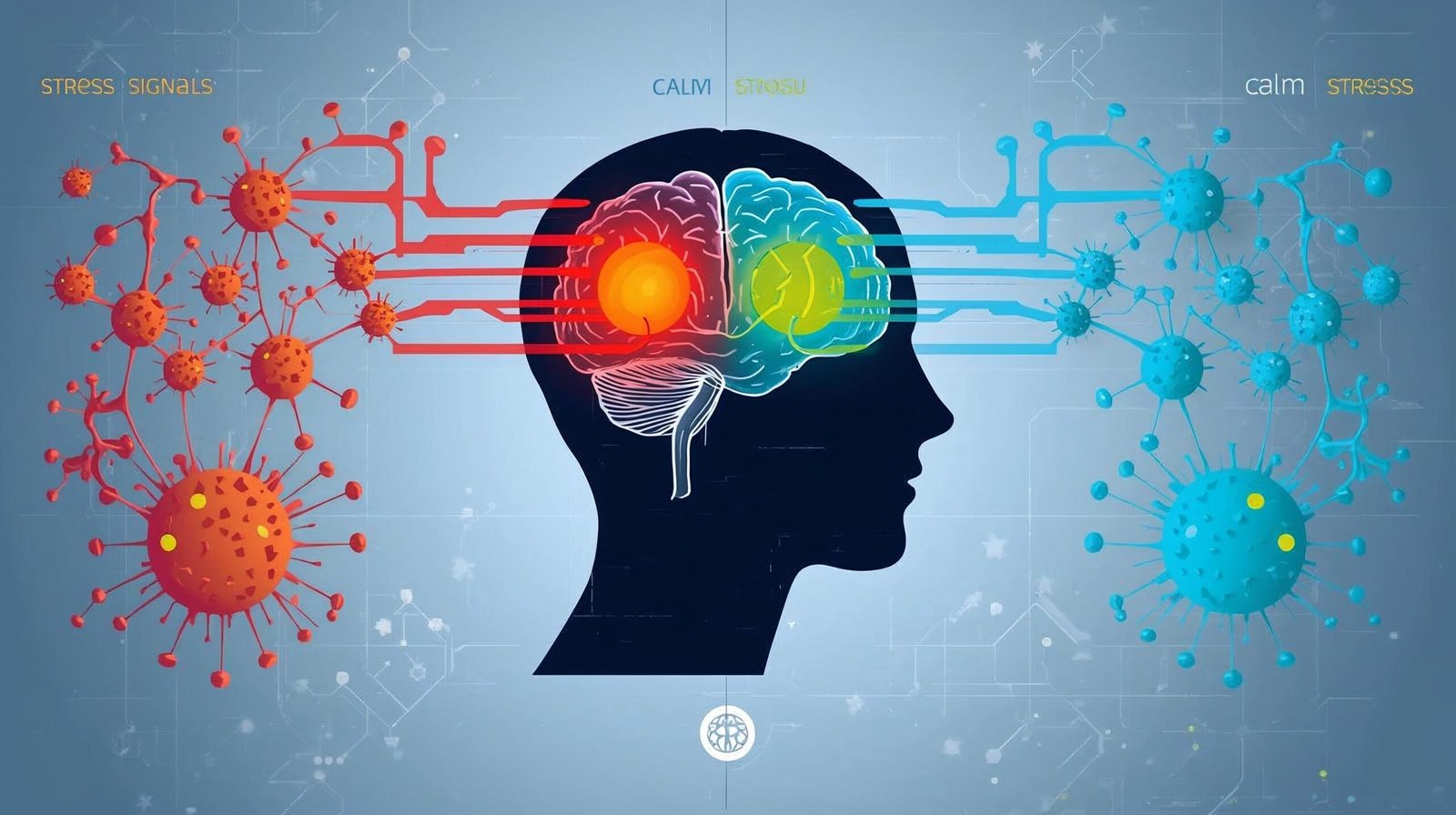
One of the most compelling findings in the telomere effect concerns the destructive role of chronic stress. Persistent stress triggers elevated cortisol levels and systemic inflammation, both of which accelerate telomere shortening.
Dr. Epel’s research highlights that individuals exposed to long-term emotional strain often exhibit telomere lengths equivalent to those of much older individuals. However, the book introduces an empowering nuance: perception matters. How stress is interpreted by the mind significantly alters its biological impact.
The Telomere Effect explains that reframing stress as manageable or meaningful can substantially reduce its cellular damage, preserving telomere length even in demanding circumstances.
Nutrition and The Telomere Effect
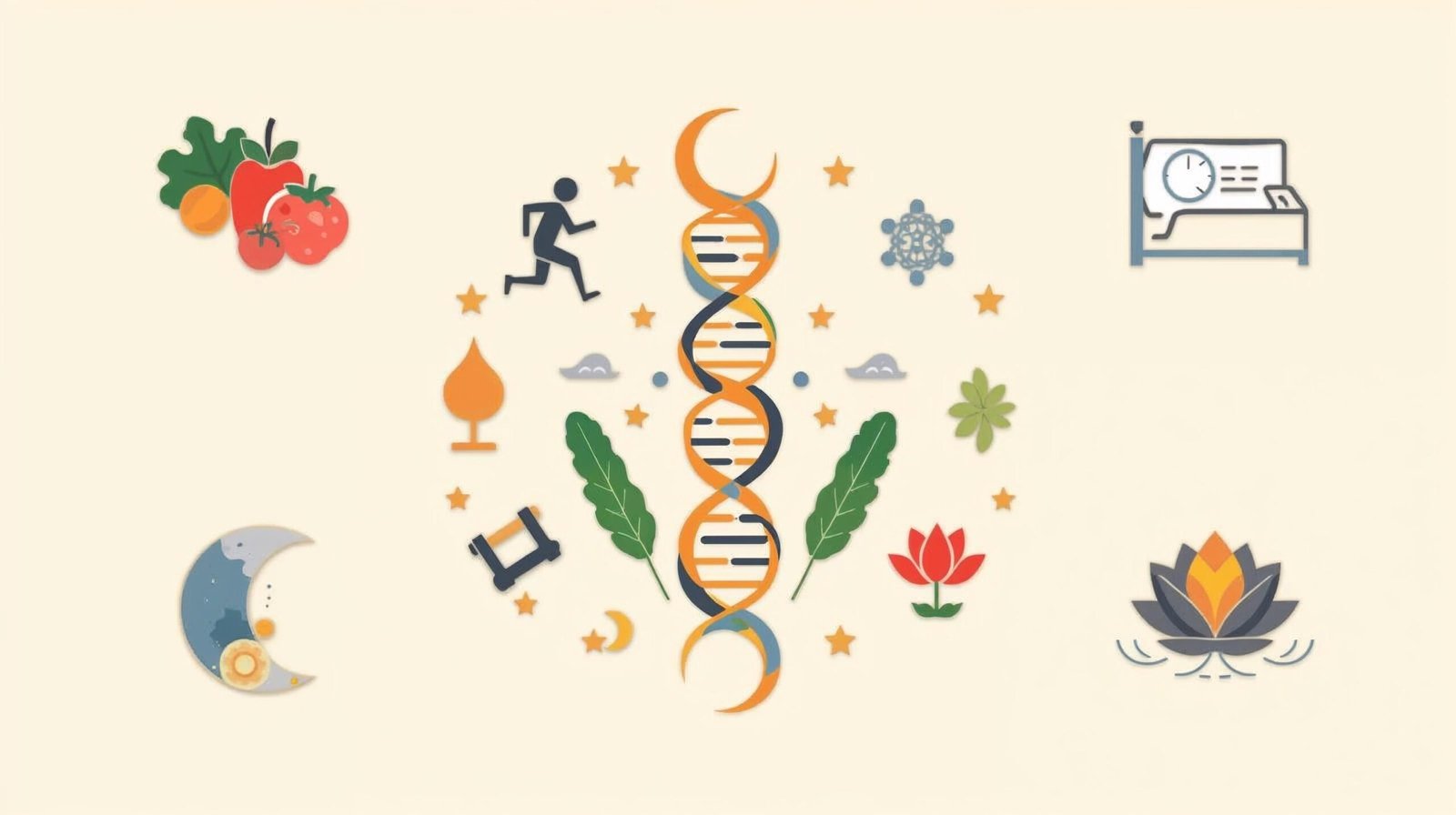
Diet plays a pivotal role in shaping the telomere effect. Nutritional patterns rich in antioxidants, fibre, healthy fats, and phytonutrients are consistently associated with longer telomeres.
The authors emphasise Mediterranean-style diets that prioritise vegetables, fruits, legumes, nuts, whole grains, and olive oil. These foods reduce oxidative stress and inflammation, two primary drivers of telomere erosion.
Conversely, diets high in processed foods, refined sugars, and trans fats accelerate cellular ageing. The Telomere Effect makes it clear that everyday food choices directly influence chromosomal health.
Physical Activity and Longevity in The Telomere Effect
Regular physical activity emerges as one of the most powerful lifestyle interventions discussed in the telomere effect. Moderate, consistent exercise reduces inflammation, improves insulin sensitivity, and increases telomerase activity.
Importantly, the book discourages extremes. Overtraining and sedentary behaviour are both harmful. Balanced movement, such as walking, strength training, and aerobic exercise, supports telomere maintenance most effectively.
Sleep, Recovery, and The Telomere Effect
Sleep deprivation silently accelerates ageing. The Telomere Effect presents evidence that insufficient or poor-quality sleep is linked to significantly shorter telomeres, independent of age.
During deep sleep, the body regulates immune responses, repairs DNA damage, and stabilises hormonal systems. Protecting sleep is therefore not optional but foundational to applying the telomere effect in real life.
Mindset, Emotions, and The Telomere Effect
One of the most transformative sections of the telomere effect explores how thoughts and emotions influence biology. Chronic pessimism, hostility, and rumination are associated with faster telomere shortening.
In contrast, optimism, gratitude, purpose, and compassion are correlated with healthier telomere profiles. The book introduces the concept of stress mindsets, demonstrating that believing stress is harmful magnifies its biological impact, while viewing stress as a challenge reduces cellular damage.
Social Relationships and The Telomere Effect
Humans are biologically wired for connection. The Telomere Effect integrates research showing that loneliness and social isolation accelerate ageing at a cellular level.
Strong social bonds buffer stress responses, lower inflammation, and enhance emotional resilience. According to the telomere effect, nurturing meaningful relationships is as vital to longevity as diet or exercise.
Epigenetics and the Hopeful Message of The Telomere Effect
Perhaps the most empowering message of the telomere effect lies in epigenetics. Genes are not destiny. Lifestyle and environment determine which genes are activated or suppressed.
This means individuals can actively influence their biological future. The Telomere Effect reframes ageing as a dynamic, responsive process shaped by daily choices rather than an unavoidable decline.
Scientific Integrity and Balanced Perspective
While the telomere effect is optimistic, it remains scientifically cautious. The authors acknowledge the limitations of telomere measurement and avoid exaggerated claims. This intellectual honesty strengthens the book’s credibility and distinguishes it from sensational longevity literature.
Key Practical Lessons from The Telomere Effect
The book encourages small, sustainable changes rather than radical overhauls:
-
Effective stress management
-
Whole-food, anti-inflammatory nutrition
-
Regular moderate exercise
-
Prioritising quality sleep
-
Maintaining strong social bonds
-
Cultivating purpose and emotional resilience
Together, these habits reinforce the principles of the telomere effect at a cellular level.
The Role of Early Life Experiences in Biological Ageing
One of the most intellectually arresting aspects of the authors’ research is the discussion on early life stress and its lasting biological imprint. Childhood adversity, including neglect, abuse, or prolonged insecurity, is shown to exert a measurable influence on cellular ageing decades later. These early experiences shape stress-response systems, making individuals more reactive to adversity throughout life.
The body, once conditioned to perceive the world as unsafe, remains in a state of heightened vigilance. This chronic activation of stress pathways accelerates inflammation and compromises immune regulation. Over time, this contributes to faster cellular wear and tear. Importantly, the book does not suggest inevitability. Instead, it demonstrates that awareness and intentional lifestyle choices in adulthood can counteract many of these early disadvantages.
This perspective introduces a compassionate lens into ageing science. It recognises that health outcomes are not merely the result of present habits, but also of past environments. Such insight has profound implications for public health, psychology, and social policy.
Emotional Regulation and Its Cellular Consequences
Emotional regulation emerges as a subtle yet powerful determinant of long-term health. Suppressed anger, unresolved grief, and persistent anxiety do not simply affect mental wellbeing; they exert tangible biological effects. The authors explain how emotional suppression leads to heightened physiological arousal, which places sustained pressure on cardiovascular and immune systems.
Healthy emotional processing, by contrast, reduces stress hormone secretion and supports physiological balance. Practices such as journaling, therapy, reflective meditation, and expressive communication allow emotions to be metabolised rather than internalised. Over time, this emotional hygiene contributes to improved resilience and slower biological ageing.
This section of the book challenges the outdated mind–body dichotomy. It reinforces the idea that emotional literacy is not a luxury, but a biological necessity for long-term health.
Workplace Stress and Modern Ageing
Modern professional environments often normalise chronic stress, long working hours, constant digital engagement, and performance anxiety. The authors examine how these conditions quietly accelerate ageing at the cellular level. High job strain, low autonomy, and lack of recovery time are associated with increased inflammation and weakened immune responses.
However, the book also highlights protective workplace factors. A sense of purpose, autonomy, recognition, and social support can buffer even high-demand roles. Meaningful work, when paired with psychological safety, does not harm health and may even enhance it.
This insight reframes productivity. Sustainable performance, the authors argue, arises not from relentless pressure but from balanced engagement, adequate recovery, and psychological wellbeing.
Gender Differences in Stress and Health Outcomes
An important and often overlooked discussion concerns gender-specific stress patterns. Biological responses to stress differ between men and women, influenced by hormonal regulation, social expectations, and caregiving roles. Women, particularly caregivers, often experience chronic emotional labour, which remains undervalued and invisible.
The authors present evidence showing that prolonged caregiving stress, when unsupported, is linked to accelerated biological ageing. Yet social support, shared responsibility, and self-compassion significantly mitigate these effects. This underscores the importance of structural and cultural change alongside individual responsibility.
The discussion is nuanced and avoids oversimplification, acknowledging that health disparities are shaped by both biology and social context.
Inflammation as the Silent Accelerator
Chronic inflammation is identified as a central mechanism linking stress, lifestyle, and ageing. Unlike acute inflammation, which is protective, persistent low-grade inflammation damages tissues and disrupts cellular repair processes. It is implicated in heart disease, diabetes, neurodegeneration, and autoimmune disorders.
The authors explain how poor diet, inadequate sleep, chronic stress, and physical inactivity converge to fuel inflammatory pathways. Conversely, anti-inflammatory lifestyles restore balance and protect cellular integrity. This framework provides a unifying explanation for why diverse lifestyle factors influence ageing in remarkably similar ways.
Understanding inflammation as a modifiable process empowers individuals to make informed, evidence-based choices rather than relying on pharmacological interventions alone.
The Psychological Power of Purpose and Meaning
One of the most uplifting insights in the book is the role of purpose. Individuals who perceive their lives as meaningful consistently demonstrate better health outcomes and longer lifespans. Purpose provides psychological coherence, reducing existential stress and promoting adaptive coping strategies.
Purpose does not require grand achievements. It may arise from family roles, creative pursuits, service, learning, or contribution to community. What matters is the sense that one’s existence has value beyond immediate gratification.
The authors suggest that purpose stabilises emotional responses and enhances motivation for healthy behaviours, creating a virtuous cycle that supports long-term wellbeing.

Cultural Attitudes Towards Ageing
Cultural narratives around ageing exert a powerful psychological influence. Societies that associate ageing with decline, irrelevance, or burden inadvertently amplify stress and disengagement among older adults. In contrast, cultures that value wisdom, experience, and continuity promote healthier ageing trajectories.
The book draws on cross-cultural research demonstrating that positive age beliefs are associated with better memory, physical function, and longevity. Internalised ageism, by contrast, accelerates cognitive and physical decline.
This insight highlights the need to transform not only individual habits but also collective narratives surrounding ageing.
Technology, Attention, and Cognitive Load
The modern digital environment presents unique challenges to mental and biological health. Constant notifications, multitasking, and information overload keep the nervous system in a state of perpetual stimulation. The authors discuss how fragmented attention increases cognitive fatigue and stress reactivity.
Intentional digital boundaries, such as focused work periods, device-free time, and mindful consumption, are presented as protective strategies. Restoring attentional depth allows the nervous system to recover, supporting emotional regulation and physiological balance.
This discussion is particularly relevant in contemporary life, where technological convenience often comes at an invisible biological cost.
Ageing as Adaptation Rather Than Decline
Perhaps the most philosophically profound message of the book is the reframing of ageing itself. Rather than a linear decline, ageing is presented as an adaptive process shaped by environmental signals. The body responds to perceived threats or supports accordingly.
When life is characterised by chronic threat, scarcity, and stress, biological systems prioritise survival over repair. When life offers safety, connection, and meaning, the body invests in maintenance and resilience.
This perspective replaces fear with agency. It suggests that while time cannot be stopped, its biological impact can be softened through conscious living.
Resilience, Adaptability, and the Biology of Recovery
An often underappreciated aspect of long-term health is the body’s capacity for recovery. Resilience is not merely psychological toughness; it is a biological phenomenon rooted in adaptability. Individuals who recover efficiently from stress show healthier hormonal regulation, lower inflammatory markers, and improved immune responsiveness over time.
The authors emphasise that recovery is as important as effort. Continuous striving without adequate restoration places the body in a perpetual deficit. Periods of rest, reflection, and emotional processing allow physiological systems to recalibrate. This rhythm of engagement and recovery mirrors natural biological cycles and supports sustainable health.
Adaptability also involves learning from adversity rather than being defined by it. When challenges are integrated into personal growth narratives, they lose much of their damaging impact. This cognitive integration reduces chronic stress activation and fosters emotional equilibrium.
Equally important is self-compassion. Harsh self-judgement prolongs stress responses, whereas kindness toward oneself promotes psychological safety. This internal safety signal allows the nervous system to shift from defence to repair.
Ultimately, resilience is not about avoiding difficulty, but about cultivating the internal and external resources needed to navigate it. Through consistent recovery practices, balanced expectations, and compassionate self-awareness, individuals can support long-term wellbeing even in the face of unavoidable life pressures.
This perspective reinforces the book’s central message: health is sustained not through relentless control, but through intelligent responsiveness to life’s demands.
Final Reflection: A New Framework for Living Well
This work ultimately transcends biology. It offers a comprehensive framework for living that integrates science, psychology, and human experience. Health is not portrayed as the absence of disease, but as the presence of balance, meaning, and adaptability.
By demonstrating how everyday choices shape long-term outcomes, the authors invite readers to become stewards of their own wellbeing. This is not a call for perfection, but for awareness, consistency, and compassion.
In a world increasingly dominated by quick fixes and fragmented advice, this book stands as a reminder that the most powerful interventions are often the simplest: how we think, how we connect, how we rest, and how we live each day.
Frequently Asked Questions (FAQs)
What is The Telomere Effect about?
The telomere effect explains how lifestyle, stress, and mindset influence cellular ageing through telomere biology.
Is The Telomere Effect scientifically reliable?
Yes. It is authored by a Nobel Prize–winning scientist and grounded in peer-reviewed research.
Can telomeres actually be lengthened?
The Telomere Effect suggests stabilising or slowing telomere shortening is achievable through lifestyle changes.
Who should read The Telomere Effect?
Anyone interested in healthy ageing, preventive health, stress science, or evidence-based longevity.
Does the book replace medical treatment?
No. It complements medical care by focusing on modifiable lifestyle factors.
Conclusion: Why The Telomere Effect Deserves Serious Attention
The Telomere Effect is a landmark work that reshapes how we understand ageing. It replaces helplessness with responsibility and fear with evidence-based hope. By showing that thoughts, habits, and relationships directly influence cellular health, the telomere effect empowers readers to take control of their biological future.
This book does not promise immortality, but it offers something far more valuable: the knowledge that ageing can be slowed, health can be preserved, and vitality can be extended through informed, intentional living.
For more in-depth, science-driven book reviews and thoughtful insights, visit shubhanshuinsights.com, where knowledge meets clarity and evidence meets action.
Living with awareness, balance, and intention allows health to become a lifelong practice, where science guides choices, resilience strengthens character, and longevity emerges naturally from daily habits.