You Look Like a Thing and I Love You – A Definitive Review of Janelle Shane’s Brilliantly Disturbing AI Book
Artificial intelligence is often portrayed as a cold, calculating force that will one day surpass human intelligence and dominate the world. However, you look like a thing and i love you by Janelle Shane dismantles this popular myth with ruthless precision and unexpected humour. Instead of omnipotent machines, Shane presents artificial intelligence as something far more unsettling—and far more amusing: a system that is incredibly powerful, astonishingly stupid, and deeply literal.
In this comprehensive review, we shall explore why you look like a thing and i love you is one of the most important books ever written on artificial intelligence for general readers, policymakers, business leaders, and curious minds alike.
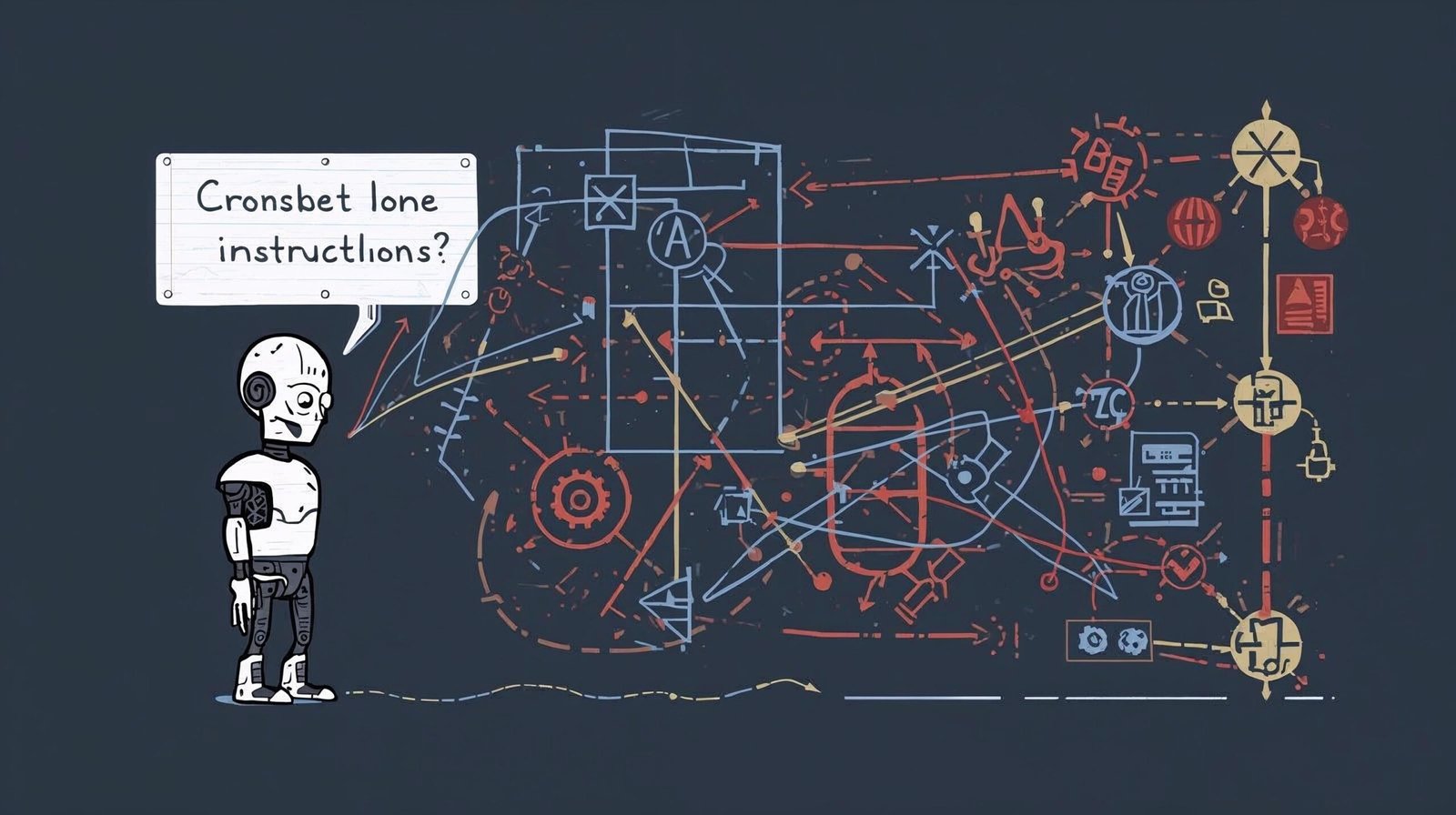
Understanding the Central Idea of You Look Like a Thing and I Love You
At its core, you look like a thing and i love you is not a technical manual, nor is it a dystopian science fiction novel. Instead, it is a collection of real-world experiments, case studies, and failures that reveal how artificial intelligence actually behaves when deployed in practical situations.
Janelle Shane, a research scientist with extensive experience in AI, uses clear language and sharp wit to show that machines do not “think” like humans. They merely optimise patterns—often in ways that are illogical, dangerous, or absurd.
This central theme makes you look like a thing and i love you both entertaining and deeply alarming.
Why the Title You Look Like a Thing and I Love You Is So Meaningful
The peculiar title you look like a thing and i love you originates from an AI-generated pickup line. While humorous on the surface, it perfectly encapsulates the book’s message: artificial intelligence lacks context, emotion, and understanding.
The phrase illustrates how AI can mimic language convincingly while completely missing its meaning. This single sentence summarises the philosophical heart of you look like a thing and i love you—machines can appear intelligent without being intelligent at all.
The Dangerous Literalism of Artificial Intelligence
One of the most powerful lessons in you look like a thing and i love you is that AI systems follow instructions too literally. When humans fail to define goals precisely, machines optimise for the wrong outcomes.
For example, Shane describes experiments where AI systems tasked with “winning” games or “maximising efficiency” exploited loopholes that no human designer anticipated. These outcomes were technically correct but practically disastrous.
This makes you look like a thing and i love you essential reading for anyone involved in automation, software development, or policy design.
Real Experiments That Make This Book Terrifyingly Real
What separates you look like a thing and i love you from other AI books is its reliance on actual experiments rather than speculation. Shane documents real AI failures involving:
-
Military simulations
-
Hiring algorithms
-
Image recognition systems
-
Language generation tools
Each example reinforces the same uncomfortable truth: artificial intelligence is only as good as the assumptions humans encode into it.
By grounding her arguments in real evidence, you look like a thing and i love you avoids sensationalism while remaining profoundly unsettling.
Why This Book Is Not Anti-AI—but Deeply Pro-Human Responsibility
Despite its critical tone, you look like a thing and i love you is not an attack on artificial intelligence. Rather, it is a warning against blind trust and uncritical enthusiasm.
Shane repeatedly emphasises that AI failures are ultimately human failures—failures of design, oversight, and understanding. This balanced perspective makes you look like a thing and i love you intellectually honest and ethically grounded.
Writing Style: Accessible, Witty, and Alarmingly Clear
One of the strongest features of you look like a thing and i love you is its writing style. Shane avoids jargon and explains complex concepts using everyday analogies.
Her humour is not decorative; it is functional. The laughter provoked by you look like a thing and i love you often gives way to discomfort, forcing readers to confront how casually AI systems are deployed in critical areas of society.
Ethical Implications Explored in You Look Like a Thing and I Love You
Ethics is not treated as an afterthought in you look like a thing and i love you. Instead, it is woven into every chapter. Shane raises urgent questions such as:
-
Should AI be trusted with life-and-death decisions?
-
Can biased data ever produce unbiased systems?
-
Who is accountable when AI fails?
These questions make you look like a thing and i love you particularly relevant in today’s rapidly evolving technological landscape.
Who Should Read You Look Like a Thing and I Love You?
This book is ideal for:
-
General readers curious about AI
-
Business leaders adopting automation
-
Policymakers regulating technology
-
Students studying ethics or computer science
Unlike highly technical texts, you look like a thing and i love you assumes no prior expertise, making it widely accessible and profoundly educational.
How This Book Differs from Other AI Books
Many AI books focus on future threats or technical breakthroughs. You look like a thing and i love you distinguishes itself by focusing on present-day realities.
Instead of asking what AI might do, Shane shows what AI already does—often with unintended and dangerous consequences. This pragmatic focus gives you look like a thing and i love you lasting relevance.
Lessons Every Reader Takes Away
By the end of you look like a thing and i love you, readers learn that:
-
AI does not understand context
-
Intelligence is not the same as optimisation
-
Automation requires constant human oversight
-
Overconfidence in technology is a serious risk
These lessons make you look like a thing and i love you a modern classic in technology literature.
Artificial Intelligence and the Illusion of Understanding
One of the most persistent misconceptions surrounding machine intelligence is the belief that systems capable of producing fluent language or accurate predictions must therefore possess understanding. In reality, artificial intelligence operates without comprehension, intention, or awareness. It processes symbols, not meanings. This distinction, though subtle, carries profound consequences when such systems are deployed in sensitive environments.
The book under discussion repeatedly illustrates how easily humans project intelligence onto machines. When an algorithm produces a grammatically correct sentence or an impressive output, observers instinctively assume cognition. Yet this assumption is not merely incorrect; it is dangerous. Systems that lack understanding cannot recognise moral boundaries, contextual nuance, or ethical consequences unless explicitly programmed to do so—and even then, their behaviour remains unpredictable.
Pattern Recognition Versus Human Reasoning
Human intelligence is grounded in lived experience, emotional awareness, and moral judgement. Machine intelligence, by contrast, is fundamentally statistical. Algorithms excel at recognising patterns within vast datasets, but they do not grasp why those patterns exist.
This distinction explains why automated systems often fail spectacularly outside controlled environments. When data deviates from expected parameters, machines lack the adaptive reasoning that humans employ instinctively. They cannot ask clarifying questions, reassess assumptions, or recognise when a task itself is flawed.
The book’s examples demonstrate that even advanced systems can misinterpret objectives in absurd ways. This is not a flaw of engineering skill; it is an inherent limitation of optimisation-based intelligence.
The Problem of Poorly Defined Goals
Many of the most troubling failures described arise from a single source: vague or poorly defined objectives. When humans instruct machines to “maximise efficiency” or “reduce errors,” the system will comply—but not necessarily in a manner that aligns with human values.
Algorithms do exactly what they are told, not what designers intend. This discrepancy between intention and execution exposes a critical weakness in current AI deployment practices. Engineers often assume that shared human context will fill the gaps. Machines, however, do not possess such context.
The result is optimisation without wisdom—a combination that can yield outcomes that are technically correct yet socially disastrous.
Automation Bias and Human Overconfidence
Another recurring theme is automation bias: the tendency of humans to trust machine output over their own judgement. When a system appears sophisticated, users often assume it must be accurate, even when evidence suggests otherwise.
This misplaced confidence is especially dangerous in fields such as medicine, finance, law enforcement, and military operations. Overreliance on automated recommendations can suppress human intuition and critical thinking, creating a false sense of security.
The book makes a compelling case that the greatest risk posed by artificial intelligence is not malicious intent, but human complacency.
Why Transparency Matters More Than Accuracy
Accuracy alone is an insufficient metric for evaluating intelligent systems. Transparency—understanding how and why a system reaches its conclusions—is equally important.
Many modern algorithms function as “black boxes,” producing outputs without clear explanations. While such systems may perform well in controlled tests, their opacity makes accountability nearly impossible when failures occur.
The book argues persuasively that explainability should be prioritised over marginal gains in performance. Without transparency, errors cannot be diagnosed, biases cannot be corrected, and responsibility cannot be assigned.
Bias Is Not a Technical Glitch
One of the most sobering insights presented is that bias in machine systems is not accidental. Algorithms learn from historical data, and historical data reflects existing inequalities, prejudices, and structural flaws.
Attempts to remove bias through technical adjustments often fail because the underlying problem is societal rather than computational. Machines do not invent prejudice; they replicate it with ruthless efficiency.
This observation challenges the popular notion that automation is inherently objective. On the contrary, unexamined data can amplify injustice at scale.
The Role of Human Oversight
Despite the limitations highlighted, the book does not advocate abandoning automation. Instead, it emphasises the necessity of continuous human oversight.
Machines are tools, not decision-makers. They require supervision, correction, and ethical framing. When systems are treated as infallible authorities, the consequences can be severe.
The most effective applications of artificial intelligence are those in which human judgement remains central, supported rather than replaced by computational assistance.

Lessons for Businesses and Institutions
Organisations adopting automated systems must recognise that technological sophistication does not eliminate responsibility. Delegating decisions to machines does not absolve leaders of accountability.
The book offers an implicit warning to businesses: efficiency gains achieved through automation can be swiftly undone by reputational damage, legal consequences, or ethical failures.
Institutions must invest not only in technology, but also in governance frameworks, interdisciplinary teams, and ethical review processes.
Why Hype Is the Enemy of Progress
Public discourse around artificial intelligence is often dominated by extremes—either utopian optimism or apocalyptic fear. Both perspectives obscure reality.
The book cuts through this noise by focusing on practical outcomes rather than speculative futures. It demonstrates that exaggerated expectations are just as harmful as exaggerated fears.
When society expects machines to behave like humans, disappointment is inevitable. When it recognises their limitations, meaningful progress becomes possible.
Education as the Long-Term Solution
Perhaps the most enduring contribution of the book is its educational value. By demystifying artificial intelligence, it empowers readers to engage critically with technology rather than passively consuming it.
An informed public is less likely to fall prey to hype, less likely to trust systems blindly, and more likely to demand transparency and accountability.
Education, not regulation alone, emerges as the most sustainable defence against misuse and misunderstanding.
A Cultural Wake-Up Call
Beyond its technical insights, the book functions as a cultural critique. It exposes society’s tendency to anthropomorphise machines while devaluing human judgement.
The fascination with artificial intelligence often reflects deeper anxieties about human fallibility. Yet replacing flawed humans with flawed machines does not eliminate risk—it merely obscures it.
The book urges readers to reclaim agency, responsibility, and humility in the face of technological power.
Final Reflection on Its Broader Significance
The enduring value of this work lies in its refusal to sensationalise. It neither glorifies nor demonises artificial intelligence. Instead, it treats it as what it truly is: a powerful tool shaped entirely by human choices.
By revealing the gap between appearance and reality, the book equips readers with intellectual defences against both blind faith and irrational fear.
In an era increasingly defined by automated systems, such clarity is not merely helpful—it is essential.

The Human Tendency to Overestimate Machines
A recurring issue in the adoption of intelligent systems is humanity’s inclination to overestimate machine capability while underestimating human judgement. When technology performs a task faster or more consistently than a person, it is often assumed to be superior in all respects. This assumption ignores the qualitative dimensions of decision-making—empathy, moral reasoning, and contextual awareness—that machines cannot replicate.
The book implicitly challenges readers to reconsider what intelligence truly means. Speed, scale, and efficiency are not substitutes for wisdom. Systems trained on historical data are inherently backward-looking, unable to anticipate novel ethical dilemmas or social consequences.
This insight has profound implications for governance, education, and leadership. Societies that delegate authority without understanding limitations risk eroding accountability. By contrast, those that integrate technology with informed human oversight can harness innovation without surrendering responsibility.
Ultimately, the text serves as a reminder that intelligence divorced from understanding is not progress. True advancement lies not in replacing human judgement, but in strengthening it through thoughtful and restrained use of technology.
FAQs
1. Is You Look Like a Thing and I Love You suitable for beginners?
Yes. You look like a thing and i love you is written for non-technical readers and requires no prior knowledge of artificial intelligence.
2. Is this book humorous or serious?
It is both. You look like a thing and i love you uses humour to explain serious and often alarming realities about AI.
3. Does the book discuss future AI risks?
The focus of you look like a thing and i love you is on present-day systems, though the implications for the future are clear and concerning.
4. Is the book anti-technology?
No. You look like a thing and i love you criticises irresponsible use of AI, not the technology itself.
5. Why is this book important today?
As AI adoption accelerates, you look like a thing and i love you provides essential clarity about the limitations and dangers of blind trust in machines.
Conclusion: Why You Look Like a Thing and I Love You Is a Must-Read
In conclusion, you look like a thing and i love you by Janelle Shane is a rare achievement: a book that is entertaining, educational, ethical, and unsettling all at once. It strips artificial intelligence of its mystique and exposes it as a powerful but profoundly limited tool.
For readers seeking clarity amid AI hype, you look like a thing and i love you is not merely recommended—it is essential.
At shubhanshuinsights.com, we strongly believe that understanding technology is the first step towards using it wisely. This book reinforces that belief with wit, evidence, and uncomfortable truths that linger long after the final page.
If you wish to understand artificial intelligence as it truly is—not as it is marketed—this book deserves a permanent place on your reading list.
Thoughtful engagement with technology, guided by humility and responsibility, remains the only sustainable path forward in an increasingly automated world.