Waking the Tiger Summary: A Definitive and Scholarly Review of Peter A. Levine’s Trauma-Healing Masterpiece
In the evolving landscape of psychology and somatic therapy, few works have exerted an influence as profound and enduring as Waking the Tiger: Healing Trauma by Dr. Peter A. Levine. This Waking the Tiger summary aims to present a comprehensive, orthodox, and intellectually faithful examination of Levine’s ideas, illuminating why this book remains a cornerstone in trauma studies even decades after its publication.
Unlike traditional psychological models that focus primarily on cognition and memory, Levine’s work boldly challenges established paradigms by asserting that trauma is not fundamentally a mental disorder, but a physiological dysregulation of the nervous system. This Waking the Tiger summary explores how trauma originates, how it becomes trapped in the body, and how it can be released through natural biological processes.
Understanding Trauma: The Central Thesis of Waking the Tiger
At the heart of this Waking the Tiger summary lies Levine’s most radical assertion: trauma is not caused by the event itself, but by the nervous system’s inability to complete a defensive response.
Drawing inspiration from ethology—the study of animals in their natural environments—Levine observed that wild animals routinely face life-threatening situations without developing chronic trauma. The reason, he argues, is simple yet revolutionary: animals instinctively discharge excess survival energy through shaking, trembling, and movement after danger has passed.
Humans, however, suppress these natural responses due to social conditioning, fear, and cognitive interference. As a result, the nervous system remains locked in a state of hyper-arousal or shutdown, giving rise to symptoms such as anxiety, depression, chronic pain, and post-traumatic stress disorder (PTSD). This Waking the Tiger summary repeatedly underscores that trauma is stored in the body, not merely in the mind.
The Autonomic Nervous System and Trauma
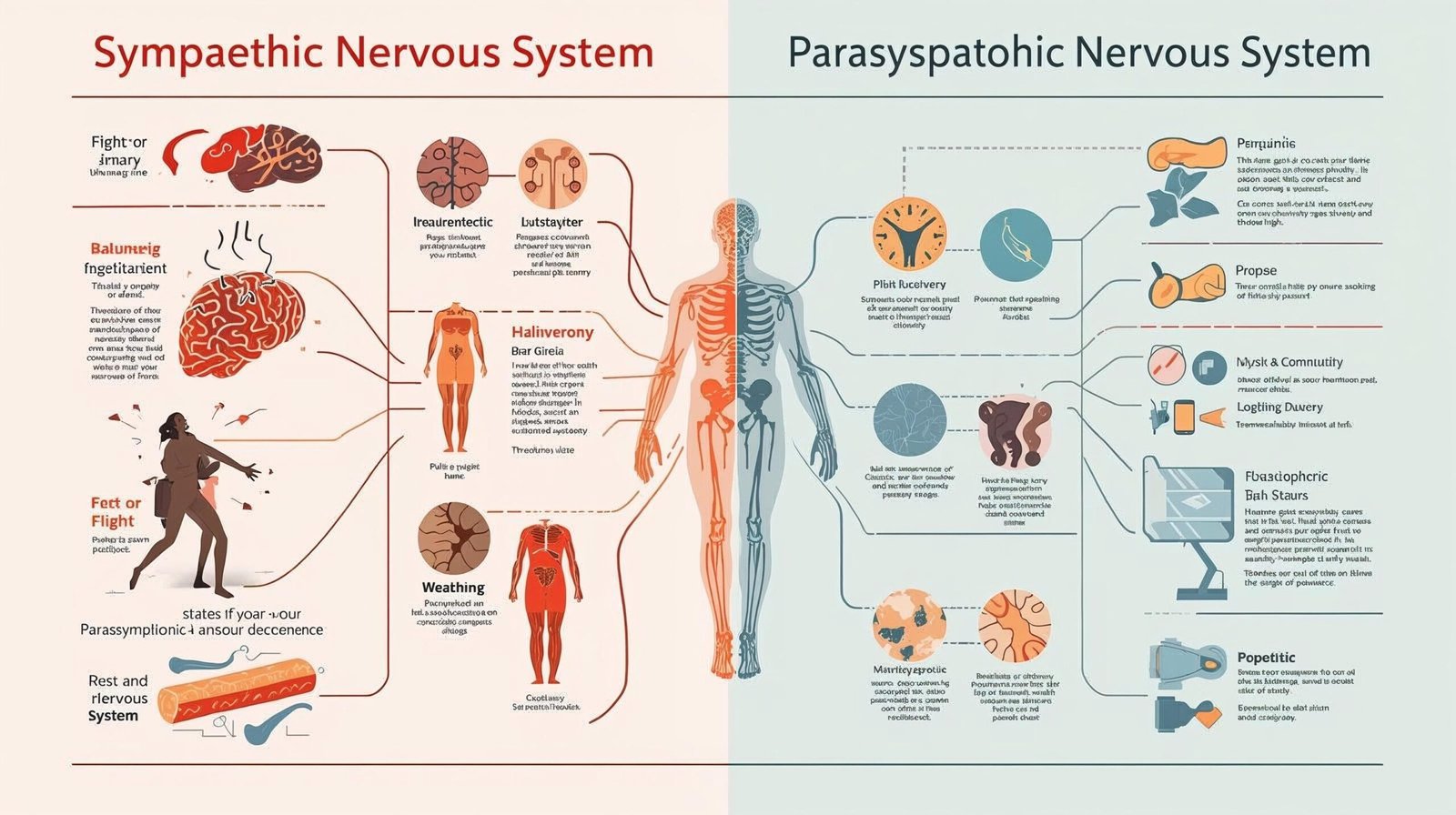
A critical component of this Waking the Tiger summary is Levine’s explanation of the autonomic nervous system (ANS), which consists of:
-
The sympathetic nervous system (fight or flight)
-
The parasympathetic nervous system (rest, digestion, and recovery)
Trauma occurs when these systems become imbalanced. Instead of returning to equilibrium after a threat, the body remains stuck in survival mode. Levine refers to this state as incomplete biological activation, a condition that perpetuates fear long after the danger has vanished.
By emphasising physiology over pathology, this Waking the Tiger summary reveals why many trauma survivors fail to heal through talk therapy alone.
Somatic Experiencing: Levine’s Ground-Breaking Method
One of the most important contributions explored in this Waking the Tiger summary is the development of Somatic Experiencing (SE), a body-oriented therapeutic approach created by Levine.
Somatic Experiencing does not require the reliving or verbal recounting of traumatic events. Instead, it gently guides individuals to notice bodily sensations, micro-movements, and emotional shifts in a controlled and titrated manner.
Levine introduces key principles such as:
-
Titration – processing trauma in small, manageable doses
-
Pendulation – moving between states of discomfort and safety
-
Interoceptive awareness – sensing internal bodily cues
This Waking the Tiger summary makes it clear that healing occurs not through catharsis, but through gradual nervous system regulation.
Trauma Symptoms Explained Through a Biological Lens
Another vital section of this Waking the Tiger summary addresses the wide range of symptoms trauma can produce. Levine meticulously links physical and psychological symptoms to unresolved survival energy, including:
-
Chronic anxiety and panic attacks
-
Emotional numbness and dissociation
-
Hyper-vigilance and insomnia
-
Digestive disorders and immune dysfunction
-
Persistent feelings of helplessness
Rather than viewing these symptoms as disorders, Levine reframes them as adaptive survival responses that have lost their original purpose. This re-conceptualisation is one of the book’s most liberating insights and a recurring emphasis in this Waking the Tiger summary.
The Role of Fear, Immobility, and the Freeze Response
A particularly striking element in this Waking the Tiger summary is Levine’s examination of the freeze response, often overlooked in mainstream psychology.
When fight or flight is impossible, the nervous system may default to immobility—a state characterised by numbness, collapse, and dissociation. Levine explains that this response is biologically protective, but becomes pathological when it remains unresolved.
Through clinical case studies, Levine demonstrates how gently accessing and releasing frozen energy allows the body to complete its interrupted defensive responses. This Waking the Tiger summary emphasises that trauma healing does not require force, but patience, safety, and awareness.
Why Trauma Healing Does Not Require Re-Living Pain
One of the most reassuring messages conveyed in this Waking the Tiger summary is that healing does not necessitate emotional re-traumatisation.
Levine strongly critiques exposure-based therapies that overwhelm the nervous system by forcing individuals to relive traumatic memories. Instead, he advocates for bottom-up healing, allowing the body to guide the process organically.
This approach restores a sense of control and dignity to trauma survivors—an ethical dimension that makes Waking the Tiger particularly compelling and humane.
Scientific Foundations and Clinical Evidence
This Waking the Tiger summary would be incomplete without acknowledging Levine’s scientific rigor. The book integrates insights from neuroscience, physiology, psychobiology, and evolutionary biology.
Levine references research on:
-
Stress hormones such as cortisol and adrenaline
-
Brain-body communication pathways
-
Polyvagal theory foundations (later expanded by Stephen Porges)
Although written in accessible language, Waking the Tiger is firmly grounded in empirical observation and clinical practice, lending credibility to its unconventional claims.
Strengths of Waking the Tiger
From an academic and therapeutic standpoint, this Waking the Tiger summary highlights several enduring strengths:
-
A revolutionary body-based model of trauma
-
Compassionate and non-pathologising language
-
Practical exercises rooted in biological realism
-
Broad applicability beyond PTSD
-
Integration of science and experiential wisdom
Levine’s writing is measured, respectful, and devoid of sensationalism, enhancing the book’s intellectual authority.
Limitations and Criticisms
In the interest of balance, this Waking the Tiger summary must also acknowledge certain limitations.
Some readers may find the book’s anecdotal style less structured than conventional academic texts. Others may struggle to apply somatic concepts without professional guidance. Additionally, empirical validation of Somatic Experiencing continues to evolve, though contemporary research increasingly supports its effectiveness.
These limitations, however, do not diminish the book’s foundational contribution to trauma theory.
Who Should Read Waking the Tiger?
According to this Waking the Tiger summary, the book is particularly valuable for:
-
Trauma survivors seeking non-verbal healing methods
-
Therapists, counsellors, and psychologists
-
Yoga teachers and body-based practitioners
-
Medical professionals dealing with psychosomatic illness
-
Readers interested in neuroscience and human resilience
The book demands patience and introspection, but rewards the reader with profound insight.

Trauma, Memory, and the Body: A Deeper Philosophical Extension
A further and more contemplative reading of Waking the Tiger reveals that Peter A. Levine’s work extends beyond clinical trauma resolution into the realm of human philosophy and embodied memory. This extended waking the tiger summary interpretation positions trauma not merely as an individual affliction, but as a universal biological phenomenon embedded in the human condition.
Levine challenges the Cartesian separation of mind and body by asserting that memory is not exclusively cognitive. Traumatic memory, according to his framework, is primarily procedural and sensory, encoded in muscular tension, posture, breathing patterns, and visceral responses. This insight radically alters how healing must be approached, demanding attention to subtle physiological cues rather than conscious recollection alone.
Cultural Conditioning and the Suppression of Instinct
One of the more understated yet critical implications emerging from this waking the tiger summary is Levine’s critique of modern civilisation. Contemporary societies, in their pursuit of emotional restraint and productivity, often discourage spontaneous bodily expression. Crying, shaking, trembling, or collapsing are interpreted as weakness rather than biological completion.
This cultural repression interrupts the natural discharge of survival energy, resulting in accumulated stress that manifests as chronic illness, emotional dysregulation, and psychological rigidity. Levine does not argue for regression into primal behaviour; rather, he advocates for reintegrating instinct with awareness, allowing the nervous system to complete what culture has prematurely inhibited.
Trauma Across the Lifespan
Another dimension worth elaborating within this waking the tiger summary is the lifelong impact of early trauma. Levine emphasises that trauma is not limited to catastrophic events; it may arise from subtle, repeated experiences of neglect, emotional unavailability, or perceived threat during childhood.
These early imprints shape autonomic patterns that persist into adulthood, influencing relationships, self-perception, and stress tolerance. Importantly, Levine maintains an optimistic stance: the nervous system remains plastic throughout life. Even deeply entrenched trauma responses can be gently renegotiated through somatic awareness and safety-oriented intervention.
The Ethics of Gentle Healing
From an ethical standpoint, Waking the Tiger represents a moral shift in therapeutic philosophy. This waking the tiger summary underscores Levine’s insistence that healing must never replicate the violence of the original trauma. Therapeutic aggression, forced emotional exposure, or premature catharsis risk reinforcing helplessness rather than resolving it.
Levine’s methodology restores agency to the individual. The body is not treated as a passive object to be corrected, but as an intelligent participant in its own recovery. This ethical sensitivity elevates the book beyond technique, situating it as a humane manifesto for trauma-informed care.
Trauma, Society, and Collective Stress
While primarily focused on individual healing, Levine’s ideas also lend themselves to broader social analysis. This waking the tiger summary interpretation suggests that collective trauma—experienced through war, displacement, pandemics, and systemic insecurity—operates through the same biological mechanisms as personal trauma.
When societies fail to process collective fear and shock, symptoms emerge at scale: polarisation, aggression, emotional numbing, and institutional rigidity. Levine’s work implicitly calls for trauma-aware education, healthcare, and governance systems that prioritise nervous system regulation at both individual and communal levels.

Integration With Modern Neuroscience
Although Waking the Tiger predates many contemporary neuroscientific discoveries, its core assertions have aged remarkably well. This waking the tiger summary aligns closely with later research on neuroplasticity, interoception, and vagal tone.
Modern studies increasingly validate the idea that bottom-up approaches—those that engage bodily sensation before cognition—are essential for resolving trauma. Levine’s early insights anticipated these developments, reinforcing the book’s status as a foundational rather than peripheral text.
Practical Implications for Everyday Life
Beyond therapy rooms, Levine’s principles offer practical guidance for daily living. This waking the tiger summary interpretation encourages individuals to cultivate bodily awareness through simple practices: conscious breathing, mindful movement, sensory grounding, and respectful pacing.
By learning to recognise early signs of activation or collapse, individuals can intervene before stress escalates into trauma. This preventive dimension transforms Waking the Tiger from a recovery manual into a lifelong guide for emotional self-regulation.
Enduring Relevance in a High-Stress World
In an era defined by acceleration, uncertainty, and overstimulation, the relevance of Levine’s work has only intensified. This waking the tiger summary reinforces that trauma is not an anomaly afflicting a few, but a spectrum of nervous system responses affecting many.
Levine’s message is ultimately hopeful: the body possesses an intrinsic capacity for restoration when given safety, patience, and respect. Healing is not imposed from outside; it unfolds from within, guided by biological intelligence older than language itself.
The Quiet Power of Self-Regulation and Inner Safety
A subtle yet transformative theme running through Peter A. Levine’s work is the cultivation of inner safety. Healing, in Levine’s framework, is inseparable from the experience of safety at the physiological level. Without safety, the nervous system remains vigilant, defensive, and unable to integrate change. This insight reframes recovery not as a process of confrontation, but as one of reassurance and gradual trust-building.
Self-regulation emerges as a learned biological skill rather than a fixed trait. Individuals are not born incapable of managing stress; rather, overwhelming experiences disrupt the body’s natural regulatory rhythms. Levine’s approach patiently restores these rhythms by allowing the organism to sense when activation rises and when rest becomes possible. This oscillation between effort and ease mirrors natural cycles observed throughout the living world.
Another significant implication of this perspective lies in its rejection of moral judgement. Emotional reactions such as fear, withdrawal, or irritability are not interpreted as personal failures. They are understood as incomplete survival responses awaiting resolution. This compassionate reframing dismantles shame, which itself acts as a powerful inhibitor of recovery.
Levine’s emphasis on bodily awareness also fosters humility in healing. Progress is often quiet and incremental rather than dramatic. Small shifts in posture, breath, or sensation can signal profound internal reorganisation. By valuing these subtle markers, individuals learn to honour the body’s pace rather than imposing external expectations upon it.
Importantly, this philosophy encourages responsibility without blame. While individuals are not at fault for the injuries inflicted by overwhelming experiences, they are invited to participate actively in their restoration. This balanced stance empowers without burdening, offering dignity instead of dependency.
Ultimately, Levine’s contribution extends beyond trauma resolution into a broader lesson on human adaptability. The nervous system, when treated with patience and respect, reveals a remarkable capacity for renewal. In a world increasingly characterised by speed and pressure, this message carries enduring relevance. Healing, as Levine demonstrates, unfolds not through force or urgency, but through attentive presence and biological wisdom patiently allowed to express itself.

Final Reflective Note
Taken together, these extended reflections affirm that Waking the Tiger is not merely a therapeutic text, but a profound reorientation of how humans understand suffering, resilience, and healing. This waking the tiger summary expansion deepens the original thesis by situating trauma within culture, ethics, neuroscience, and everyday life.
For readers of shubhanshuinsights.com, this work stands as a reminder that true recovery does not demand heroism or endurance, but attentiveness and compassion—towards the body, the nervous system, and the silent wisdom they carry.
Frequently Asked Questions (FAQs)
1. What is the core message of Waking the Tiger?
This Waking the Tiger summary reveals that trauma is a physiological condition rooted in nervous system dysregulation, not a psychological weakness.
2. Is Waking the Tiger suitable for beginners?
Yes. While scientifically grounded, the book is written in accessible language suitable for non-experts.
3. Does the book offer practical exercises?
Yes. Levine includes gentle somatic awareness exercises throughout the book.
4. Can trauma be healed without talking about it?
According to this Waking the Tiger summary, yes—healing can occur through bodily awareness without verbal recounting.
5. Is Somatic Experiencing evidence-based?
Research continues to support its efficacy, especially for PTSD and chronic stress disorders.
Conclusion: A Timeless Work on Healing and Human Survival
In conclusion, this Waking the Tiger summary affirms that Peter A. Levine’s work is not merely a book on trauma—it is a philosophical re-examination of human survival, resilience, and biological wisdom.
Waking the Tiger dismantles the myth that healing must be painful and instead proposes a gentler, more humane path rooted in nature itself. Its influence continues to shape modern trauma therapy, making it an indispensable read for anyone seeking genuine understanding rather than symptomatic relief.
At shubhanshuinsights.com, we believe books like Waking the Tiger remind us that healing is not about fixing what is broken, but about awakening what was never destroyed. Levine’s work stands as a powerful testament to the body’s innate intelligence and its unwavering drive toward wholeness.
Through awareness, patience, and embodied wisdom, Levine reminds us that healing is not heroic struggle, but the quiet restoration of balance, dignity, and humanity within ourselves.