The Most Important Thing by Howard Marks – A Definitive Review
In a financial world increasingly dominated by noise, speculation, algorithmic frenzy, and emotional excess, The Most Important Thing by Howard Marks stands apart as a work of rare intellectual sobriety. It is not a book that dazzles the reader with formulas or promises effortless riches. Instead, it offers something far more valuable: clarity of thought.
Howard Marks, the legendary co-founder of Oaktree Capital Management, distils decades of real-world investing experience into a philosophical framework that challenges conventional wisdom. The Most Important Thing is not about finding the next hot stock; it is about understanding risk, human behaviour, market cycles, and—above all—second-level thinking.
This review on shubhanshuinsights.com explores why The Most Important Thing is widely regarded as one of the most intellectually honest investment books ever written, and why its lessons remain profoundly relevant in every market environment.

Who Is Howard Marks?
Howard Marks is not merely a theorist. He is a practitioner of the highest order. As the co-founder of Oaktree Capital Management, he has managed billions of dollars with an emphasis on risk control and value investing.
What elevates Marks above many market commentators is his humility. Throughout The Most Important Thing, he repeatedly acknowledges uncertainty, fallibility, and the limits of knowledge—qualities rarely celebrated in modern finance.
His famous investor memos, admired by Warren Buffett himself, form the intellectual backbone of The Most Important Thing.
The Central Philosophy of The Most Important Thing
Despite its title, The Most Important Thing is not about identifying a single immutable truth. Rather, it is about recognising that what matters most changes with context.
Marks structures the book around a series of “most important things,” each representing a core investment principle. These principles collectively form a mental checklist that guards investors against arrogance, complacency, and emotional decision-making.
1. Second-Level Thinking
One of the most cited concepts in The Most Important Thing is second-level thinking.
First-level thinkers ask:
“Is this a good company?”
Second-level thinkers ask:
“What is the market expecting, and how does reality differ from those expectations?”
The Most Important Thing teaches that superior returns do not come from obvious truths, but from insights that are both correct and non-consensus. This alone separates great investors from average ones.
2. Understanding Risk—Not Avoiding It
Contrary to popular belief, The Most Important Thing does not advocate avoiding risk altogether. Instead, Marks argues that risk is inseparable from opportunity.
However, risk is not volatility. Risk is the probability of permanent capital loss.
This nuanced definition is one of the most valuable contributions of The Most Important Thing, especially in an era where price fluctuations are often mistaken for danger.
3. The Critical Importance of Risk Control
Marks famously states:
“If we avoid the losers, the winners will take care of themselves.”
In The Most Important Thing, risk control is not a defensive posture—it is an offensive advantage. Investors who survive downturns intact are positioned to capitalise when others are forced to retreat.
This philosophy resonates deeply with long-term investors and aligns perfectly with the ethos of capital preservation.
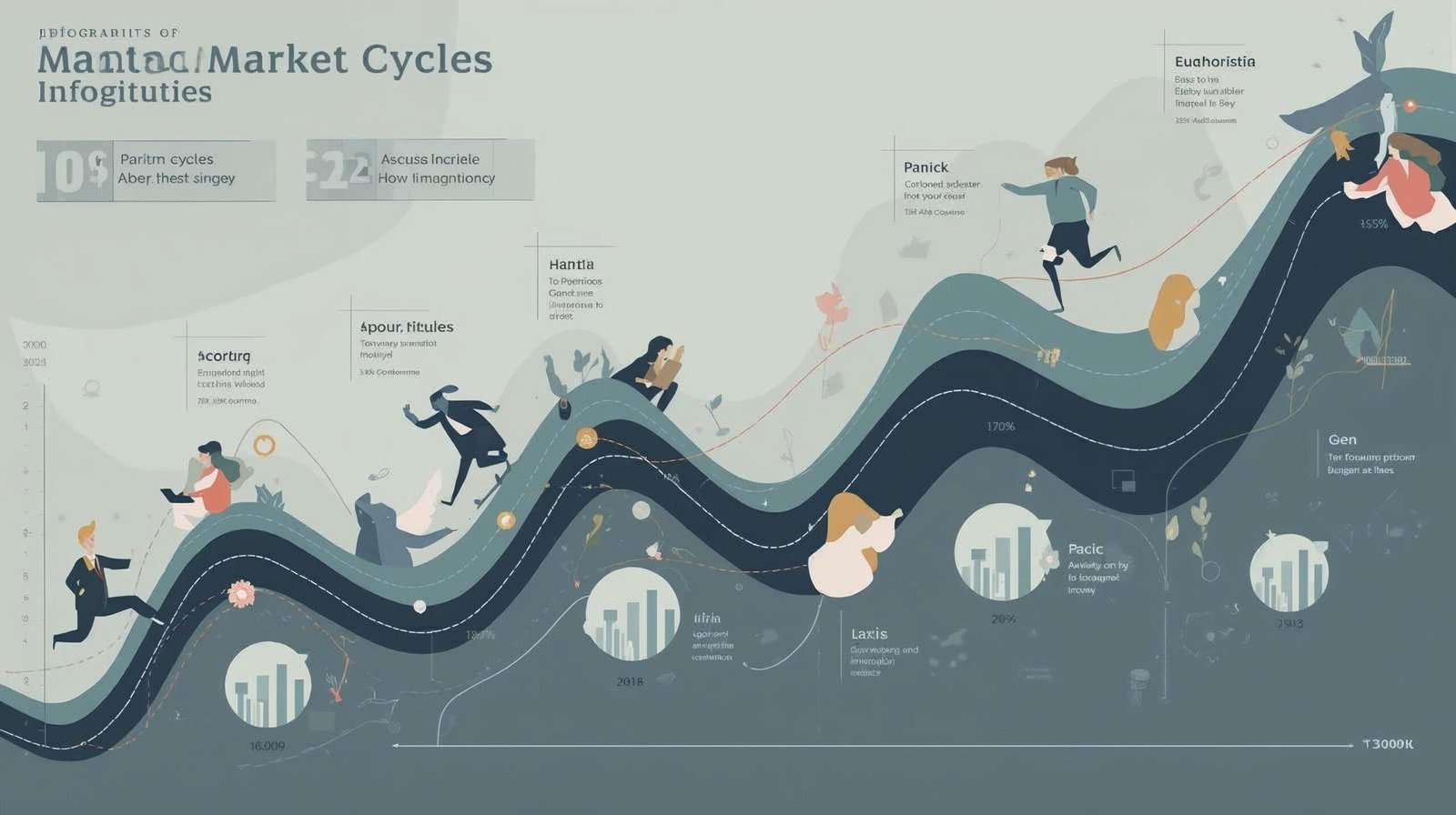
4. Market Cycles Are Inevitable
One of the most sobering lessons in The Most Important Thing is the inevitability of market cycles.
Boom and bust, greed and fear, optimism and despair—these are not anomalies; they are constants. Marks emphasises that understanding where we are in the cycle is more important than predicting exact market tops or bottoms.
Ignoring cycles, according to The Most Important Thing, is one of the gravest mistakes an investor can make.

5. The Danger of Overconfidence
Financial history is littered with brilliant minds undone by arrogance. The Most Important Thing repeatedly warns against overconfidence, especially during prolonged bull markets.
When success breeds complacency, standards erode. Risk is underestimated. Discipline disappears.
Marks reminds readers that being right too often can be more dangerous than being wrong occasionally.
6. Contrarianism with Discipline
The Most Important Thing champions contrarian thinking—but not reckless contrarianism.
Marks is clear: being contrarian only has value when the crowd is wrong. Blindly opposing consensus without rigorous analysis is merely stubbornness.
True contrarianism requires emotional resilience, patience, and the willingness to appear wrong before being proven right.
7. The Price You Pay Matters
A recurring theme in The Most Important Thing is valuation discipline.
A great asset bought at an excessive price becomes a poor investment. Conversely, an average asset bought cheaply can generate excellent returns.
This principle reinforces the timeless wisdom that price and value are not the same—a distinction many investors forget during euphoric markets.
Writing Style and Structure
The prose of The Most Important Thing is refreshingly direct. Marks avoids jargon wherever possible, favouring clear explanations and real-world examples.
The book is structured as a series of essays, allowing readers to reflect deeply on each concept. This makes The Most Important Thing a book that rewards rereading—each cycle of experience reveals new layers of meaning.
Why The Most Important Thing Endures
Unlike many finance books tied to specific eras or strategies, The Most Important Thing is timeless. Its lessons apply equally to equities, bonds, real estate, and private investments.
What makes The Most Important Thing enduring is its focus on human behaviour—the one variable that never changes.
Who Should Read This Book?
The Most Important Thing is essential reading for:
-
Long-term investors
-
Value investors
-
Finance students
-
Portfolio managers
-
Serious individual investors seeking intellectual discipline
It is not suitable for those seeking shortcuts, speculation, or quick profits.
Key Strengths of The Most Important Thing
-
Profound intellectual honesty
-
Emphasis on risk and humility
-
Real-world applicability
-
Endorsements by legendary investors
-
Timeless relevance
These strengths explain why The Most Important Thing continues to be recommended by professionals worldwide.
The Psychological Discipline Behind Superior Investing
One of the most understated yet profound contributions of Howard Marks lies in his emphasis on psychological discipline. While technical knowledge can be acquired through study, emotional control is forged only through experience, reflection, and humility. Markets are not merely mechanisms of price discovery; they are mirrors reflecting collective human behaviour—fear, greed, envy, impatience, and overconfidence.
Marks underscores that the greatest investment errors rarely stem from lack of intelligence. Rather, they arise from emotional lapses during periods of stress or exuberance. Investors abandon discipline at precisely the moments when discipline is most required. This psychological fragility explains why rational strategies fail when emotions overwhelm judgment.
The book repeatedly urges readers to cultivate emotional resilience—to remain grounded when markets soar and resolute when they collapse. This inner stability, according to Marks, is not optional; it is foundational.
Patience as a Competitive Advantage
In a world obsessed with speed, patience has become a contrarian virtue. Marks presents patience not as passivity, but as deliberate restraint. Waiting for favourable conditions, adequate margins of safety, and mispriced opportunities is not inactivity—it is strategic discipline.
Many investors feel compelled to act continuously, mistaking movement for progress. Marks dismantles this illusion by explaining that inactivity can be the most rational course of action when opportunities are scarce. Capital preserved during unfavourable conditions becomes powerful ammunition when circumstances reverse.
Patience, therefore, is not simply a personal virtue; it is a structural advantage. Those who can endure periods of inactivity without emotional discomfort are better positioned to act decisively when true opportunities emerge.
The Illusion of Forecasting Precision
Another enduring lesson is the inherent limitation of forecasting. Marks does not deny the usefulness of informed expectations, but he rejects the false confidence often associated with precise predictions. Economic variables are interdependent, nonlinear, and influenced by unpredictable human responses.
The belief that markets can be forecasted with accuracy fosters complacency and excessive risk-taking. Marks argues that acknowledging uncertainty is not a weakness; it is a prerequisite for intelligent decision-making. By accepting the limits of knowledge, investors can focus on preparation rather than prediction.
This philosophy encourages probabilistic thinking—evaluating outcomes in terms of likelihood rather than certainty. Such thinking promotes flexibility and reduces the emotional shock when reality diverges from expectations.
The Role of Humility in Long-Term Success
Humility emerges as a recurring ethical and intellectual theme. Marks repeatedly cautions against the dangers of intellectual arrogance, particularly after periods of success. History demonstrates that prolonged success often breeds a false sense of invincibility.
True humility does not mean underestimating one’s abilities; it means recognising the role of luck, favourable conditions, and external variables. By maintaining humility, investors remain open to opposing views, critical feedback, and continuous learning.
This mindset fosters adaptability—a trait essential for survival in evolving markets. Those who cling rigidly to outdated assumptions are eventually humbled by reality.
Risk Perception Versus Risk Reality
A subtle yet powerful distinction made throughout the book is the difference between perceived risk and actual risk. When optimism is widespread, perceived risk declines even as actual risk increases. Conversely, during periods of pessimism, perceived risk rises while actual risk may diminish.
Marks urges readers to resist the emotional contagion of the crowd. Popular sentiment is often a lagging indicator, not a reliable guide. Understanding this asymmetry enables investors to act rationally when others react emotionally.
This inversion between perception and reality is one of the most exploitable inefficiencies in markets, yet it remains underutilised due to psychological discomfort.

Why Average Thinking Produces Average Results
Marks emphasises that extraordinary results require non-average thinking. However, non-average thinking is inherently uncomfortable because it involves standing apart from consensus. Social validation, deeply ingrained in human psychology, discourages deviation from the crowd.
Investors who consistently align with consensus thinking may achieve average outcomes, but rarely exceptional ones. Superior results require independent analysis, emotional fortitude, and the willingness to endure periods of underperformance.
Marks does not glorify contrarianism for its own sake. Instead, he frames it as a consequence of rigorous analysis rather than a goal in itself. When evidence diverges from popular belief, independent thinkers must follow evidence—even at the cost of temporary discomfort.
The Asymmetry Between Losses and Gains
A recurring analytical insight in the book is the asymmetric nature of losses and gains. A loss of 50 percent requires a subsequent gain of 100 percent merely to break even. This mathematical reality underscores the disproportionate impact of losses on long-term performance.
Marks argues that avoiding severe losses is more important than capturing every gain. This perspective challenges the aggressive pursuit of upside at the expense of downside protection.
By prioritising capital preservation, investors ensure longevity—the most underestimated variable in compounding wealth. Survival, not brilliance, is the primary determinant of long-term success.
Experience as the Ultimate Teacher
While theory provides a framework, Marks acknowledges that true understanding emerges through experience. Market cycles imprint lessons that no textbook can replicate. Painful losses, missed opportunities, and emotional stress shape judgment in ways abstract learning cannot.
However, experience alone is insufficient unless accompanied by reflection. Marks advocates for deliberate learning—examining decisions, outcomes, and emotional responses to extract durable insights.
This reflective practice transforms experience into wisdom, enabling investors to respond more effectively to future challenges.
Why Simplicity Is Often Superior
In contrast to complex financial engineering, Marks consistently advocates for simplicity. Complexity often obscures risk rather than mitigating it. Financial innovations, while intellectually impressive, frequently introduce hidden vulnerabilities.
Simple strategies grounded in fundamental principles are more transparent, adaptable, and resilient. They allow investors to understand what they own, why they own it, and under what conditions it may fail.
Marks does not reject sophistication outright; he rejects unnecessary complexity that creates a false sense of security.
Ethical Responsibility in Capital Allocation
Beyond returns, the book subtly addresses the ethical dimension of investing. Capital allocation influences businesses, employment, innovation, and societal outcomes. Reckless risk-taking does not merely harm portfolios; it destabilises institutions and livelihoods.
Marks’ emphasis on prudence reflects an ethical responsibility toward clients and stakeholders. Intelligent investing, in this view, is not solely a personal pursuit—it carries broader implications.
This ethical undertone distinguishes the book from purely profit-driven narratives and reinforces the moral dimension of disciplined decision-making.
Relevance Across Generations and Markets
The principles articulated transcend geography, asset classes, and generations. Whether applied to equities, fixed income, real assets, or private markets, the underlying logic remains consistent.
Markets evolve, instruments change, and technologies advance, but human behaviour remains constant. This continuity explains why the book continues to resonate with new generations of investors despite shifting market structures.
The timeless nature of these insights ensures their applicability long after trends fade.

A Framework, Not a Formula
Perhaps the most important contribution of Howard Marks is his refusal to offer formulas. Instead, he provides a framework—a way of thinking that adapts to changing conditions.
Formulas promise certainty and ease. Frameworks demand effort, judgment, and accountability. The latter is harder, but infinitely more valuable.
By encouraging readers to think rather than follow, Marks empowers them to navigate uncertainty with confidence and restraint.
Final Reflective Commentary from shubhanshuinsights.com
In an age of information overload and intellectual shortcuts, the enduring value of this work lies in its insistence on thoughtful restraint. It reminds readers that wisdom in investing is not loud, fast, or flamboyant. It is quiet, patient, and deeply analytical.
For those committed to long-term excellence rather than short-term excitement, the principles discussed here serve as an intellectual compass—steady, disciplined, and remarkably resilient.
Frequently Asked Questions (FAQs)
1. Is The Most Important Thing suitable for beginners?
Yes, although some concepts may require slow, thoughtful reading. Beginners will gain a strong philosophical foundation.
2. Does the book provide stock recommendations?
No. The Most Important Thing focuses on principles, not specific investments.
3. How is this book different from other investing books?
It emphasises how to think, not what to buy—a distinction that defines its greatness.
4. Is The Most Important Thing still relevant today?
Absolutely. Market psychology and risk dynamics remain unchanged.
5. How many times should one read this book?
Ideally, once every market cycle. Each reading offers new insights.
Conclusion: Why This Book Truly Matters
In an industry obsessed with prediction, The Most Important Thing teaches preparation. In a culture addicted to certainty, it embraces uncertainty with wisdom.
Howard Marks does not promise success. He offers something far rarer: the tools to avoid failure.
For readers of shubhanshuinsights.com, The Most Important Thing is not merely a book—it is a mental framework, a safeguard against emotional excess, and a lifelong companion in the pursuit of intelligent investing.
If you read only one investment book to refine your thinking rather than inflate your ego, let it be The Most Important Thing.
💬 Final Thought from shubhanshuinsights.com
True investment mastery begins not with brilliance, but with humility—and The Most Important Thing teaches that lesson with quiet, devastating clarity.
Ultimately, enduring success in investing is neither accidental nor dramatic. It is the cumulative outcome of sound judgment, emotional restraint, and intellectual honesty applied consistently over time. Readers who internalise these principles will find themselves better equipped not merely to endure uncertainty, but to navigate it with confidence, composure, and uncommon clarity across all market conditions.