The Key Muscles of Yoga by Ray Long: A Definitive Anatomy-Driven Guide to Intelligent Yoga Practice
In the contemporary yoga world, where posture often eclipses principle and flexibility is mistakenly equated with mastery, the key muscles of yoga by Ray Long emerges as a profoundly corrective text. Written by Ray Long, MD—an orthopaedic surgeon, anatomist, and lifelong yoga practitioner—this book is not merely instructional; it is revelatory. It bridges the often-ignored gap between traditional yoga wisdom and modern medical science, offering practitioners a safer, deeper, and more intelligent approach to asana practice.
Unlike generic yoga manuals, the key muscles of yoga by Ray Long does not focus on superficial alignment cues alone. Instead, it draws the reader into the living mechanics of the human body, revealing how muscles, joints, and connective tissues cooperate to create stability, mobility, and balance within each posture.
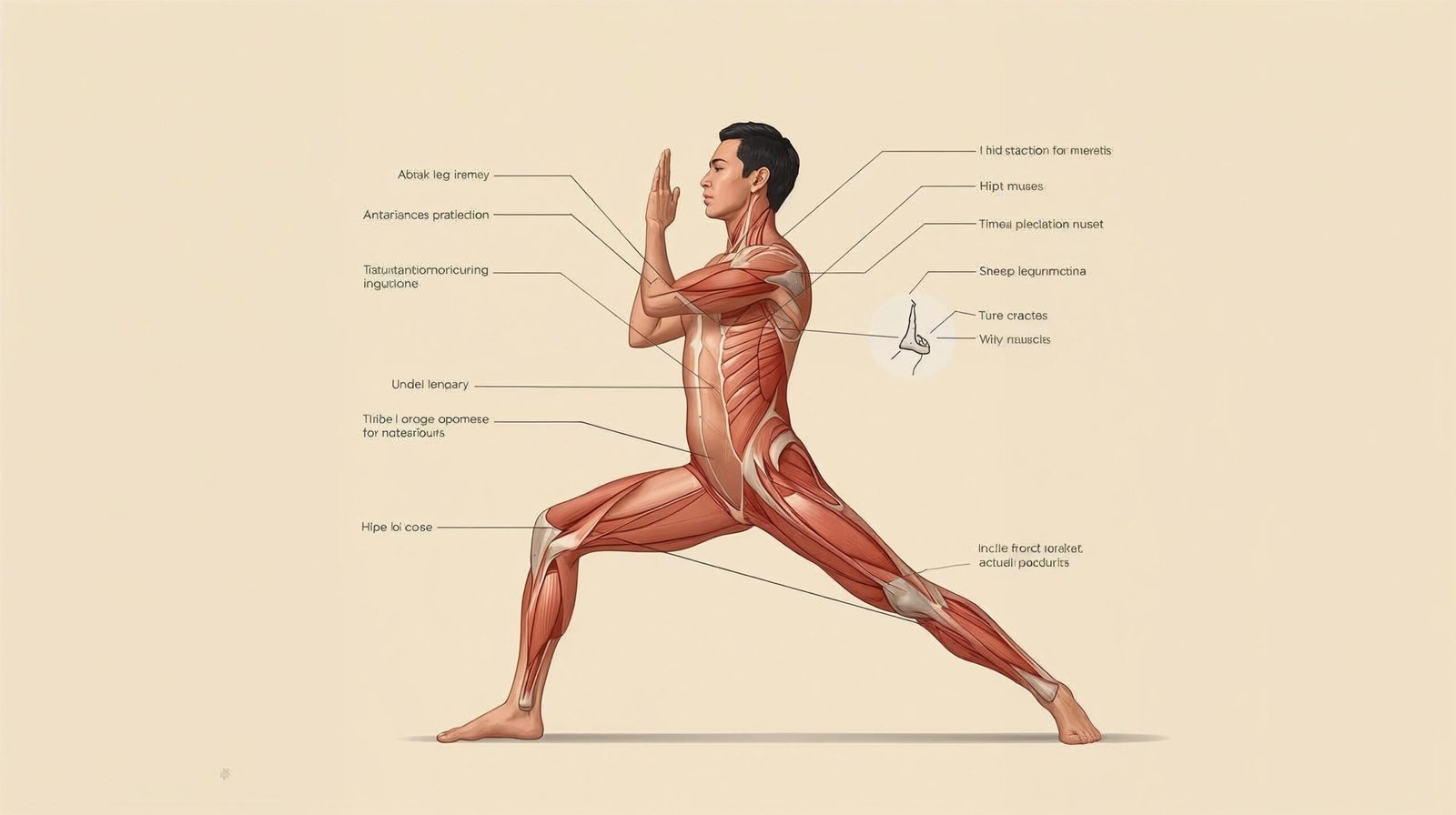
Understanding how key muscles activate to stabilise and support yoga poses
Who Is Ray Long, MD, and Why His Work Matters
To fully appreciate the key muscles of yoga by Ray Long, one must first understand the authority behind it. Ray Long, MD, is not a casual commentator on anatomy. He is a board-certified orthopaedic surgeon with decades of clinical experience and advanced training in anatomy, biomechanics, and musculoskeletal medicine. Importantly, he is also a committed yoga practitioner who understands yoga not merely as physical exercise but as an integrated discipline.
This dual expertise allows Long to translate complex anatomical concepts into practical insights that directly serve yoga practitioners. The key muscles of yoga by Ray Long stands apart precisely because it speaks fluently to both the scientific mind and the yogic spirit.
The Central Thesis of the Book
At its core, the key muscles of yoga by Ray Long argues that yoga postures cannot be practised safely or effectively without understanding muscular engagement. Yoga is not about passively sinking into poses; it is about conscious activation, reciprocal inhibition, and balanced force distribution throughout the body.
Ray Long introduces the idea that muscles act in functional groups rather than isolation. When practitioners learn to activate the correct muscles at the correct time, flexibility improves naturally, joint integrity is protected, and the nervous system responds with greater ease.
Understanding the “Key Muscles” Concept
One of the most valuable contributions of the key muscles of yoga by Ray Long is the identification of primary muscular drivers within each posture. Rather than overwhelming the reader with every muscle involved, Long isolates the most influential muscle groups—those that govern movement, alignment, and stability.
These include:
Prime movers responsible for initiating action
Stabilising muscles that protect joints
Synergistic muscles that refine posture
Antagonistic muscles that regulate stretch
This clarity makes the key muscles of yoga by Ray Long exceptionally practical. Even complex anatomical information becomes immediately applicable on the mat.
Anatomy Visualisation: A Revolutionary Teaching Tool
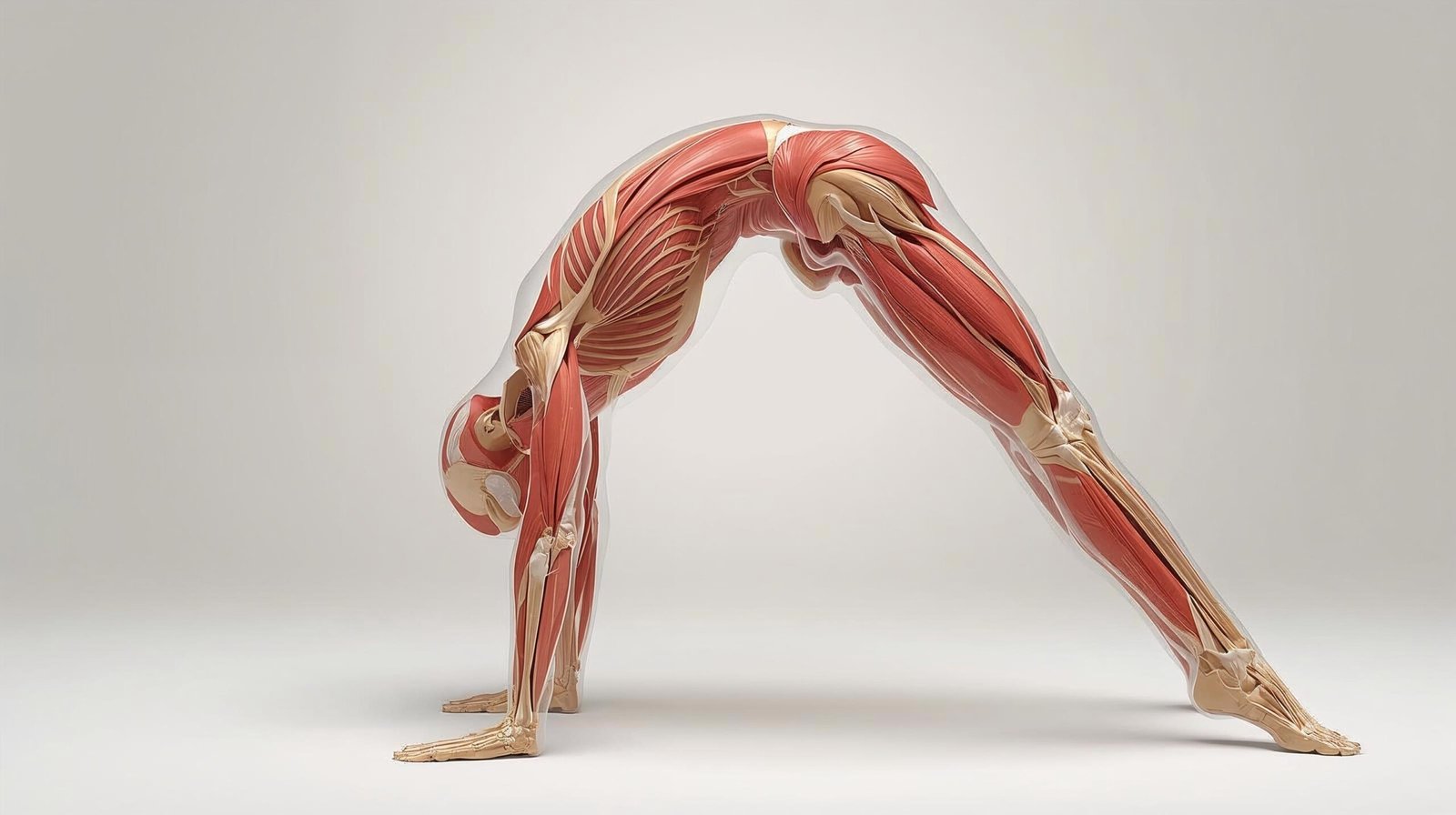
A defining feature of the key muscles of yoga by Ray Long is its stunning anatomical illustrations. These are not decorative images; they are educational instruments. The illustrations allow practitioners to visualise muscle engagement beneath the skin while performing asanas.
This visual learning approach accelerates understanding and retention. When a practitioner can see the iliopsoas engaging in hip flexion or the gluteus medius stabilising the pelvis, internal awareness increases dramatically.
Such visual intelligence transforms yoga from a mechanical routine into a mindful, embodied science.
How the Book Improves Safety in Yoga Practice
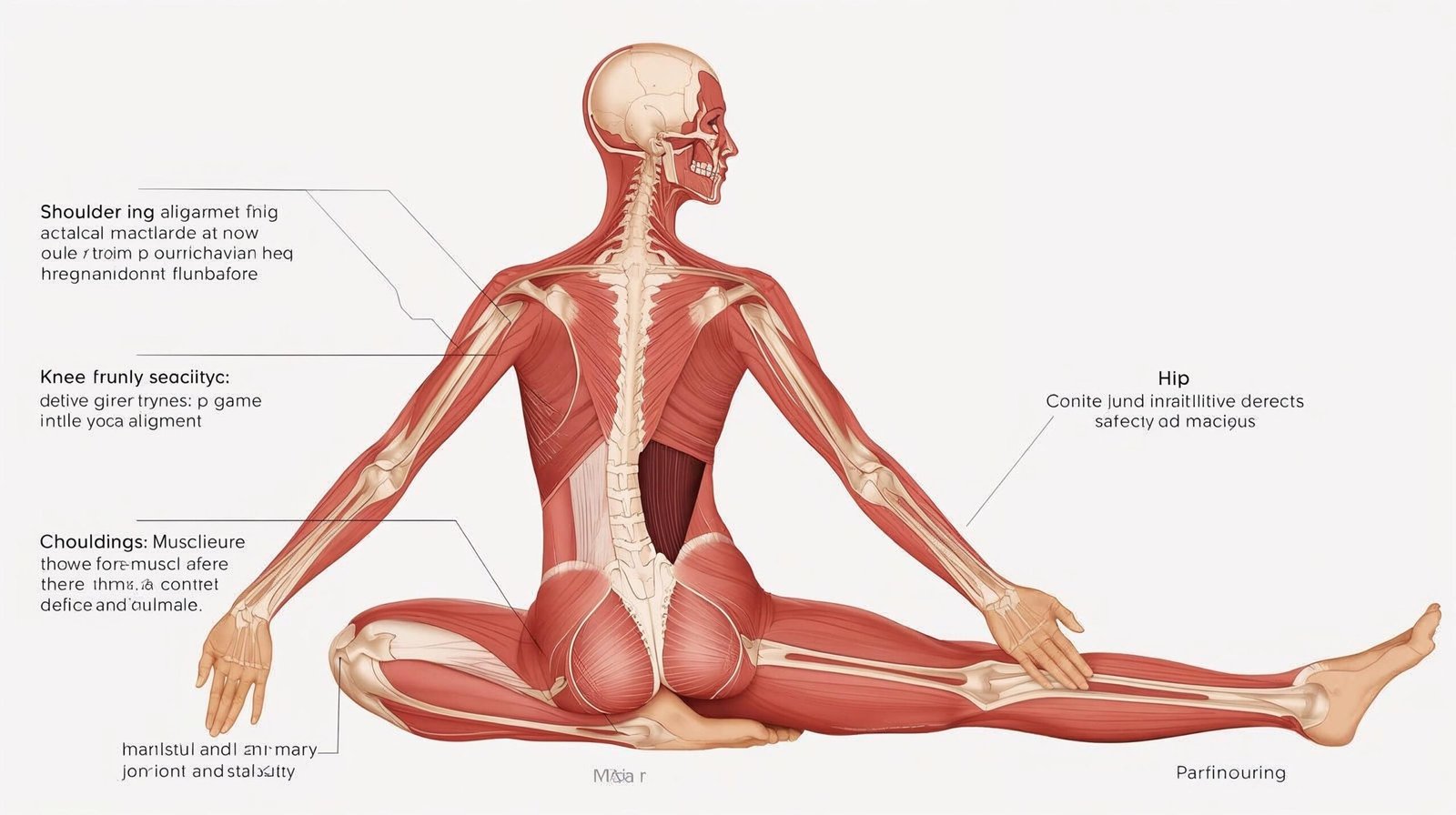
Injuries in yoga often arise not from advanced postures but from poor muscular engagement. The key muscles of yoga by Ray Long addresses this issue directly by teaching practitioners how to protect vulnerable joints—particularly the knees, shoulders, hips, and lumbar spine.
Ray Long explains how improper stretching without muscular support can destabilise joints. He emphasises co-contraction, controlled engagement, and gradual progression. As a result, the key muscles of yoga by Ray Long is particularly valuable for:
Yoga teachers
Long-term practitioners
Rehabilitation-focused students
Anyone recovering from injury
Bridging Traditional Yoga and Modern Science
What makes the key muscles of yoga by Ray Long exceptional is its respect for yoga’s philosophical roots while embracing scientific accuracy. Long does not dismiss traditional teachings; instead, he clarifies them through anatomy.
Concepts such as sthira sukham asanam (steadiness and ease) gain new meaning when interpreted through muscular balance. Strength and relaxation are no longer abstract ideals but measurable physiological states.
How proper muscle activation protects vulnerable joints in yoga practice
Application Across Yoga Styles
Although grounded in classical asana practice, the key muscles of yoga by Ray Long transcends stylistic boundaries. Whether one practises Hatha, Vinyasa, Iyengar, or Ashtanga yoga, the principles remain universally applicable.
The book does not prescribe rigid sequences. Instead, it offers anatomical intelligence that adapts to any style. This universality ensures the book’s long-term relevance.
The Role of Muscle Engagement in Flexibility
One of the most misunderstood aspects of yoga is flexibility. The key muscles of yoga by Ray Long dispels the myth that flexibility is achieved through passive stretching. Long demonstrates how intelligent muscle engagement actually creates deeper, safer range of motion.
Through reciprocal inhibition and neuromuscular coordination, muscles learn to release naturally. This insight alone makes the key muscles of yoga by Ray Long invaluable to practitioners struggling with stiffness or plateaus.
Pedagogical Value for Yoga Teachers
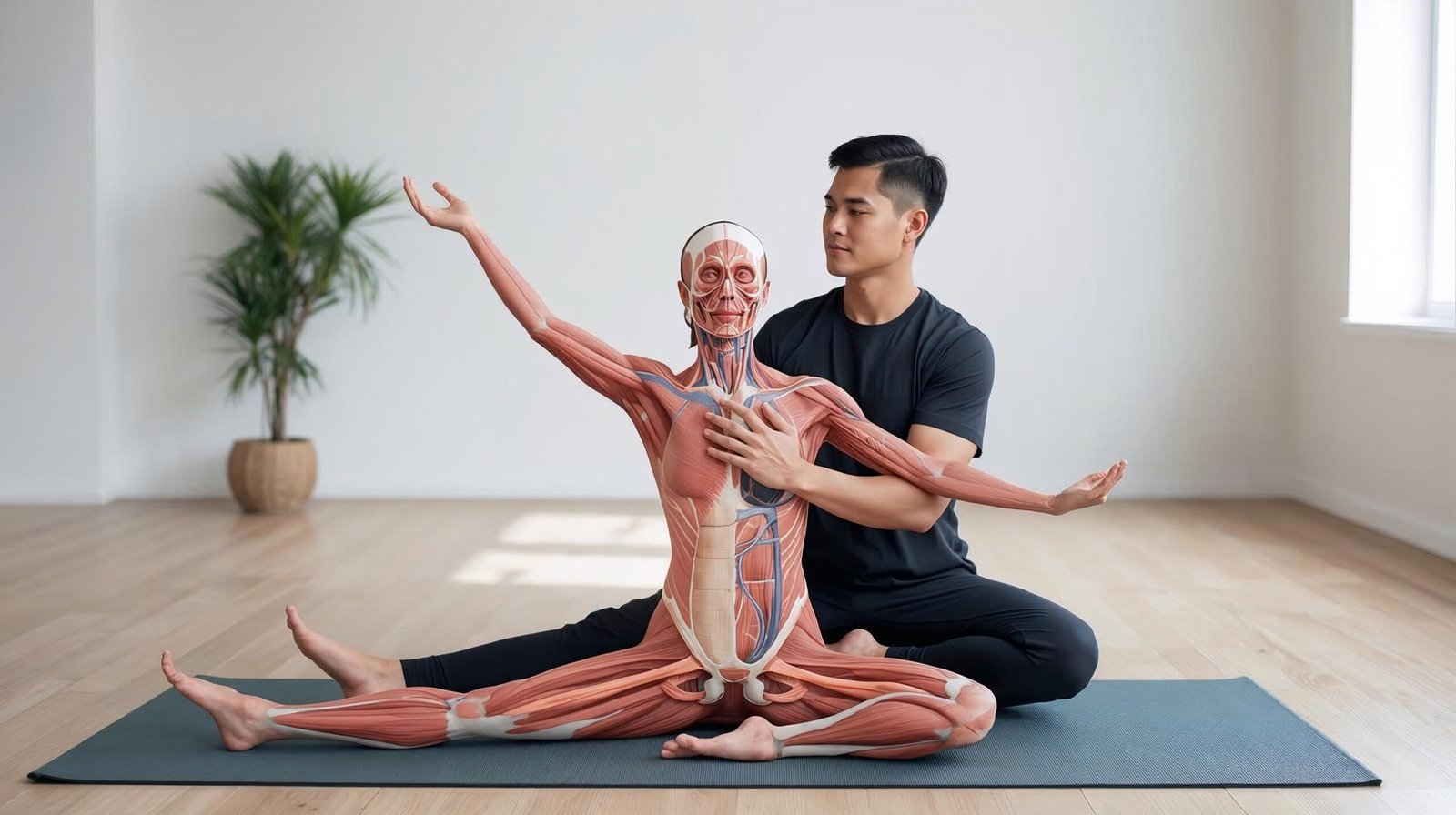
For yoga teachers, the key muscles of yoga by Ray Long functions as an advanced training manual. It equips teachers with precise language, anatomical confidence, and injury-preventive strategies.
Teaching shifts from external shape correction to internal awareness cultivation. Students learn why a pose feels stable or unstable, not merely how it should look.
Intellectual Depth Without Intimidation
Despite its scientific foundation, the key muscles of yoga by Ray Long avoids unnecessary complexity. Medical terminology is explained clearly, and concepts are layered progressively.
This balance ensures accessibility without dilution. Beginners gain foundational understanding, while advanced practitioners uncover deeper insights with repeated reading.
Why This Book Demands Slow, Reflective Reading
The key muscles of yoga by Ray Long is not a book to skim. Its value lies in reflection, application, and repeated study. Each chapter invites the reader to pause, practise, and observe bodily responses.
Such mindful engagement transforms reading into embodied learning.
The Psychological and Neuromuscular Intelligence of Yoga Practice
One of the least discussed yet most profound contributions of the key muscles of yoga by ray long lies in its exploration of neuromuscular intelligence. Yoga, when practised with anatomical awareness, becomes not merely a physical discipline but a sophisticated dialogue between the nervous system and the musculoskeletal framework. Ray Long subtly reinforces the idea that muscles do not act independently; they are governed by neural signals that determine tone, timing, and coordination.
This understanding reshapes the practitioner’s relationship with effort. Instead of forcing range or mimicking external form, one begins to cultivate refined motor control. Each posture becomes an exercise in proprioception—an internal sensing of body position and movement. Such awareness significantly reduces unconscious strain and transforms yoga into a practice of intelligence rather than endurance.
The connection between the nervous system and muscle control in yoga
Muscle Activation as a Gateway to Mindfulness
True mindfulness in yoga does not arise solely from breath awareness or stillness; it emerges from conscious engagement with bodily mechanics. The key muscles of yoga by ray long demonstrates that intentional muscle activation anchors the mind in the present moment. When attention is directed toward subtle muscular engagement, mental distraction diminishes naturally.
This integration of anatomy and awareness offers a corrective to the increasingly aesthetic-driven yoga culture. Postures cease to be static shapes and instead become living processes. Every micro-adjustment—whether stabilising the scapulae or grounding through the feet—demands attentiveness. In this sense, anatomical precision becomes a form of meditation in motion.
Reframing Strength in Yoga Philosophy
Strength in yoga has long been misunderstood as muscular bulk or visual exertion. Ray Long reframes strength as controlled engagement combined with intelligent release. The key muscles of yoga by ray long articulates this philosophy through anatomy rather than abstraction. Muscles are not engaged maximally but optimally—only as much as necessary to maintain integrity and balance.
This principle aligns seamlessly with yogic ideals of moderation and sustainability. Overactivation leads to rigidity; underactivation invites collapse. The practitioner’s task is to find the equilibrium point where effort supports ease. Such understanding elevates yoga beyond fitness and situates it firmly within the realm of conscious movement science.
Long-Term Practice and Joint Longevity
One of the gravest risks in long-term yoga practice is cumulative joint stress. Unlike acute injuries, these develop silently over years of misaligned or unsupported movement. The key muscles of yoga by ray long offers a preventive framework by teaching practitioners how muscles shield joints from excessive load.
For example, proper engagement of the rotator cuff muscles protects the shoulder during weight-bearing poses, while balanced activation around the knee prevents ligament strain. These insights are particularly valuable for ageing practitioners who wish to maintain a lifelong relationship with yoga. The book implicitly advocates for longevity over extremity—a message both timely and necessary.
The Ethical Dimension of Anatomical Knowledge
An often-overlooked aspect of anatomical education in yoga is its ethical implication. Teachers wield significant influence over students’ bodies, and ignorance can result in harm. By emphasising responsibility through knowledge, the key muscles of yoga by ray long indirectly addresses teaching ethics.
Anatomical understanding empowers teachers to offer safer modifications, recognise individual limitations, and avoid dogmatic instruction. This ethical dimension elevates teaching from performance to stewardship. Informed guidance respects the diversity of bodies rather than imposing uniform standards.
The Book as a Reference Manual, Not a One-Time Read
Unlike narrative-driven yoga books, this work functions as a reference text meant for repeated consultation. Each return reveals deeper layers of understanding. The key muscles of yoga by ray long rewards patience and intellectual curiosity, making it particularly suited for practitioners who view yoga as a lifelong study rather than a short-term pursuit.
As the body evolves with age, injury, or increased experience, the relevance of anatomical insight only grows. What once seemed theoretical becomes experientially obvious. This enduring applicability secures the book’s place as a permanent fixture on the serious yogi’s shelf.
A visual guide to understanding internal muscle mechanics during yoga
Integrating Anatomy Without Losing the Soul of Yoga
A common fear among traditional practitioners is that anatomy may reduce yoga to mechanical exercise. Ray Long addresses this concern implicitly by presenting anatomy as a means of deepening—not replacing—inner awareness. The key muscles of yoga by ray long does not strip yoga of its spiritual essence; it grounds that essence in physical reality.
When the body moves with intelligence, the mind follows. When joints feel safe, breath flows freely. When effort is balanced, stillness arises naturally. Anatomy, in this context, becomes a servant of presence rather than an obstacle to it.
The Evolution of the Modern Yoga Practitioner
Modern yoga practitioners face challenges unknown to previous generations—sedentary lifestyles, repetitive stress, and information overload. The key muscles of yoga by ray long responds to these realities by offering a method that is both corrective and empowering.
Rather than prescribing rigid ideals, the book equips practitioners with principles adaptable to individual needs. This adaptability is crucial in an age where yoga must counterbalance the physical consequences of modern living.
Why This Book Gains Value with Experience
Interestingly, the value of this work increases as one’s practice matures. Beginners may initially focus on visible muscle engagement, but advanced practitioners begin to perceive subtler patterns—muscle tone, timing, and integration. The key muscles of yoga by ray long supports this progression by providing a framework that grows with the reader.
Such scalability is rare in yoga literature. Many books are either introductory or advanced; few successfully bridge both. This text accomplishes that balance with quiet authority.
A Necessary Antidote to Superficial Yoga Culture
In a landscape saturated with quick certifications and visually driven instruction, this book serves as an antidote. The key muscles of yoga by ray long reminds practitioners that yoga is not about appearance but about relationship—between muscles, joints, breath, and awareness.
It challenges readers to slow down, study, and respect the intelligence of the body. In doing so, it restores dignity to the practice and encourages a return to substance over spectacle.
Extended Reflection from shubhanshuinsights.com
At shubhanshuinsights.com, we believe that meaningful learning begins where superficial understanding ends. This book exemplifies that philosophy. It does not promise shortcuts or dramatic transformations; instead, it offers something rarer—clarity, safety, and depth.
For those willing to engage sincerely, this work becomes more than a book. It becomes a mentor—quiet, precise, and unwavering in its commitment to truth.
How anatomical knowledge enhances yoga instruction and learning
The Quiet Discipline of Anatomical Mastery
Beyond technique and terminology, this work encourages a deeper discipline—patience. Understanding how the body truly functions requires time, observation, and humility. Each posture becomes an experiment in awareness rather than a performance. Subtle shifts in engagement often reveal more progress than dramatic external changes, reminding practitioners that growth in yoga is frequently invisible yet profound.
The book also reinforces the importance of rest and integration. Muscular intelligence is not cultivated through constant effort alone, but through balanced cycles of activation and release. This rhythm mirrors the broader philosophy of yoga itself, where action is always tempered by reflection. Over time, such balance fosters resilience, allowing the body to adapt without strain.
Perhaps most importantly, the text nurtures respect for individual anatomy. No two bodies respond identically, and comparison becomes irrelevant when attention is directed inward. This perspective liberates practitioners from unrealistic expectations and encourages sustainable practice rooted in self-awareness. In a discipline often clouded by external validation, such grounding insight is both refreshing and necessary.
Frequently Asked Questions (FAQs)
1. Is the key muscles of yoga by Ray Long suitable for beginners?
Yes. While anatomically rich, the explanations are clear and structured. Beginners willing to learn will benefit greatly.
2. Do I need a medical background to understand the book?
No. Ray Long writes for practitioners, not surgeons. Medical concepts are explained in practical terms.
3. Can this book help prevent yoga injuries?
Absolutely. Injury prevention is one of the book’s strongest contributions.
4. Is the book relevant for yoga teachers?
It is essential reading for teachers seeking depth, precision, and anatomical authority.
5. Does the book focus only on muscles?
Primarily yes, but muscles are discussed in relation to joints, movement patterns, and nervous system response.
Final Verdict: A Landmark Work in Yoga Literature
In an era of superficial instruction and performance-driven yoga culture, the key muscles of yoga by Ray Long stands as a work of intellectual integrity and practical wisdom. It restores yoga to its rightful place as a discipline of awareness, precision, and respect for the human body.
This book does not promise instant mastery. Instead, it offers something far more valuable: understanding. Through knowledge comes safety, depth, and longevity in practice.
For anyone serious about yoga—not merely as exercise but as lifelong study—the key muscles of yoga by Ray Long is not optional reading; it is foundational.
Ultimately, this approach invites lifelong learning, embodied wisdom, and compassionate self-study, ensuring that yoga remains a source of strength, clarity, and quiet transformation for years to come.