Supertraining by Mel Siff & Yuri Verkhoshansky – A Monument of Scientific Strength Training
The book Supertraining by the late Dr. Mel C. Siff and the legendary Soviet sports scientist Yuri Verkhoshansky is not merely a training manual; it is an uncompromising scientific manifesto. Among strength coaches, elite athletes, and serious scholars of physical preparation, supertraining occupies a near-mythical status. It is revered, feared, misunderstood, and often quoted—but rarely mastered.
Unlike popular fitness books that dilute complex concepts for mass consumption, supertraining refuses to simplify. It demands intellectual discipline, physiological literacy, and an honest respect for the science of human adaptation. This is precisely why, decades after its publication, it remains one of the most authoritative texts ever written on strength, power, and athletic performance.

The Origins and Intellectual Lineage of Supertraining
To understand supertraining, one must first appreciate its origins. Yuri Verkhoshansky was one of the principal architects of modern plyometric and shock training methodologies in the Soviet Union. His work laid the foundation for explosive power development and long-term athletic adaptation.
Mel Siff, a biomechanist and sports scientist, acted as the bridge between Soviet research and Western coaching systems. The collaboration resulted in supertraining, a text that synthesised decades of Eastern European sports science with rigorous biomechanical and physiological analysis.
This is not a book written for commercial appeal. It is written for truth.
Why Supertraining Is Considered the Most Advanced Training Book Ever Written
What separates supertraining from conventional strength training literature is its uncompromising scientific depth. The book does not provide “programs” in the modern sense. Instead, it provides principles—immutable laws of adaptation that govern all effective training systems.
Key areas explored include:
-
Neurophysiological adaptation
-
Muscle fibre recruitment dynamics
-
Stretch-shortening cycle mechanics
-
Shock method and reactive strength
-
Long-term periodisation principles
-
CNS fatigue and recovery management
The reader is expected to think, analyse, and apply—not merely follow.
The Shock Method: The Heart of Supertraining
One of the most influential contributions of supertraining is the formal introduction of the shock method. Verkhoshansky’s research into depth jumps and reactive strength fundamentally changed how explosive power is trained.
The shock method exploits the stretch-shortening cycle by subjecting the neuromuscular system to extremely high eccentric loads, followed by immediate concentric action. This method, when applied correctly, produces extraordinary gains in explosive strength.
However, supertraining repeatedly warns against careless application. This is not training for beginners. The authors emphasise structural preparedness, tendon integrity, and neurological readiness.
A Brutally Honest Discussion on Overtraining and Adaptation
Unlike many modern texts that romanticise “training harder,” supertraining offers a sobering examination of overtraining, maladaptation, and chronic fatigue. The book explains that progress does not occur during training, but during recovery.
This perspective is central to the philosophy of supertraining. Excessive volume, poorly timed intensity, and inadequate recovery do not produce champions—they produce injuries and stagnation.
The authors’ discussion on delayed transformation and residual training effects remains unmatched even today.
Periodisation Reimagined Through Supertraining
While many coaches believe they understand periodisation, supertraining exposes how superficial most interpretations truly are. The book presents periodisation as a dynamic biological process rather than a rigid calendar-based model.
Key insights include:
-
The hierarchy of training effects
-
Residual strength and power qualities
-
The sequencing of training stimuli
-
Accumulation, transmutation, and realisation phases
This scientific framework has profoundly influenced modern block periodisation models.
Why Supertraining Is Often Misunderstood
The difficulty of supertraining is both its greatest strength and its greatest barrier. The language is dense. The references are academic. The concepts require repeated reading.
Many coaches quote the book without fully understanding it. Others abandon it entirely, mistaking complexity for irrelevance. In truth, supertraining is timeless precisely because it refuses to chase trends.
Who Should Read Supertraining (And Who Should Not)
Supertraining is not for casual gym-goers. It is not for those seeking quick fixes or aesthetic-focused routines.
This book is ideal for:
-
Strength and conditioning coaches
-
Sports science students
-
Elite and sub-elite athletes
-
Researchers and biomechanists
Those unwilling to study physiology, biomechanics, and neural adaptation will find supertraining intimidating—but that is by design.

The Scientific Rigor That Modern Fitness Lacks
In an era dominated by social media certifications and algorithm-driven workouts, supertraining stands as a reminder of what true expertise looks like. Every claim is supported by research. Every method is contextualised within biological limits.
This scientific honesty is why supertraining continues to be cited in academic literature and elite coaching circles worldwide.
Legacy of Supertraining in Modern Coaching
Many modern training systems—whether they acknowledge it or not—are intellectual descendants of supertraining. Concepts such as reactive strength index, velocity-based training foundations, and CNS management can all trace their lineage back to this work.
The book’s influence extends far beyond its pages.
The Philosophical Depth Behind Scientific Training
Beyond physiology and biomechanics, this work possesses a philosophical dimension rarely acknowledged in fitness literature. It challenges the reductionist mindset that views training as a collection of isolated exercises. Instead, it frames athletic preparation as an integrated biological, neurological, and psychological process.
The authors insist that every physical stimulus interacts with the organism as a whole. Muscular strength cannot be separated from nervous system efficiency, nor can power development be divorced from recovery capacity. This holistic perspective elevates the book from a manual to a philosophical treatise on human performance.
The Nervous System as the True Limiting Factor
One of the most important intellectual contributions of this text lies in its emphasis on neural adaptation. While many popular approaches focus almost exclusively on muscular hypertrophy, the authors repeatedly demonstrate that the nervous system governs force production, coordination, and rate of force development.
Training methods that excessively fatigue neural pathways compromise long-term progress. The book explains how excessive intensity, when applied without structural readiness, leads to decreased motor unit synchronisation and diminished reflex efficiency. This insight remains profoundly relevant, especially in modern training environments dominated by maximal effort culture.
The Forgotten Role of Tendons and Connective Tissue
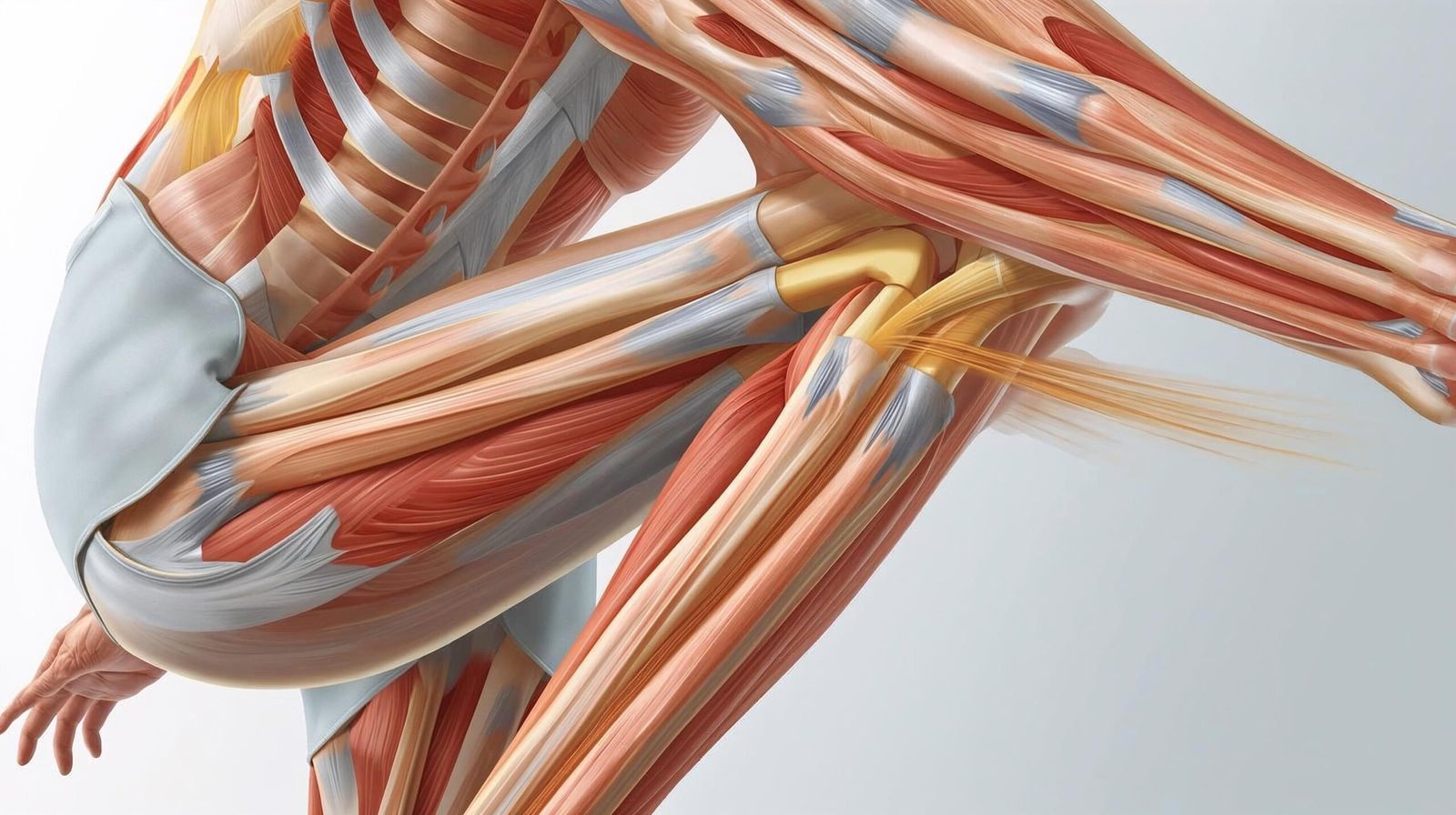
Another area of exceptional insight is the detailed discussion of connective tissue adaptation. Tendons, ligaments, and fascia adapt far more slowly than muscle fibres. Neglecting this biological reality leads to injury, stagnation, and chronic pain.
The authors explain how gradual exposure to increasing mechanical stress enhances elastic energy storage and release. This process is essential for explosive movement efficiency. The modern obsession with rapid progression often ignores these foundational principles, making this section particularly valuable for contemporary coaches and athletes.
Why Volume Is Not the Enemy—Ignorance Is
Contrary to the simplistic belief that high volume is inherently dangerous, the text presents a nuanced examination of workload management. Volume, when intelligently structured, serves as a critical driver of long-term adaptation.
The authors distinguish between productive workload and destructive excess. They argue that problems arise not from volume itself, but from poor sequencing, inadequate recovery, and misunderstanding of adaptive timelines. This balanced approach dismantles many modern myths surrounding minimalist training philosophies.
Delayed Training Effects and Long-Term Planning
One of the most intellectually demanding concepts presented is the notion of delayed training effects. Physical qualities do not always manifest immediately after stimulus application. Some adaptations require weeks or even months to fully emerge.
This principle has profound implications for planning. Short-term performance fluctuations should not be mistaken for long-term progress or regression. Coaches who chase immediate results often disrupt deeper adaptations still in development. Understanding delayed effects enables patience, precision, and strategic foresight.
Misinterpretation by the Modern Fitness Industry
Many contemporary training systems borrow selectively from the ideas presented in this book, often stripping them of context. Advanced methods are repackaged for mass consumption without adequate consideration of prerequisites.
This dilution has led to widespread misuse. Techniques designed for highly trained athletes are frequently applied to novices, resulting in injury and disappointment. The authors explicitly warn against this practice, emphasising that training methods must correspond to the athlete’s developmental stage.
A Scientific Rebuttal to Trend-Based Training
Fads rise and fall with predictable regularity. One decade glorifies instability training, another worships minimalism, and another advocates constant maximal effort. This book stands in stark opposition to trend-based thinking.
Rather than chasing novelty, it anchors training decisions in biological law. Mechanical principles, neural responses, and adaptive thresholds remain constant regardless of marketing cycles. This commitment to permanence over popularity is what gives the text its enduring authority.
The Ethical Responsibility of the Coach
An often-overlooked theme in the book is ethical responsibility. Coaches are entrusted with the physical wellbeing of athletes. Poor programming decisions can cause irreversible harm.
The authors argue that ignorance is not a neutral state—it is dangerous. Coaches must pursue education relentlessly, question assumptions, and respect biological limits. This ethical framework elevates coaching from instruction to stewardship.
Why This Work Demands Repeated Study
This is not a book that yields its value in a single reading. Its density requires patience, reflection, and repeated engagement. Each return to the text deepens understanding, particularly as the reader gains practical experience.
Concepts that initially appear abstract become vividly clear when observed in real-world training scenarios. This iterative learning process is one of the book’s greatest strengths.
Its Influence on Elite Athletic Systems
While rarely acknowledged publicly, many elite sporting institutions have quietly integrated these principles into their preparation models. Olympic programmes, professional teams, and military training systems have drawn heavily from the research presented.
The success of these systems serves as empirical validation. When applied with discipline and understanding, the methods produce resilient, powerful, and adaptable athletes.
The Psychological Discipline Required for Mastery
Understanding complex training theory requires intellectual humility. The book does not flatter the reader. It exposes gaps in knowledge and challenges comfortable assumptions.
This discomfort is productive. Growth—whether physical or intellectual—emerges from confronting limitations. Readers willing to endure this challenge are rewarded with clarity that few resources provide.
Timelessness in an Age of Distraction
In an era of short attention spans and algorithm-driven content, this work stands as an act of resistance. It demands focus, effort, and seriousness. These qualities are increasingly rare, yet increasingly valuable.
The book’s endurance across decades is proof that substance outlasts spectacle. Knowledge rooted in science does not expire.

The True Measure of Its Greatness
The greatest achievement of this text is not any single method or concept. It is the mindset it cultivates. Readers emerge more analytical, more cautious, and more respectful of human complexity.
Rather than providing answers, it teaches how to think. This intellectual independence is the highest form of education.
The Role of Biomechanics in Intelligent Training Design
A particularly compelling aspect of this work is its meticulous integration of biomechanics into training theory. Movement is not treated as an aesthetic phenomenon, but as a mechanical event governed by force vectors, leverage, joint angles, and temporal coordination. Every exercise, jump, or lift is analysed not merely for muscular involvement, but for its mechanical efficiency and transfer to sport-specific actions.
This biomechanical clarity enables practitioners to distinguish between exercises that appear similar on the surface but produce vastly different outcomes. It discourages blind exercise selection and instead promotes deliberate movement analysis. In doing so, it fosters a more rational and economical approach to training design—one rooted in efficiency rather than excess.
Why Simplicity Is Often a Sign of Mastery
One of the paradoxes explored implicitly throughout the text is that genuine sophistication often results in apparent simplicity. While the underlying theory is complex, its application—when fully understood—leads to cleaner programming decisions and fewer unnecessary interventions.
This stands in contrast to contemporary practices that equate complexity with effectiveness. Excessive variation, constant novelty, and overly complicated protocols frequently signal uncertainty rather than expertise. The authors’ restrained approach demonstrates that mastery lies in understanding what to exclude as much as what to include.
Adaptation as a Biological Conversation
Training is presented not as an act of domination over the body, but as a dialogue with it. Every stimulus sends a message, and the organism responds according to its current state, history, and recovery resources. When stimuli are appropriate, the response is positive adaptation. When they are excessive or poorly timed, the response is defensive.
This conceptualisation reframes preparation as a cooperative process rather than a coercive one. It encourages attentiveness, patience, and respect for individual variability—qualities often absent in rigid, one-size-fits-all systems.
The Importance of Technical Precision
Another enduring lesson is the value placed on technical execution. Power, strength, and speed are not solely products of effort; they are expressions of coordination. Poor technique compromises force transfer, increases injury risk, and blunts adaptation.
The authors repeatedly highlight that technical refinement should precede intensity escalation. This principle is especially relevant in modern environments where load progression is frequently prioritised over movement quality.
A Quiet Critique of Modern Convenience
Though never overtly polemical, the text implicitly critiques the modern desire for convenience. Meaningful development requires time, discipline, and intellectual engagement. There are no shortcuts to neurological efficiency or structural resilience.
This quiet insistence on effort over ease is perhaps one of the book’s most uncomfortable truths. Yet it is precisely this refusal to compromise that secures its enduring relevance.
Closing Addition
Ultimately, the lasting value of this work lies in its refusal to flatter the reader. It challenges assumptions, resists simplification, and demands accountability. In return, it offers clarity that few resources can match.
Such depth is rare—and increasingly necessary—in a field crowded with noise. For readers committed to substance over spectacle, this contribution remains indispensable.

Final Reflection
Few books reshape an entire field. Fewer still remain relevant across generations. This work has done both. It stands as a monument to scientific integrity, intellectual courage, and respect for the human organism.
For those willing to engage deeply, it offers insights that no trend, certification, or shortcut can replace. Serious knowledge demands effort—and rewards it generously.
Readers seeking similarly uncompromising, research-driven explorations of elite performance science can find more authoritative content at shubhanshuinsights.com, where depth is prioritised over popularity and truth is never diluted.
Frequently Asked Questions (FAQs)
1. Is supertraining suitable for beginners?
No. Supertraining is written for advanced practitioners with a strong foundation in training science.
2. How many times should supertraining be read?
At least three times. Each reading reveals deeper layers of understanding.
3. Is the information in supertraining still relevant today?
Absolutely. Human physiology has not changed, and neither have the principles of adaptation.
4. Does supertraining provide workout programs?
No. It provides principles, not templates.
5. Why is supertraining considered difficult to read?
Because it prioritises accuracy and depth over readability.
Conclusion: Supertraining Is Not a Book—It Is a Test
To read supertraining is to confront the limits of one’s knowledge. It strips away marketing illusions and exposes the raw mechanics of human performance. Few books demand so much from the reader—and give so much in return.
In the long history of strength training literature, supertraining remains unequalled in intellectual honesty and scientific authority. It is not fashionable. It is not easy. But it is true.
For those committed to understanding training at its deepest level, supertraining is not optional—it is essential.
More uncompromising, research-driven book insights await you at shubhanshuinsights.com, where serious knowledge is valued above trends, and truth is valued above convenience.