Peak Book Review: Secrets from the New Science of Expertise
In a world obsessed with natural talent, overnight success, and prodigies, Peak: Secrets from the New Science of Expertise by Anders Ericsson and Robert Pool arrives as a deeply unsettling—and profoundly liberating—book. It dismantles the comforting illusion that greatness is reserved for a gifted few and replaces it with something far more demanding: responsibility.
This peak book does not flatter the reader. Instead, it challenges long-held assumptions about intelligence, ability, and human potential. Drawing on decades of rigorous research, Ericsson—the pioneer of deliberate practice—argues that exceptional performance is almost always the result of structured, purposeful training rather than innate genius.
What makes this peak book exceptional is not merely its scientific grounding, but its moral clarity. It tells us, quite plainly, that excellence is earned, not bestowed.

The Central Argument of the Peak Book
At the heart of the peak book lies a radical yet evidence-based claim: talent is overrated. According to Ericsson, what separates experts from amateurs is not genetic superiority but the quality and consistency of their practice.
The authors introduce the concept of deliberate practice, a highly structured form of training that differs sharply from mindless repetition. Unlike ordinary practice, deliberate practice is:
-
Goal-oriented
-
Mentally demanding
-
Focused on specific weaknesses
-
Accompanied by immediate feedback
This principle is repeatedly reinforced throughout the peak book, using examples from music, chess, medicine, sports, and even memory competitions.
Deliberate Practice: The Backbone of the Peak Book
One cannot discuss the peak book without confronting deliberate practice in depth. Ericsson is unequivocal: practice alone is not enough. Only deliberate practice leads to measurable improvement.
The book carefully distinguishes between performance and practice. Most people, the authors argue, spend their time performing what they already know rather than stretching beyond their current capabilities. The peak book insists that true growth occurs only when one operates consistently at the edge of one’s competence.
This insight alone makes the peak book indispensable for students, professionals, athletes, and creatives alike.
Mental Representations: The Hidden Advantage of Experts
Another cornerstone of the peak book is the concept of mental representations. Experts perceive their domain differently because they have developed rich, detailed internal models that guide their actions.
For example, a chess grandmaster does not see individual pieces but recognises patterns instantly. A skilled physician does not merely observe symptoms but interprets them within a vast framework of experience.
The peak book explains that deliberate practice enhances these mental representations, allowing experts to process information faster, anticipate outcomes, and make fewer errors.
The Myth of the 10,000-Hour Rule
One of the most misunderstood ideas in popular psychology is the so-called 10,000-hour rule. The peak book takes great care to clarify this misconception.
Ericsson never claimed that time alone guarantees expertise. Instead, the peak book emphasises that how those hours are spent is far more important than the number itself. Ten thousand hours of casual practice may yield mediocrity, while fewer hours of deliberate practice can produce remarkable results.
This correction is one of the most valuable contributions of the peak book, restoring nuance to a concept that popular culture oversimplified.
The Role of Teachers and Coaches
The peak book underscores the indispensable role of expert teachers. Self-directed learning has its limits, particularly at advanced levels. Coaches identify weaknesses that learners often overlook and design exercises that target specific deficiencies.
According to the peak book, the most effective teachers do not merely impart knowledge—they structure practice in a way that accelerates skill acquisition.
This insight has profound implications for education systems, corporate training, and personal development programmes.
Can Anyone Become an Expert?
Perhaps the most provocative question addressed in the peak book is whether anyone can achieve high-level expertise. The answer, though cautiously framed, is largely affirmative.
The authors acknowledge biological constraints—height matters in basketball, for instance—but insist that within realistic boundaries, most individuals can far exceed their perceived limits.
The peak book therefore represents a philosophy of disciplined optimism. It neither indulges in motivational fantasy nor succumbs to genetic determinism.

Applications Beyond Traditional Expertise
One of the understated strengths of the peak book is its applicability beyond elite domains. The principles of deliberate practice can be applied to:
-
Public speaking
-
Writing and blogging
-
Leadership and management
-
Academic learning
-
Memory and cognitive skills
For readers like you, building intellectual authority through platforms such as shubhanshuinsights.com, the peak book offers a blueprint for sustained mastery rather than sporadic inspiration.
Criticisms and Limitations of the Peak Book
No serious review of the peak book would be complete without acknowledging its limitations. Some critics argue that Ericsson underestimates the role of motivation, personality traits, and environmental factors.
Others note that deliberate practice is mentally exhausting and emotionally taxing, making it difficult to sustain without strong external support.
However, these critiques do not diminish the core contribution of the peak book. Rather, they highlight the seriousness of the endeavour it proposes.
Why the Peak Book Matters Today
In an age dominated by viral success stories and superficial productivity hacks, the peak book offers something rare: intellectual honesty. It reminds us that mastery is slow, uncomfortable, and profoundly human.
The book’s message is almost ascetic in its discipline, yet deeply empowering. It restores dignity to effort and meaning to struggle.
For readers seeking depth over dopamine, the peak book is not merely relevant—it is essential.
The Science Behind Mastery
While the book underscores the importance of structured training, it also delves into the underlying neuroscience of expertise. Studies reveal that repeated, targeted practice physically changes the brain. Neural pathways become more efficient, connections between brain regions strengthen, and areas related to sensory processing and motor control expand. This neuroplasticity explains why individuals who train methodically outperform those who rely on intuition alone.
One particularly compelling example comes from music. In one study, novice pianists were compared with highly trained professionals. Brain scans revealed that experts developed significantly thicker gray matter in regions responsible for fine motor control and auditory perception. The more structured and deliberate the practice, the more pronounced the neurological adaptation. These findings provide a tangible, scientific explanation for why talent alone is insufficient.
Overcoming Plateaus
A common theme throughout the text is the inevitability of plateaus. Even highly motivated learners eventually reach stages where improvement slows or seems impossible. The book presents strategies for overcoming these stagnations:
-
Micro-goals: Breaking down complex skills into smaller, achievable objectives keeps learners motivated and allows for measurable progress.
-
Varying training methods: Changing the context or method of practice prevents mental stagnation and fosters creativity.
-
Seeking expert feedback: Guidance from experienced mentors provides fresh perspectives that learners often miss.
These strategies highlight that mastery is rarely linear. Understanding the cyclical nature of improvement—periods of rapid growth followed by plateaus—is essential for anyone striving to excel.

The Role of Motivation and Discipline
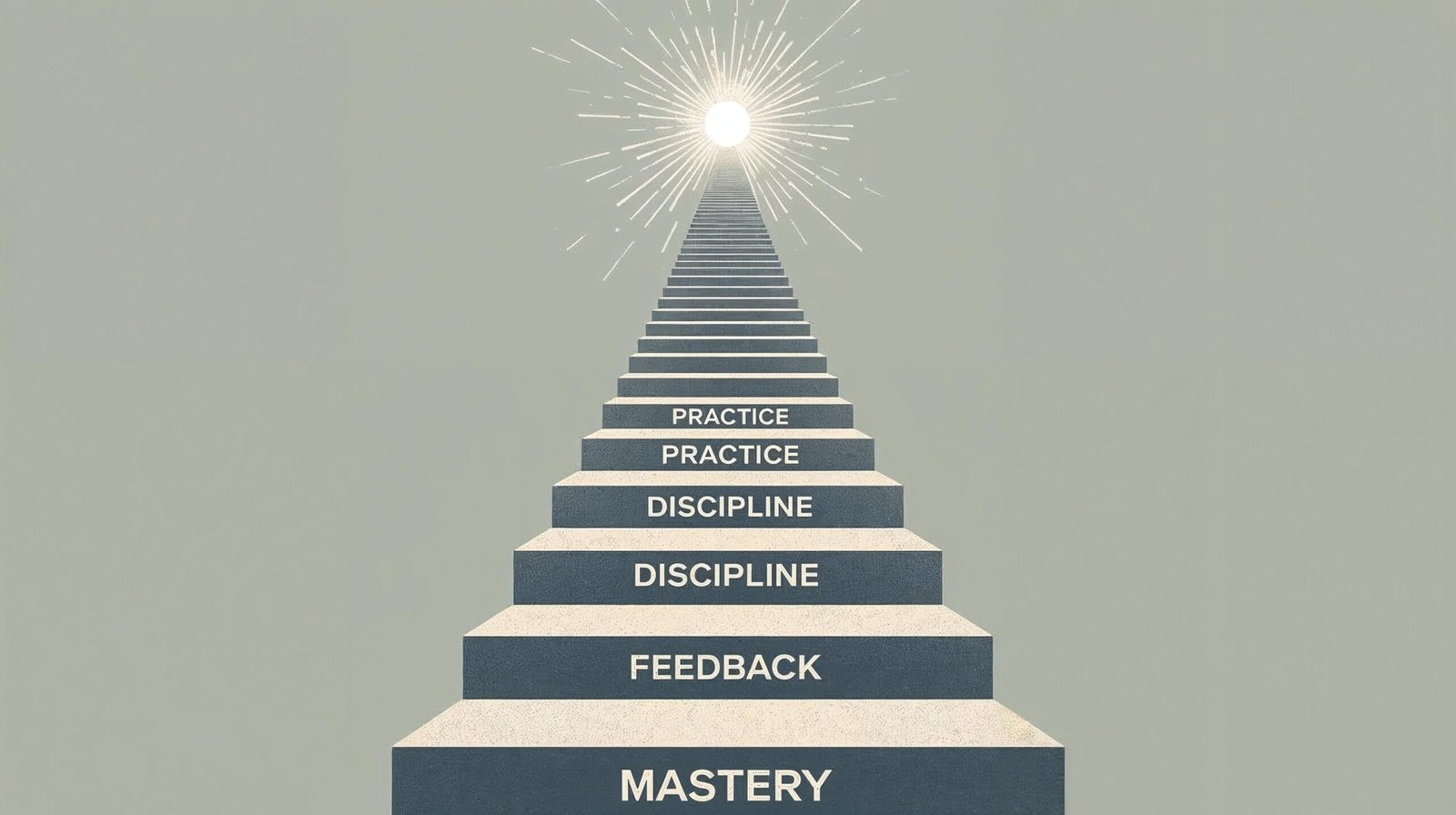
Beyond practice, the book emphasizes the psychological factors that determine success. While the public often fixates on innate ability, internal drive is equally critical. Motivation, both intrinsic and extrinsic, sustains long-term effort. Discipline ensures that practice remains consistent, even when immediate results are not visible. The combination of effort, guidance, and self-regulation is what separates casual learners from top performers.
The authors also explore the concept of “grit”, popularized by psychologist Angela Duckworth. Long-term persistence, resilience in the face of failure, and the ability to embrace challenge are all integral components of sustained improvement. The science discussed in the book suggests that these qualities can be developed and strengthened through targeted effort, much like any other skill.
Applications in Everyday Life
While much of the book focuses on elite performers—athletes, musicians, surgeons—the principles extend far beyond professional arenas. Ordinary individuals can apply these strategies in their daily lives to enhance learning and skill development:
-
Education: Students can adopt structured learning routines, focus on weak areas, and seek timely feedback to improve performance across subjects.
-
Professional development: In corporate environments, deliberate practice can accelerate the acquisition of leadership, negotiation, and technical skills.
-
Creative pursuits: Artists, writers, and designers benefit from exercises that challenge their comfort zones, enabling innovation and refinement of their craft.
-
Personal growth: Skills like memory, problem-solving, and communication can be cultivated systematically, making personal development more measurable and effective.
By framing everyday learning in terms of structured, deliberate effort, the book transforms mundane practice into a powerful tool for improvement.
The Social Context of Expertise
Another insightful angle explored in the text is the social and environmental factors influencing skill development. Access to resources, mentorship, and supportive communities can dramatically accelerate or impede progress. Conversely, unsupportive environments may hinder even highly motivated individuals. Understanding the interplay between individual effort and social context is crucial for both educators and policy-makers.
The authors highlight programs where students from underprivileged backgrounds achieved extraordinary proficiency when provided with structured practice, expert coaching, and consistent feedback. These cases reinforce the book’s core message: circumstances matter, but they do not wholly dictate outcomes.
The Psychology of Mistakes
A recurring theme is the positive role of errors. Rather than viewing mistakes as failures, the text frames them as opportunities for learning. When approached constructively, errors reveal gaps in understanding and provide concrete targets for improvement. Deliberate analysis of mistakes, combined with corrective practice, fosters deeper skill acquisition than flawless execution alone.
For instance, in sports psychology, elite athletes regularly review failures—missed shots, poor plays, or tactical errors—and design practice routines specifically to address those weaknesses. This approach turns setbacks into stepping stones, emphasizing growth rather than perfection.
Developing Mental Representations
Mental representations, or the internal models experts use to process information, are explored in far greater depth than most readers expect. These cognitive structures allow individuals to anticipate challenges, interpret complex situations, and make rapid, informed decisions. Crucially, the book details methods for strengthening these representations:
-
Visualization techniques: Mentally rehearsing actions enhances both physical execution and decision-making speed.
-
Simulation exercises: Creating hypothetical scenarios encourages problem-solving and adaptability.
-
Chunking information: Breaking down large, complex tasks into manageable units improves recall and accuracy.
Over time, mental representations allow practitioners to handle greater complexity with ease. The text provides numerous examples across fields, from chess players analyzing board positions to surgeons performing delicate procedures.

Innovation and Expertise
The authors also touch upon the relationship between structured practice and creativity. While expertise is often associated with precision and adherence to established techniques, mastery creates freedom. Once foundational skills are internalized through disciplined practice, individuals gain the capacity to innovate, improvise, and explore new approaches.
For example, accomplished jazz musicians or master chefs rely on rigorous repetition to build technical fluency. Once these fundamentals are ingrained, they can experiment boldly, pushing the boundaries of their craft. This interplay between discipline and creativity highlights the broader significance of methodical skill development.
The Role of Technology
In contemporary settings, technology amplifies the principles discussed in the text. Digital tools can provide feedback, simulate complex scenarios, and track progress meticulously. From educational apps to performance analytics in sports, structured practice is increasingly supported by objective data, making improvement measurable and precise.
The book argues that technology should complement, not replace, traditional coaching and mentorship. Tools provide insight, but human guidance remains critical in interpreting results and designing targeted practice sessions.
Case Studies Across Fields
The text is rich with real-world case studies that illustrate how structured effort produces extraordinary outcomes:
-
Medicine: Surgeons practicing simulations on complex procedures dramatically reduce error rates.
-
Music: Instrumentalists who follow regimented practice schedules outperform naturally talented peers.
-
Athletics: Gymnasts and swimmers achieve elite performance not through innate ability but by persistent refinement of technique.
-
Memory sports: Competitors leverage structured mnemonic strategies, demonstrating that recall can be systematically enhanced.
These examples underscore the book’s central argument that consistent, intentional effort shapes excellence more than innate gifts.
Implications for Education and Policy
Beyond individuals, the book has profound implications for how society structures learning and skill development. Educational institutions can benefit from emphasizing structured, feedback-driven practice over rote memorization or reliance on assumed talent. Governments and organizations can design programs to identify potential early, provide sustained support, and create environments where deliberate practice is feasible for all learners.
The book also challenges the widespread glorification of prodigies in media. By focusing on the process rather than the myth of genius, it encourages a culture that values effort, persistence, and systematic improvement.
The Emotional Journey of Mastery
While the book is scientific in tone, it does not ignore the emotional aspects of development. The path to mastery can be frustrating, humbling, and at times disheartening. However, the text emphasizes that these emotional challenges are integral to growth. Recognizing setbacks as natural, temporary, and instructive fosters resilience and sustains long-term engagement.
The emotional arc—from initial struggle to competence and eventual expertise—is as critical as the cognitive strategies discussed. Readers are encouraged to embrace discomfort as a companion on the journey to mastery rather than a barrier.
Broader Life Lessons
Finally, the book conveys lessons applicable beyond skill acquisition:
-
Persistence pays off: Steady, deliberate effort accumulates in ways that shortcuts rarely achieve.
-
Self-awareness is essential: Honest appraisal of strengths and weaknesses guides effective improvement.
-
Mentorship matters: Learning from others accelerates progress far more than solitary effort.
-
Growth is possible at any stage: While early advantage helps, adults can still develop advanced skills through disciplined practice.
These principles can be applied in professional life, personal relationships, or creative endeavors. By emphasizing controllable factors—effort, strategy, feedback—the book offers a blueprint for intentional growth.
Frequently Asked Questions (FAQs)
1. What is the core idea of the Peak book?
The core idea of the peak book is that expertise is developed through deliberate practice rather than innate talent.
2. Is the Peak book suitable for beginners?
Yes, the peak book is accessible to beginners, though its principles demand patience and long-term commitment.
3. Does the Peak book deny the role of genetics?
No, the peak book acknowledges biological differences but argues they are far less decisive than commonly believed.
4. Can the ideas in the Peak book be applied to academics?
Absolutely. The peak book offers powerful insights for students seeking deep learning rather than rote memorisation.
5. How is deliberate practice different from regular practice?
According to the peak book, deliberate practice is structured, feedback-driven, and focused on weaknesses.
Conclusion: A Sobering Yet Liberating Book
The peak book is not an easy read in the emotional sense. It strips away comforting excuses and replaces them with accountability. Yet, in doing so, it grants something far more valuable than reassurance: agency.
By showing that excellence is built, not born, the peak book redefines human potential. It invites readers to abandon passive admiration of greatness and instead participate in its creation.
If you are serious about mastery—whether in writing, thinking, teaching, or living—this book deserves a permanent place on your intellectual shelf.
For more deeply reasoned book insights that value discipline over hype, visit shubhanshuinsights.com, where ideas are not merely consumed, but cultivated.