Strength Training Anatomy Book – A Definitive Review of Frédéric Delavier’s Masterpiece
The strength training anatomy book by Frédéric Delavier occupies a unique and commanding position in the world of fitness literature. Unlike conventional strength manuals that rely heavily on verbal instruction or anecdotal advice, this book penetrates deeply into the anatomical foundations of resistance training. It reveals not merely how exercises are performed, but why they function, which muscles they stimulate, and how errors silently sabotage progress.
For athletes, trainers, physiotherapists, and serious fitness enthusiasts, the strength training anatomy book is not optional reading. It is a foundational text—often misunderstood as a picture book, yet profoundly scientific in intent and execution.
This review examines the book meticulously, exploring its structure, philosophy, illustrations, practical relevance, limitations, and enduring value.
Introduction to the Strength Training Anatomy Book
At its core, the strength training anatomy book dismantles ignorance. Frédéric Delavier, a former powerlifter and anatomist, combines academic precision with real-world lifting experience. This dual authority is what elevates the book beyond superficial fitness guides.
Rather than promoting trends or routines, Delavier presents the human body as a mechanical system governed by leverage, joint alignment, muscular recruitment, and neural coordination. The strength training anatomy book educates the reader to think anatomically, thereby fostering intelligent and injury-resistant training.
The Author’s Authority: Frédéric Delavier
Frédéric Delavier’s background lends immense credibility to the strength training anatomy book. Trained in anatomy and biomechanics, he is also an accomplished strength athlete. This rare synthesis ensures that the book never drifts into impractical academic abstraction.
Delavier understands the gym floor as intimately as the anatomical chart. Every illustration reflects lived experience—failed lifts, overuse injuries, plateaus, and breakthroughs. The strength training anatomy book is thus written not for theorists alone, but for practitioners who demand truth over motivation.
Structure and Layout of the Strength Training Anatomy Book
The structure of the strength training anatomy book is one of its greatest strengths. Exercises are categorised by body part—chest, back, shoulders, arms, legs, and core. Each movement is accompanied by:
-
Highly detailed anatomical illustrations
-
Primary and secondary muscles engaged
-
Variations and their biomechanical implications
-
Common mistakes and injury risks
This systematic organisation allows the reader to reference the book repeatedly, transforming it into a long-term training companion rather than a one-time read.
Anatomical Illustrations: Where the Book Dominates
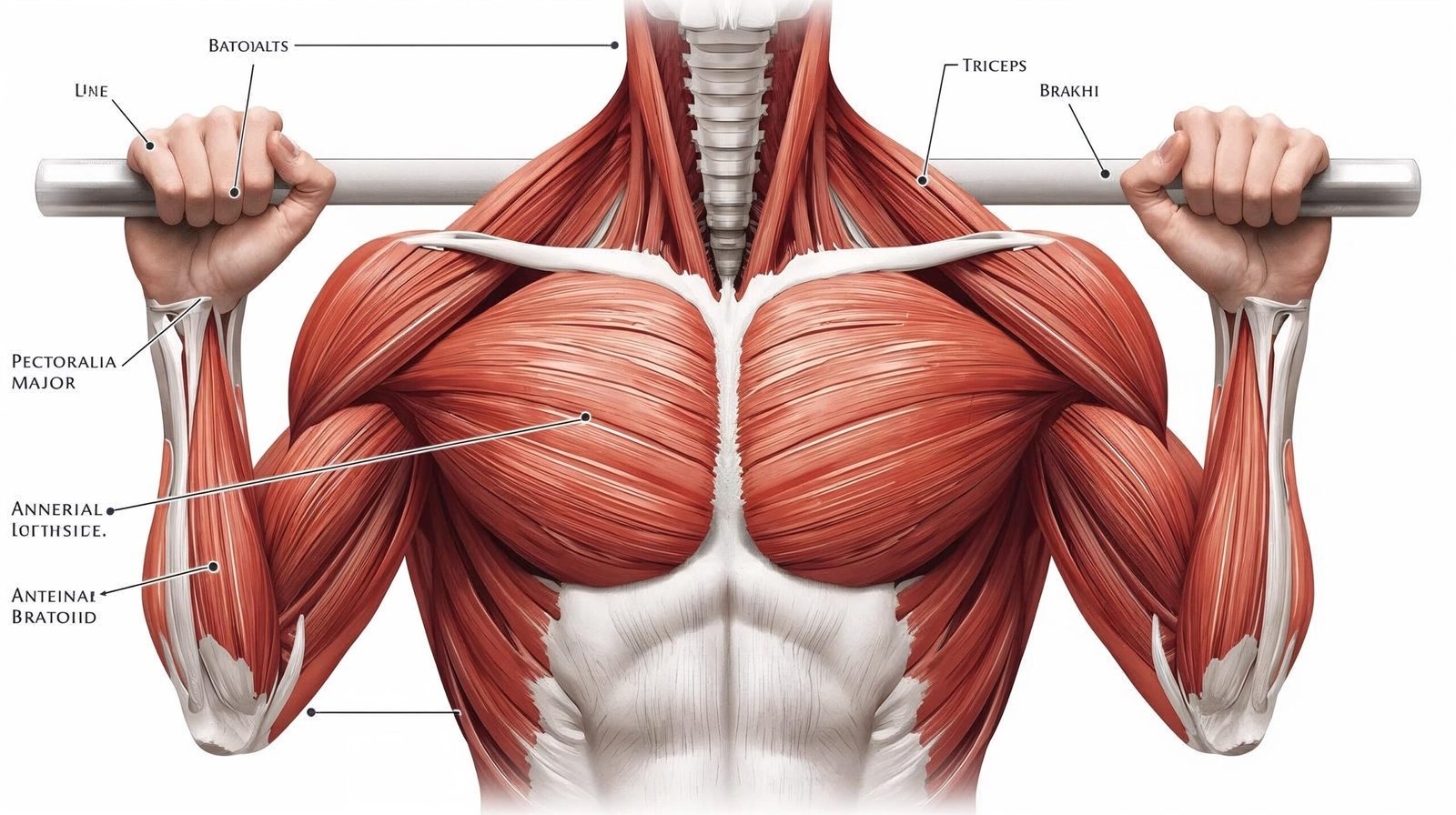
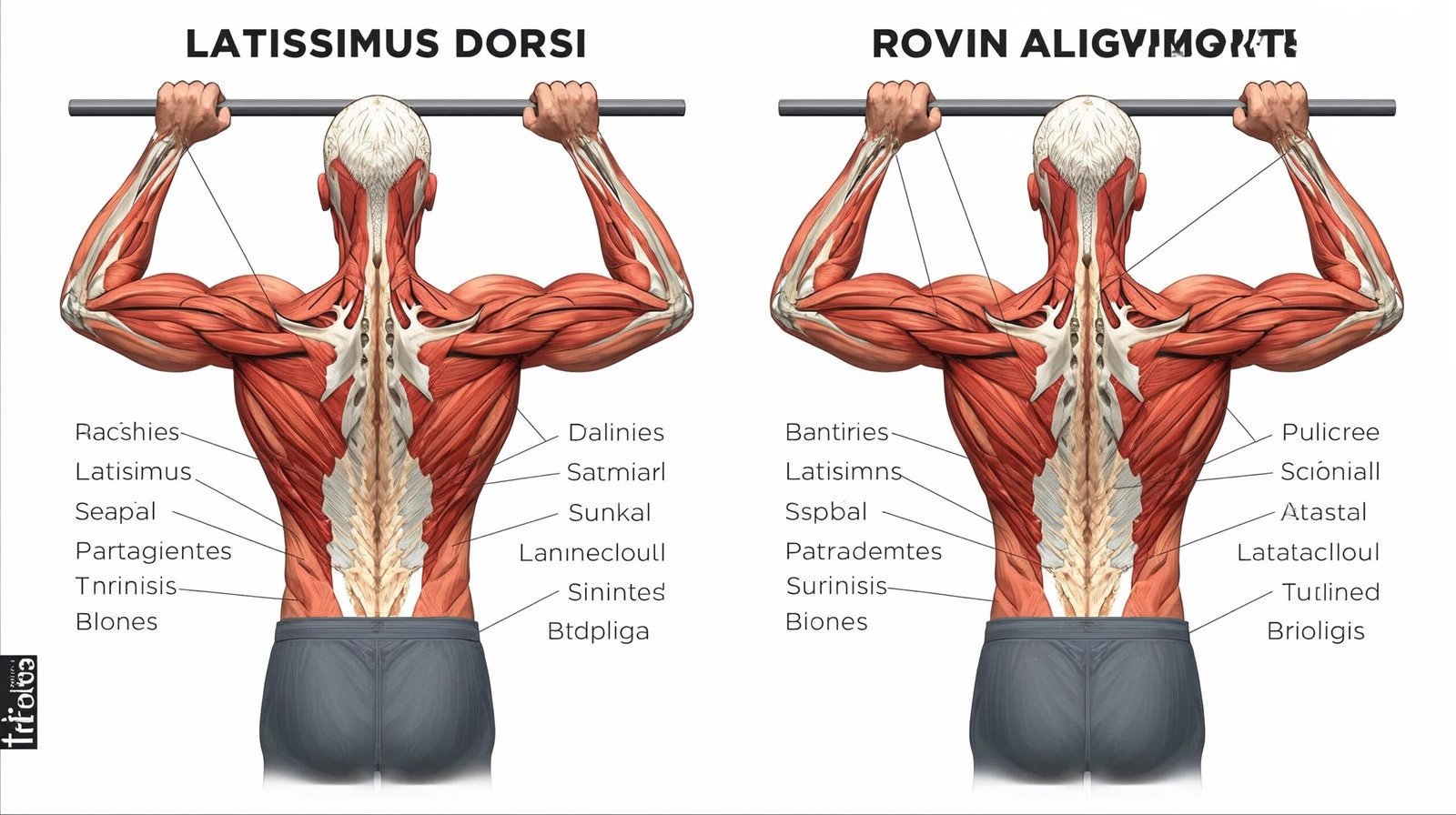
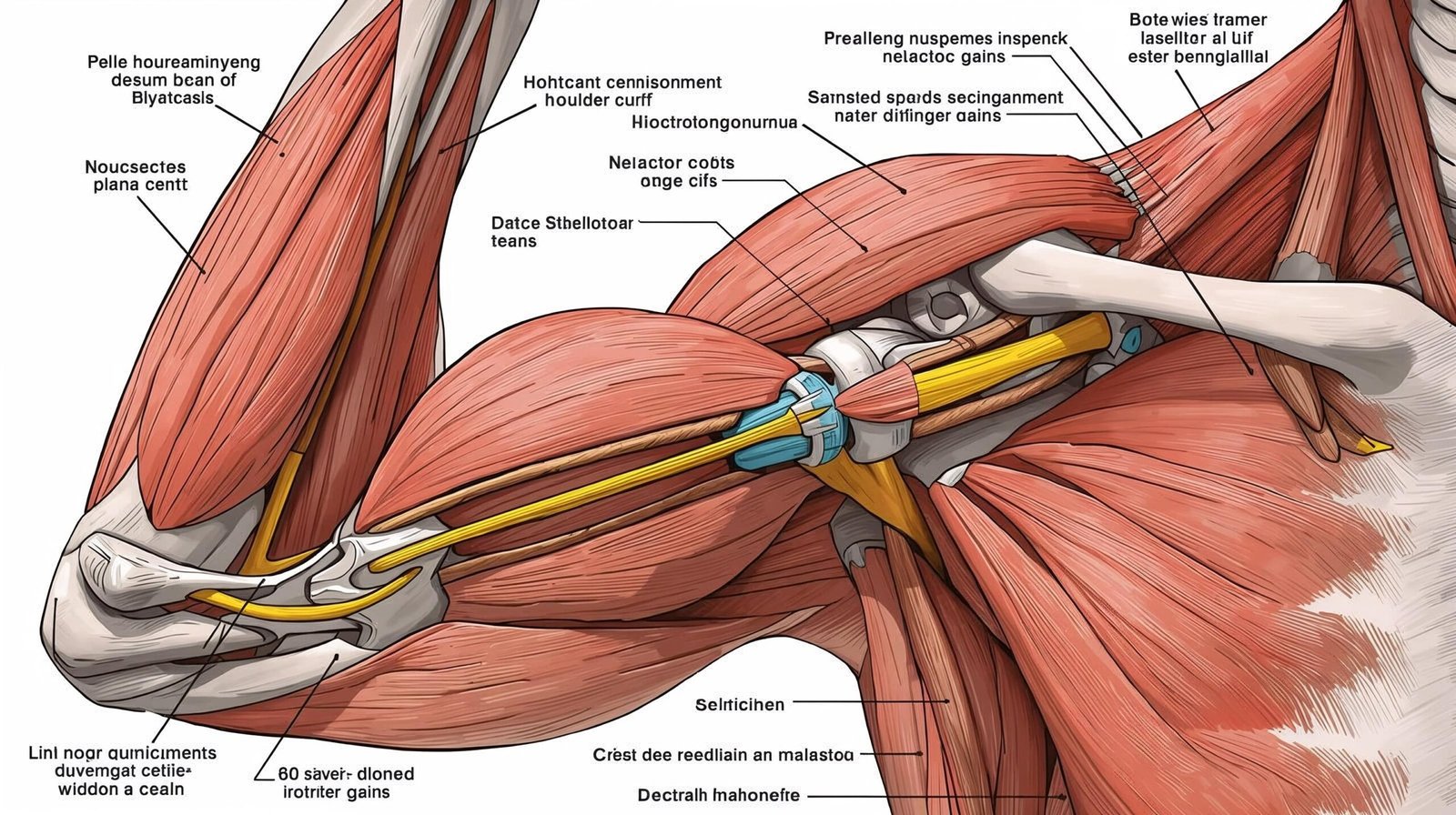
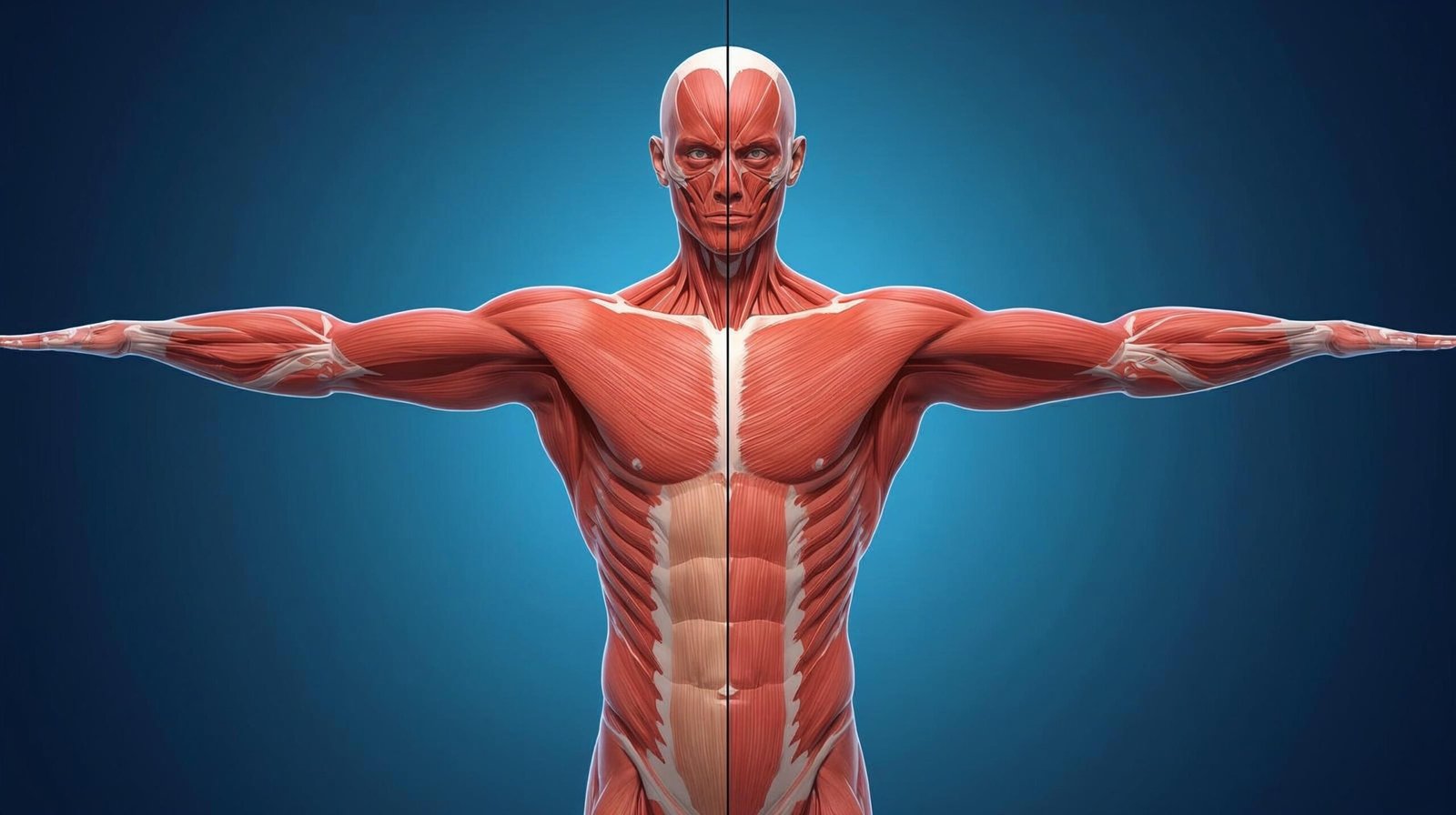
The defining feature of the strength training anatomy book is its illustrations. Delavier’s drawings are neither decorative nor simplified. They expose muscle fibres, joint articulations, tendon insertions, and skeletal leverage with forensic clarity.
Unlike photographs, these illustrations strip away distraction and isolate truth. The reader learns precisely how changing grip width, foot placement, or range of motion alters muscular emphasis. This makes the strength training anatomy book exceptionally valuable for injury prevention and targeted hypertrophy.
Exercise Execution Explained with Surgical Precision
Most training injuries occur not due to lack of effort, but due to misunderstanding of anatomy. The strength training anatomy book addresses this root cause directly.
Each exercise is dissected anatomically. The reader learns:
-
Why poor shoulder positioning ruins bench press progress
-
How spinal alignment affects force transmission
-
Why certain “popular” exercises are inherently risky
By studying the strength training anatomy book, one learns to lift intelligently, not blindly.
A Book That Corrects Gym Myths Ruthlessly
One of the most uncomfortable yet valuable aspects of the strength training anatomy book is its refusal to flatter the reader. Delavier does not hesitate to dismantle myths propagated by gym culture.
Exercises glorified on social media are often exposed as inefficient or hazardous. The strength training anatomy book prioritises biomechanical efficiency over ego-driven lifting, making it an essential corrective force in modern fitness education.
Who Should Read the Strength Training Anatomy Book?
The strength training anatomy book serves a wide audience, including:
-
Strength and conditioning coaches
-
Personal trainers
-
Bodybuilders and powerlifters
-
Physiotherapy students
-
Serious home trainees
Beginners may initially find the content dense, yet this density is precisely what grants the book longevity. The strength training anatomy book grows with the reader.
Practical Application in Real Training
The true value of the strength training anatomy book emerges when theory meets practice. Readers report immediate improvements in:
-
Mind–muscle connection
-
Exercise selection
-
Training balance
-
Joint health
By internalising anatomical logic, the reader begins to self-correct form instinctively. This transformation is gradual but profound.
Limitations of the Strength Training Anatomy Book
No review would be complete without honest critique. The strength training anatomy book does not provide ready-made workout plans. Readers seeking quick routines may feel disoriented.
However, this absence is intentional. Delavier equips the reader with principles, not prescriptions. The book demands intellectual engagement, rewarding those willing to think critically.
Comparison with Other Fitness Books
Compared to motivational or routine-based fitness books, the strength training anatomy book stands apart. It does not inspire through emotion, but through understanding.
While books like Starting Strength or Arnold’s Encyclopedia offer structured systems, the strength training anatomy book provides the anatomical lens through which all systems must be evaluated.
Long-Term Relevance and Timelessness
Trends fade. Anatomy does not.
The strength training anatomy book remains relevant decades after publication because human biomechanics remain unchanged. This timelessness ensures the book’s continued authority across generations of lifters.
Why the Strength Training Anatomy Book Is Still Misunderstood
Ironically, the greatest weakness of the strength training anatomy book is its depth. Many readers underestimate it, mistaking illustrations for simplicity.
In reality, the book demands patience, repeated study, and practical application. Those who persist gain an anatomical literacy that transforms training permanently.
The Psychological Discipline Embedded in Anatomical Knowledge
One of the most underestimated contributions of Delavier’s work lies in the psychological transformation it induces in the reader. When an individual begins to understand movement through structure rather than habit, impulsive training gradually gives way to deliberate execution. This shift cultivates patience, restraint, and analytical thinking—qualities rarely emphasised in mainstream fitness culture.
Anatomical awareness compels the trainee to respect limitations. It discourages reckless overload and replaces it with precision-based progression. Over time, this mental recalibration becomes as valuable as any increase in muscle mass or strength output. Training ceases to be an emotional release and evolves into a disciplined practice governed by logic and bodily intelligence.
Developing Muscle Symmetry Through Structural Awareness
Muscle imbalance is a silent epidemic among regular gym-goers. Delavier’s work indirectly addresses this issue by forcing readers to confront asymmetry at its source—unequal recruitment patterns and flawed movement mechanics.
When the reader studies how muscles assist, stabilise, or dominate during compound movements, subtle imbalances become visible. A stronger side, an overactive synergist, or a neglected stabiliser is no longer abstract but anatomically evident. This clarity allows for corrective strategies grounded in structure rather than guesswork.
Symmetry, therefore, emerges not from aesthetic obsession but from biomechanical fairness. The body begins to distribute effort more evenly, leading to improved posture, balanced strength, and reduced chronic discomfort.
The Role of Joint Integrity in Sustainable Progress
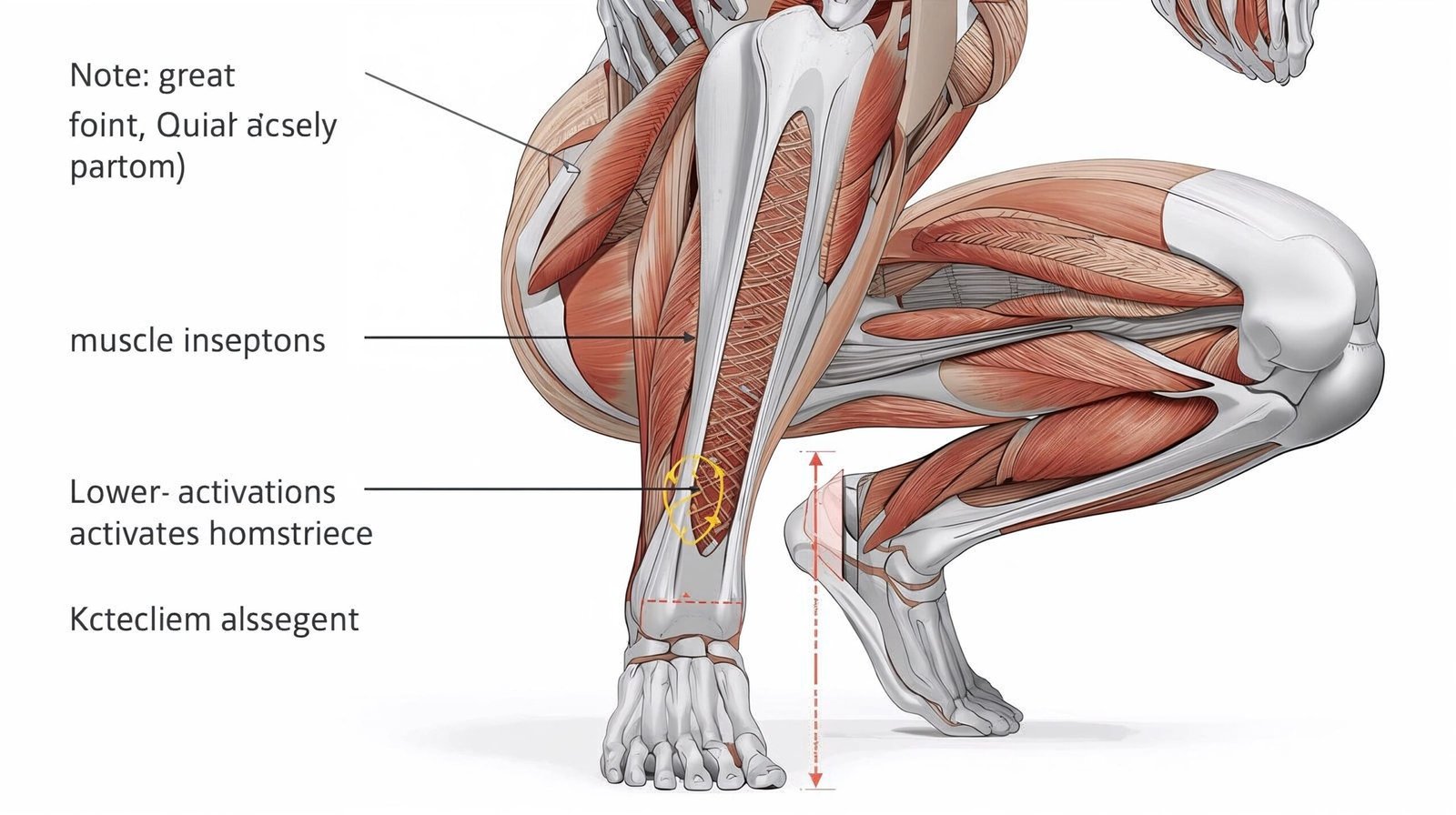
Most training plateaus are mistakenly attributed to lack of effort. In reality, many are caused by compromised joint integrity. Delavier repeatedly highlights the importance of joint positioning, cartilage preservation, and ligament stress distribution.
Understanding how joints function under load reveals why certain exercises feel powerful initially yet degrade progress over time. The reader learns that strength gains built on joint abuse are temporary, while those built on alignment and control endure.
This emphasis is particularly valuable for ageing athletes. As connective tissue resilience declines with age, structural intelligence becomes essential for maintaining performance without accelerating degeneration.
Why Exercise Selection Should Be Individualised
A crucial yet often ignored message within the book is that no exercise is universally ideal. Anatomical variation—limb length, joint orientation, muscle insertion points—ensures that individuals experience the same movement differently.
Delavier implicitly advocates for personalisation rooted in structure. Exercises that suit one lifter may injure another. This realisation frees the reader from conformity-driven programming and encourages self-observation.
Training thus becomes adaptive rather than prescriptive. Movements are chosen based on compatibility rather than popularity, resulting in longevity and consistent improvement.
Reframing Pain: Warning Signal, Not Badge of Honour
The glorification of pain in fitness culture has caused widespread misunderstanding. Delavier’s anatomical approach reframes pain as information rather than validation. Discomfort is analysed, not ignored.
When the reader learns which tissues are stressed during specific movements, pain patterns become intelligible. Sharp joint pain, dull muscular fatigue, and referred discomfort are distinguished clearly. This literacy prevents minor issues from escalating into long-term injuries.
Such awareness cultivates humility. The body is no longer treated as an adversary to be conquered but as a system to be understood and respected.
The Educational Value for Trainers and Educators
For coaches and educators, Delavier’s work functions as a silent mentor. It sharpens observational skills and deepens instructional accuracy. Trainers equipped with anatomical insight can explain corrections with clarity rather than vague cues.
This competence builds trust. Clients respond more positively when corrections are grounded in explanation rather than authority. Education replaces intimidation, creating a healthier training environment.
Furthermore, trainers become better learners themselves. Every client interaction becomes an opportunity to observe anatomical diversity in action, reinforcing theoretical knowledge through lived experience.
Anatomical Literacy as a Form of Empowerment
Perhaps the most profound contribution of the book is empowerment. Knowledge decentralises authority. The reader becomes less dependent on external instruction and more capable of self-regulation.
This autonomy is especially valuable in an era dominated by misinformation. With anatomical literacy, exaggerated claims and unsafe trends lose persuasive power. The reader can evaluate advice critically, filtering substance from spectacle.
Empowerment also enhances consistency. When individuals understand why an approach works, adherence improves naturally. Motivation shifts from emotional highs to intellectual conviction.
Long-Term Health Beyond Aesthetics
While the book is often associated with physique development, its implications extend far beyond appearance. Structural understanding contributes to daily movement efficiency—walking, lifting, sitting, and posture.
Chronic back pain, shoulder stiffness, and knee discomfort often originate from repeated mechanical errors. By correcting these patterns in training, individuals indirectly improve daily life function.
Fitness, therefore, becomes preventative medicine rather than cosmetic pursuit. This reframing aligns strength training with holistic well-being rather than superficial goals.
The Ethical Dimension of Responsible Training
There is an ethical undertone embedded in Delavier’s work: the responsibility to train without harm. Coaches influencing others bear a moral obligation to prioritise safety alongside results.
Anatomical ignorance, when paired with authority, can be dangerous. Delavier’s insistence on understanding structure serves as an ethical safeguard against negligent instruction.
This perspective elevates training from performance obsession to stewardship of human health—a mindset urgently needed in modern fitness culture.
Why Visual Learning Transcends Language Barriers
One reason the book enjoys global relevance is its reliance on visual communication. Anatomy illustrated transcends linguistic limitations, making the content accessible across cultures.
Images communicate instantly what paragraphs may fail to convey. The reader sees force vectors, muscle engagement, and joint angles without translation. This universality enhances learning efficiency and retention.
Visual literacy also improves recall. Concepts anchored in imagery remain accessible during actual training sessions, reinforcing proper execution in real time.
The Role of Curiosity in Lifelong Training Evolution
Readers who engage deeply with Delavier’s work often develop sustained curiosity. Training becomes a continuous exploration rather than a static routine.
Questions replace assumptions. Why does this variation feel better? Why does range of motion affect tension differently? Curiosity fuels experimentation grounded in structure rather than randomness.
This mindset prevents stagnation. As understanding deepens, training evolves organically, keeping both body and mind engaged across decades.
Integrating Anatomical Knowledge with Modern Science
Although rooted in classical anatomy, the principles align seamlessly with contemporary research on biomechanics, motor learning, and injury prevention.
Modern concepts such as movement variability, load management, and neuromuscular coordination find anatomical justification within Delavier’s framework. This compatibility reinforces the book’s relevance in evidence-based practice.
Rather than conflicting with science, the work complements it, providing the structural foundation upon which research findings rest.
Why Serious Readers Revisit the Book Repeatedly
Unlike motivational literature, this work rewards rereading. Each return reveals insights previously overlooked. As the reader’s experience grows, understanding deepens.
Early readings educate. Later readings refine. Eventually, the book becomes a reference rather than a narrative—a tool consulted as questions arise.
This layered utility distinguishes enduring works from disposable content. Value compounds over time, mirroring the principles of intelligent training itself.
Final Reflection: Knowledge That Protects Progress
In an industry saturated with shortcuts and spectacle, Delavier’s work stands quietly resolute. It does not promise rapid transformation, but it delivers sustainable advancement.
Those willing to study structure gain more than physical improvement. They acquire discernment, patience, and respect for biological reality.
At shubhanshuinsights.com, we regard such knowledge as foundational—not optional—for anyone who views fitness as a lifelong pursuit rather than a fleeting obsession.
True strength is not merely built.
It is understood.
A Closing Perspective on Mastery and Responsibility
True progress in physical training is rarely accidental. It emerges from the quiet accumulation of correct decisions, repeated with discipline over time. Anatomical understanding sharpens those decisions by grounding effort in reality rather than impulse. When movements are chosen and executed with structural awareness, training becomes safer, more efficient, and deeply satisfying.
Such knowledge also instils responsibility. The body entrusted to training today must still function decades later. Respecting its design is not weakness but wisdom. For readers who value longevity over spectacle, and intelligence over imitation, this approach offers a path of sustainable excellence—one where strength is preserved, movement is refined, and progress remains honest and enduring.
Frequently Asked Questions (FAQs)
1. Is the strength training anatomy book suitable for beginners?
Yes, although beginners must approach it gradually. The strength training anatomy book rewards repeated reference rather than hurried reading.
2. Does the book help prevent injuries?
Absolutely. By understanding joint mechanics and muscle recruitment, the strength training anatomy book significantly reduces injury risk.
3. Is this book useful for home workouts?
Yes. Anatomical understanding applies regardless of equipment. The strength training anatomy book enhances body awareness even with minimal tools.
4. Does it include scientific explanations?
Yes, but presented visually. The strength training anatomy book communicates science through structure rather than jargon.
5. Is the book outdated?
No. Anatomy is timeless. The strength training anatomy book remains as relevant today as ever.
Conclusion: A Book That Separates Thinkers from Followers
The strength training anatomy book is not entertainment. It is education.
It challenges assumptions, corrects errors, and demands intellectual responsibility from the reader. Those seeking shortcuts may feel frustrated. Those seeking mastery will feel liberated.
For anyone serious about understanding the body they train, the strength training anatomy book is not merely recommended—it is indispensable.
At shubhanshuinsights.com, we believe that true progress arises from knowledge, not noise. This book embodies that philosophy. It empowers readers to train with clarity, precision, and respect for their own anatomy.
Ignore it, and you train blindly.
Study it, and you train intelligently.
Ultimately, informed training cultivates confidence without arrogance, progress without injury, and discipline without obsession, allowing physical development to coexist harmoniously with long-term health, clarity, and personal responsibility.