Starting Strength Mark Rippetoe – A Ruthless Return to Strength Training Fundamentals
In an era dominated by fitness influencers, gimmicky workout apps, and endlessly recycled myths, Starting Strength by Mark Rippetoe stands as an unapologetic rebellion against modern confusion. This is not a book designed to flatter egos or sell illusions. It is a stern, methodical, and intellectually grounded manual on how to become genuinely strong.
The philosophy of starting strength mark rippetoe is built upon first principles. It rejects cosmetic fitness in favour of measurable, progressive, and functional strength. For beginners—and even for intermediates who have lost their way—this book is not merely instructive; it is corrective.
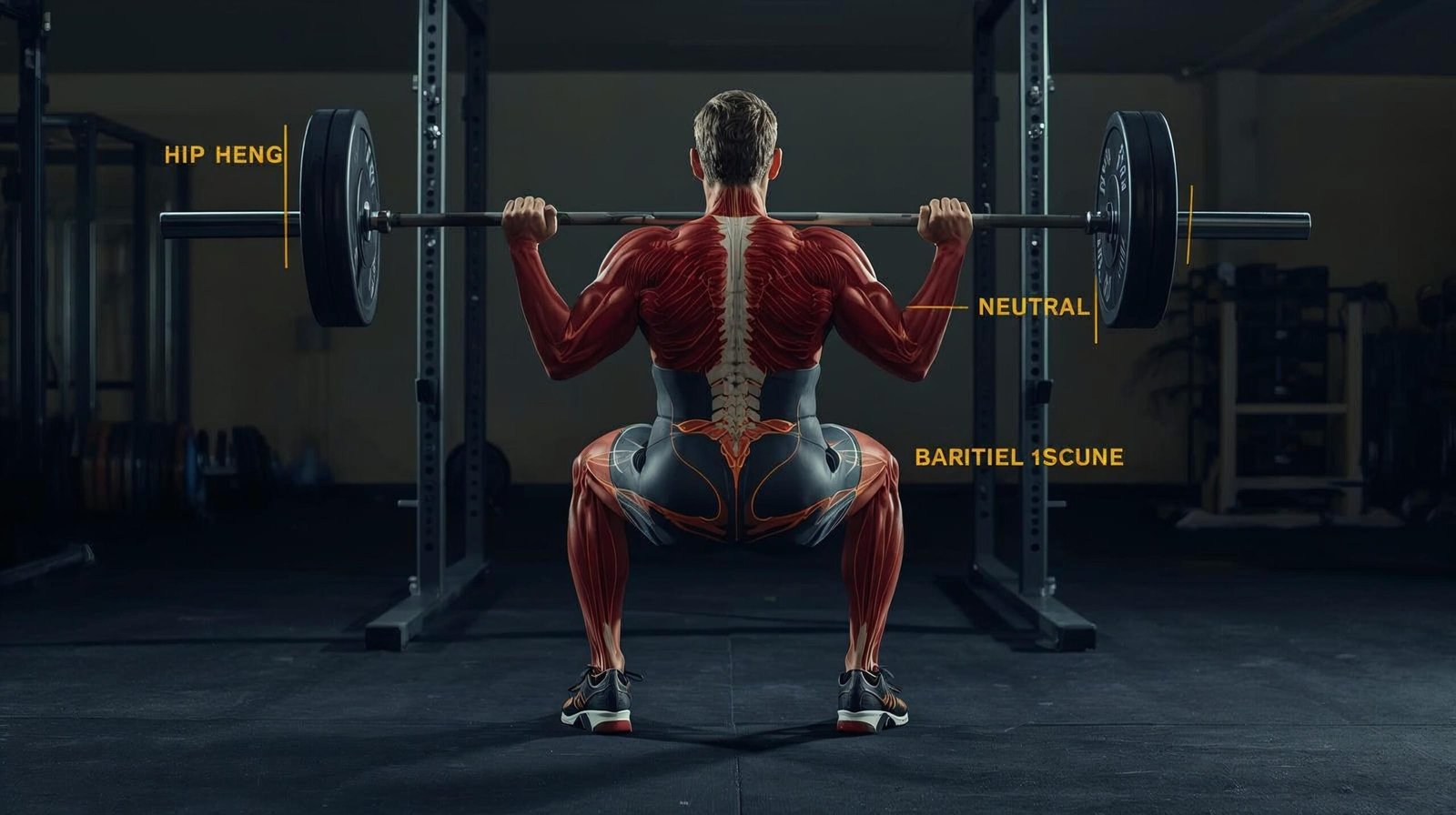
Who Is Mark Rippetoe? The Reluctant Icon of Barbell Truth
Mark Rippetoe is not a motivational speaker nor a social media personality. He is a strength coach forged in the unforgiving environment of real gyms, real barbells, and real results. His authority does not stem from aesthetics but from decades of coaching experience and biomechanical understanding.
The credibility of starting strength mark rippetoe lies in its ruthless practicality. Rippetoe speaks with the blunt honesty of someone unconcerned with popularity. His writing reflects a worldview that values empirical outcomes over fashionable theories.
The Core Philosophy of Starting Strength
At its heart, Starting Strength is about teaching the human body to produce force efficiently. It assumes nothing and explains everything. The program revolves around a simple but powerful truth: strength is the foundation upon which all other physical attributes are built.
The system presented in starting strength mark rippetoe prioritises:
-
Neuromuscular adaptation
-
Progressive overload
-
Compound barbell movements
-
Mechanical efficiency
This is not high-volume bodybuilding. It is not endurance training. It is the disciplined cultivation of raw strength.
The Big Five Lifts Explained with Scientific Precision
One of the most defining features of starting strength mark rippetoe is its obsessive focus on five foundational barbell movements:
1. The Squat
The squat is described as the most important human movement under load. Rippetoe dismantles poor form myths and reconstructs the lift using anatomy, leverage, and physics.
2. The Deadlift
Deadlifting, according to Starting Strength, is the purest expression of strength. It trains the posterior chain and reinforces correct spinal mechanics under load.
3. The Press
Often neglected, the overhead press is treated as a crucial upper-body strength developer requiring full-body tension and balance.
4. The Bench Press
Rather than chasing chest hypertrophy, Rippetoe frames the bench press as a technical movement demanding control and precision.
5. The Power Clean
The most misunderstood lift, the power clean introduces explosive force production and athletic coordination.
Every lift in starting strength mark rippetoe is analysed down to joint angles, muscle recruitment, and bar path.
Why Beginners Benefit the Most from Starting Strength
The novice lifter occupies a unique physiological position. Their body adapts rapidly to stress, provided the stress is applied correctly. Starting Strength exploits this window with clinical efficiency.
The novice linear progression model in starting strength mark rippetoe allows trainees to add weight every session—something virtually impossible in advanced programming. This builds confidence, discipline, and measurable progress.
Unlike fragmented gym routines, this approach teaches patience and respect for incremental mastery.
The Brutal Honesty That Offends—and Educates
One reason starting strength mark rippetoe attracts criticism is its tone. Rippetoe does not indulge excuses. He openly criticises ineffective training styles, poor coaching standards, and commercial fitness trends.
This intellectual severity is precisely why the book endures. It does not comfort the reader; it confronts them. For those willing to listen, the reward is clarity.
Strength vs Aesthetics: An Uncomfortable Truth
A recurring theme in starting strength mark rippetoe is the rejection of aesthetic obsession. Rippetoe argues that strength training produces muscular development as a consequence, not a goal.
This philosophy unsettles modern gym culture, which often prioritises appearance over capability. Starting Strength restores dignity to physical competence.
Programming Structure and Practical Application
The training program in starting strength mark rippetoe is deceptively simple:
-
Three workouts per week
-
Alternating sessions
-
Gradual weight increases
-
Adequate recovery
The brilliance lies in restraint. Nothing is added unless necessary. Nothing is included without justification.

Scientific Rigor Without Academic Pretence
Despite its accessibility, starting strength mark rippetoe is deeply rooted in biomechanics and physiology. Rippetoe explains concepts such as moment arms, force vectors, and muscular leverage in language that is rigorous yet comprehensible.
This makes the book both a practical manual and an educational text.
Common Misinterpretations Addressed
Many critics misread starting strength mark rippetoe as outdated or inflexible. In reality, the system is adaptable but disciplined. Adjustments occur only after mastery—not before.
The program is not anti-cardio, anti-sports, or anti-health. It simply prioritises strength as the foundation.
Long-Term Value of Starting Strength
Unlike trend-based fitness books, starting strength mark rippetoe does not expire. Its principles remain valid regardless of era, equipment, or gym culture.
Once learned, the mechanics and logic stay with the lifter for life.
Who Should Read Starting Strength?
This book is ideal for:
-
Absolute beginners
-
Lifters stuck in plateaus
-
Coaches seeking technical clarity
-
Thinkers tired of fitness noise
However, it is not for those seeking shortcuts or entertainment.
The Biomechanical Intelligence Behind Barbell Training
One of the most underappreciated strengths of this book lies in its biomechanical reasoning. Unlike generic fitness manuals that merely prescribe exercises, Starting Strength explains why movements work the way they do. The human body is treated as a mechanical system governed by leverage, force production, and efficiency. This analytical approach elevates the book far beyond routine programming.
The emphasis on balance, mid-foot positioning, and spinal rigidity reveals a level of anatomical respect rarely found in popular fitness literature. In this sense, starting strength mark rippetoe functions not only as a training guide but also as a primer in applied human mechanics. Readers are taught to think critically about movement rather than blindly imitate it.
The Psychological Discipline of Progressive Overload
Strength training is as much psychological as it is physical. The discipline required to add weight incrementally, session after session, cultivates patience and mental resilience. The program discourages impulsive variation and instead rewards consistency.
This slow, deliberate accumulation of strength stands in stark contrast to modern “muscle confusion” dogma. By insisting that adaptation occurs through repeated exposure to stress, starting strength mark rippetoe reintroduces a stoic mentality that values persistence over novelty. This mindset often spills over into other areas of life, fostering discipline beyond the gym.
Why Minimalism Becomes a Competitive Advantage
The simplicity of the program is often mistaken for a lack of sophistication. In reality, it is a carefully engineered minimalism. Each exercise earns its place through demonstrable effectiveness. Nothing ornamental is included.
In an overcrowded fitness landscape, this restraint becomes a competitive advantage. By stripping training down to essentials, starting strength mark rippetoe eliminates wasted effort and cognitive overload. The lifter is free to focus entirely on execution, recovery, and progress—elements that actually determine results.
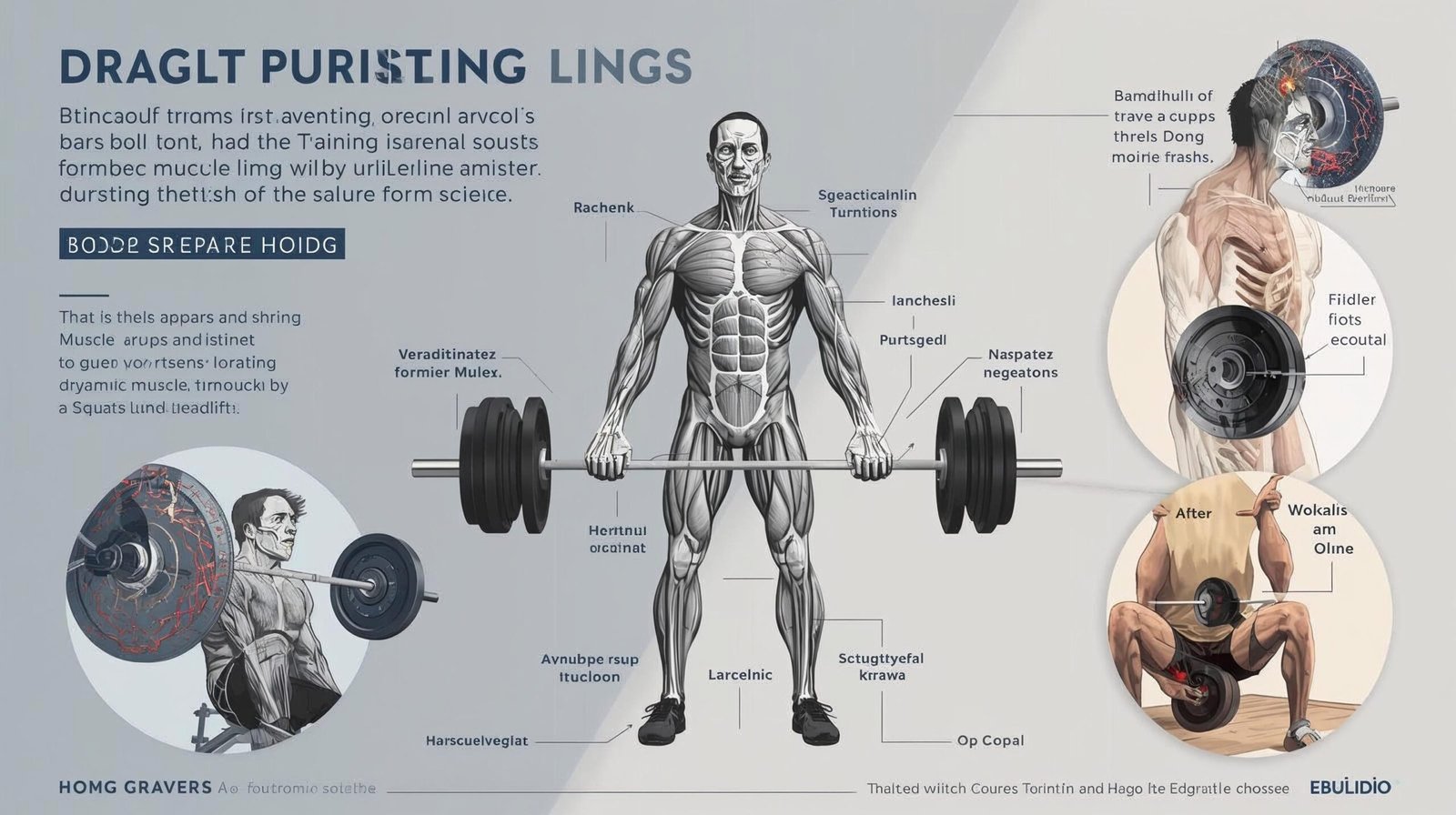
Recovery: The Forgotten Variable in Strength Development
Modern trainees frequently underestimate the importance of recovery. Endless workouts, insufficient sleep, and poor nutritional discipline sabotage progress more effectively than any flawed program. Starting Strength treats recovery as non-negotiable.
The book explains that strength gains occur between workouts, not during them. Stress must be balanced with rest to allow adaptation. By reinforcing this principle, starting strength mark rippetoe corrects a cultural bias toward overtraining and reasserts the biological limits of adaptation.
The Role of Nutrition Without Obsession
Unlike many fitness books, Starting Strength does not promote dietary extremism. Nutrition is discussed pragmatically, with emphasis on adequacy rather than restriction. The goal is to support training, not to moralise food choices.
This rational approach resonates with readers fatigued by contradictory diet advice. By anchoring nutrition to performance outcomes, starting strength mark rippetoe restores common sense to an area clouded by ideological noise. Eating becomes a tool, not an identity.
Coaching Literacy and Self-Correction
One of the book’s most enduring contributions is its impact on coaching literacy. Readers learn not only how to lift but how to diagnose errors. Visual cues, common mistakes, and corrective strategies are described in meticulous detail.
This empowers lifters to become their own informed observers. Over time, starting strength mark rippetoe trains individuals to recognise inefficiencies and make intelligent adjustments. Such self-sufficiency is rare in an industry that often thrives on dependency.
Why This Book Resists Commercial Dilution
Many influential fitness texts are eventually softened to appeal to broader audiences. Starting Strength resists this fate. Its tone remains unapologetically demanding, and its standards uncompromising.
This resistance to dilution is precisely why starting strength mark rippetoe retains credibility decades after publication. It has not been repackaged to suit trends, nor diluted for mass consumption. The integrity of its message remains intact, preserving its instructional value.
Strength as a Foundation for Lifelong Physical Autonomy
Perhaps the most profound argument made in the book is philosophical rather than physical. Strength is framed as a prerequisite for independence. The ability to lift, carry, and stabilise one’s own body under load translates directly into real-world competence.
By restoring this perspective, starting strength mark rippetoe reframes fitness as preparation for life rather than performance for display. Strength becomes a form of insurance—against frailty, dependence, and decline.
The Enduring Educational Value of Starting Strength
Even readers who eventually move on to advanced programming continue to reference this book. Its explanations of movement mechanics, force application, and progression principles form a conceptual foundation that remains relevant.
In this way, starting strength mark rippetoe functions much like a classical text. It may not provide every answer forever, but it teaches readers how to ask the right questions. That intellectual legacy ensures its continued relevance.
Why Serious Readers Still Return to This Book
Many fitness books are consumed once and forgotten. Starting Strength is revisited. Each rereading reveals nuances previously overlooked—subtle cues, deeper explanations, refined reasoning.
This depth is why starting strength mark rippetoe continues to attract thoughtful readers who value mastery over shortcuts. It rewards attention and punishes complacency, making it as demanding intellectually as it is physically.
Final Reflection on the Expanded Philosophy of Strength
Strength training, when properly understood, is an education in cause and effect. It teaches humility through failure and confidence through earned progress. Few books articulate this relationship as clearly as Starting Strength.
By grounding theory in practice and rejecting superficiality, starting strength mark rippetoe offers more than a program—it offers a framework for disciplined self-improvement. For readers willing to submit to its rigor, the returns are enduring.
The Cultural Decline of Physical Literacy
Modern society increasingly distances itself from physical competence. Mechanised convenience, sedentary occupations, and digital immersion have diminished everyday movement skills that were once taken for granted. Within this context, structured strength training assumes a civilisational significance rather than a recreational one.
The book under discussion challenges this decline by reintroducing physical literacy—an understanding of how the body moves, stabilises, and exerts force. Rather than promoting exercise as entertainment, it treats movement as a discipline to be learned and respected. This shift in perspective is both corrective and necessary in a culture that has replaced capability with appearance.
The Ethics of Effort and Personal Responsibility
One of the most compelling undercurrents in the text is its ethical stance on effort. Progress is presented not as a product of favourable genetics or specialised equipment, but as a consequence of consistent, honest work. This framing removes excuses and places responsibility squarely on the individual.
Such an approach may appear severe, yet it carries an empowering message. When outcomes are tied directly to effort and adherence, individuals reclaim agency over their development. This ethic of responsibility resonates far beyond training and reinforces principles of self-governance and perseverance.
Why Simplicity Often Signals Maturity
Inexperienced trainees frequently equate complexity with effectiveness. Elaborate routines and constant variation create an illusion of sophistication while obscuring fundamental deficiencies. The philosophy articulated in this work dismantles that illusion.
Simplicity, when achieved through understanding, reflects maturity rather than limitation. Each movement, each progression, and each rest period is selected for a reason. By eliminating unnecessary variables, the trainee learns to focus on execution and recovery—elements that genuinely determine progress.
Age, Adaptation, and Longevity
Strength training is often portrayed as a pursuit reserved for the young. This misconception overlooks the adaptability of the human body across the lifespan. Properly loaded resistance training improves bone density, joint stability, and neuromuscular coordination well into later years.
By emphasising controlled mechanics and incremental progression, the methodology discussed offers a pathway to longevity rather than burnout. Strength becomes a tool for preservation—maintaining independence, reducing injury risk, and enhancing quality of life with advancing age.
Reframing Success Beyond the Gym
The discipline cultivated through structured training frequently manifests in unexpected domains. Time management improves, confidence stabilises, and resilience increases. These outcomes are not accidental; they are by-products of repeated exposure to challenge and resolution.
Success, therefore, is not confined to numerical progress or physical transformation. It extends into posture, movement confidence, and mental composure. Training becomes a rehearsal for problem-solving under pressure, with lessons that remain applicable long after the session ends.

Closing Perspective on Enduring Physical Education
The true value of this work lies not in novelty but in permanence. Trends fade, equipment evolves, and terminology shifts, yet the principles governing force production and adaptation remain constant. By anchoring instruction to these realities, the book secures its place as an enduring educational resource.
For readers seeking more than transient motivation—those pursuing competence, autonomy, and long-term resilience—this approach offers a rare combination of intellectual clarity and practical utility. It stands as a reminder that genuine progress is rarely dramatic, but it is always earned.
FAQs – Starting Strength Mark Rippetoe
Is Starting Strength suitable for complete beginners?
Yes. Starting strength mark rippetoe is explicitly designed for novices and assumes no prior lifting experience.
Can women follow Starting Strength?
Absolutely. The principles of starting strength mark rippetoe apply universally, with appropriate load adjustments.
Does Starting Strength help with fat loss?
Indirectly. By increasing lean mass and metabolic demand, starting strength mark rippetoe supports long-term body recomposition.
Is the program outdated?
No. Human biomechanics have not changed. The science behind starting strength mark rippetoe remains valid.
Do I need a coach to follow Starting Strength?
While a coach helps, the detailed explanations in starting strength mark rippetoe allow motivated individuals to learn independently.
Conclusion: Why Starting Strength Still Matters
Starting Strength by Mark Rippetoe is not a book that panders. It is a book that teaches. In a fitness world drowning in superficial advice, starting strength mark rippetoe restores intellectual discipline, physical competence, and respect for fundamentals.
This is not merely a training program; it is a philosophy of strength rooted in reality. Those who embrace it often discover not only a stronger body but a sharper mind.
For readers seeking enduring insights into strength training, honest education, and uncompromising clarity, Starting Strength remains indispensable.
Published with conviction at: shubhanshuinsights.com
Ultimately, disciplined strength training restores dignity to the body, clarity to the mind, and resilience to the individual across a lifetime.