1776 by David McCullough: 13 Powerful Lessons from America’s Defining Struggle
History is not a static record of the past but a mirror reflecting the courage, sacrifices, and determination that shape nations. Few works capture this truth more eloquently than 1776 by David McCullough, a profound historical narrative that revisits one of the most critical years in American history. Written with the authority of a historian and the artistry of a storyteller, this book paints a gripping portrait of the year that tested the endurance of George Washington, the Continental Army, and the fragile hope of a new republic.
In this extensive review, we shall explore the timeless wisdom that readers can extract from 1776 by David McCullough. Beyond recounting battles and political events, McCullough’s work emphasizes resilience, leadership, and the power of vision in the face of insurmountable odds.
Why 1776 by David McCullough Matters
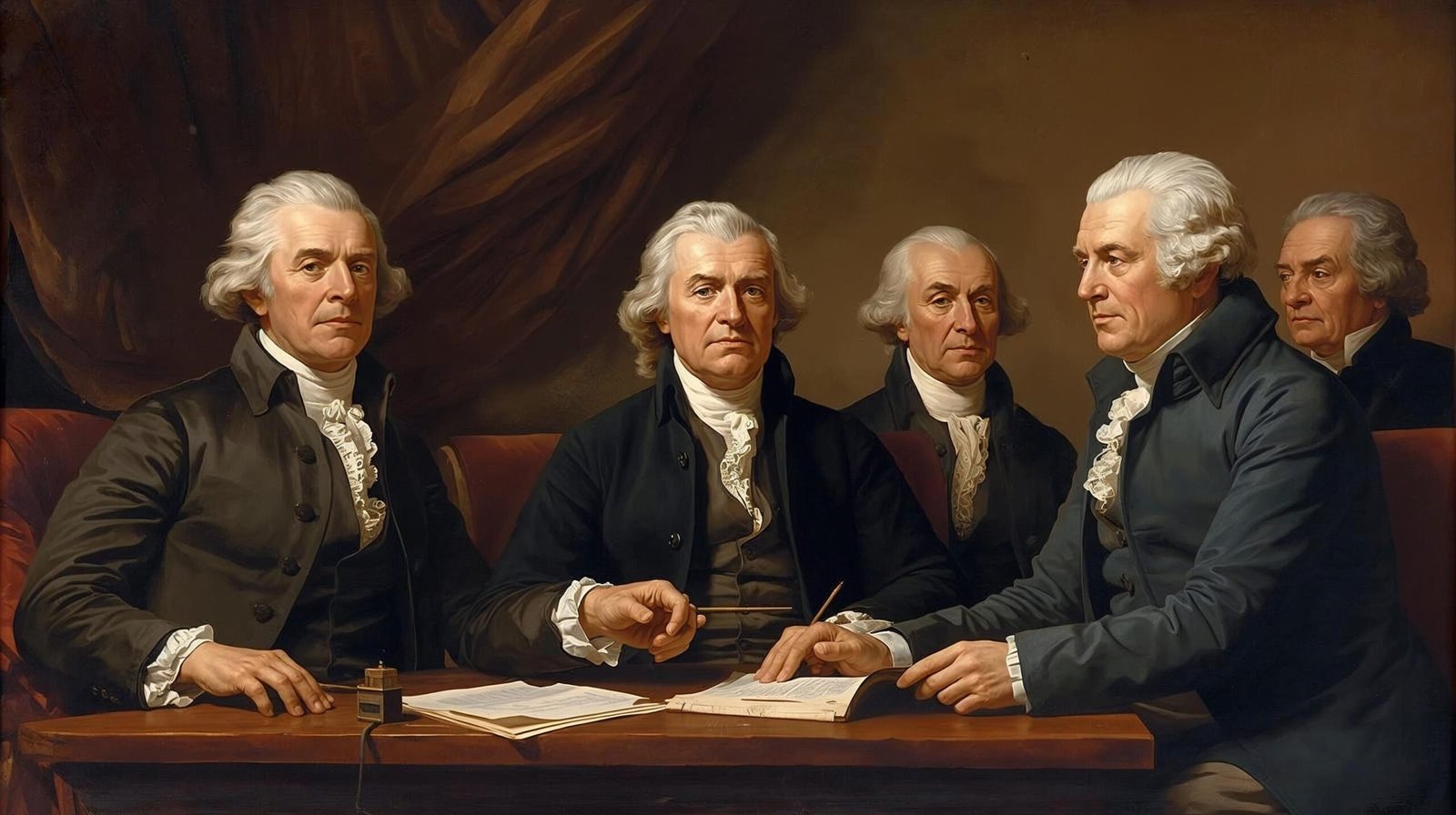
At the heart of 1776 by David McCullough lies an unflinching depiction of a young nation struggling to survive. The book transcends mere chronology; it weaves together the personal doubts of leaders, the harsh realities of war, and the fragile unity of a diverse people. Unlike many patriotic retellings, McCullough neither glorifies nor diminishes; he balances admiration with sober truth.
This balanced approach is what makes 1776 by David McCullough essential not only for students of history but also for individuals seeking lessons in perseverance and leadership.
Lesson 1: Leadership Is Forged in Fire
One of the central figures in 1776 by David McCullough is George Washington, whose early military failures could easily have crushed the revolution. Yet, Washington’s perseverance, humility, and ability to learn from defeat became decisive in keeping the revolution alive. McCullough shows us that great leaders are not born flawless but are refined through trials.
Lesson 2: Unity Amidst Diversity
The colonies were far from united in 1776. Regional differences, conflicting interests, and wavering loyalties plagued the revolution. Yet, 1776 by David McCullough highlights how unity, however fragile, was the only shield against collapse. This mirrors modern challenges where unity remains the cornerstone of progress.
Lesson 3: The Power of Ordinary People
McCullough gives voice to the unnamed soldiers who endured hunger, disease, and the chaos of war. 1776 by David McCullough reminds us that history is not only shaped by leaders but also by ordinary individuals whose sacrifices sustain revolutions.
Lesson 4: Doubt Is Natural, but Hope Is Essential
Throughout 1776 by David McCullough, doubt appears as a recurring theme. Washington doubted his abilities, Congress doubted its resources, and soldiers doubted their survival. Yet, the persistence of hope, even in bleak moments, turned the tide of events.
Lesson 5: Strategy Requires Adaptability
McCullough details Washington’s bold retreat across New Jersey and the daring counterattack at Trenton. 1776 by David McCullough proves that flexibility and calculated risk-taking are as vital in strategy as courage.
Lesson 6: The Role of Providence and Chance
Although McCullough avoids embellishing divine intervention, he acknowledges moments where chance played a decisive role. A timely fog during the evacuation of Long Island, for example, preserved the Continental Army. 1776 by David McCullough reminds us that history is often shaped by circumstances beyond human control.
Lesson 7: Morale Is Mightier Than Numbers
The British Army outnumbered and out-equipped the revolutionaries, yet morale proved decisive. 1776 by David McCullough underscores how the belief in freedom outweighed sheer numerical strength.
Lesson 8: Failure Is Not Final
Washington’s repeated defeats could have spelled the end of the revolution. Yet, 1776 by David McCullough emphasizes that failure is only a stepping stone toward ultimate success when met with persistence.
Lesson 9: The Importance of Visionary Leadership
McCullough portrays Washington not only as a commander but also as a visionary. His insistence on discipline, order, and moral conduct distinguished him from his adversaries. 1776 by David McCullough shows us how vision sustains leaders when immediate victories are scarce.
Lesson 10: Sacrifice Defines Great Causes
Freedom came at a cost. Soldiers froze in inadequate clothing, families lost loved ones, and farmers abandoned their fields. 1776 by David McCullough does not romanticize sacrifice but presents it as the unavoidable foundation of liberty.
Lesson 11: The Influence of International Perception
The revolution was not merely a domestic struggle; the eyes of Europe watched closely. 1776 by David McCullough explains how credibility abroad became vital for eventual foreign alliances. Reputation often precedes recognition.
Lesson 12: Resilience Against Overwhelming Odds
Few years in history tested resilience as harshly as 1776. 1776 by David McCullough stands as a monument to human endurance, urging readers to find strength even in their darkest hours.
Lesson 13: History Is Written in Human Terms
Unlike sterile academic accounts, McCullough animates history with human stories—fear, doubt, courage, and endurance. 1776 by David McCullough makes us feel history rather than merely learn it.
The Literary Brilliance of McCullough
Apart from the lessons, the sheer artistry of McCullough’s prose deserves admiration. 1776 by David McCullough reads like an epic, balancing factual precision with dramatic narration. This literary style makes the book accessible to both scholars and general readers.
Why Every Reader Should Pick 1776 by David McCullough
Whether one is a student of history, a leader seeking inspiration, or simply a lover of great literature, 1776 by David McCullough offers something timeless. It is not merely about America; it is about the universal struggles of nations and individuals who dare to dream of freedom.
The Historical Context of 1776
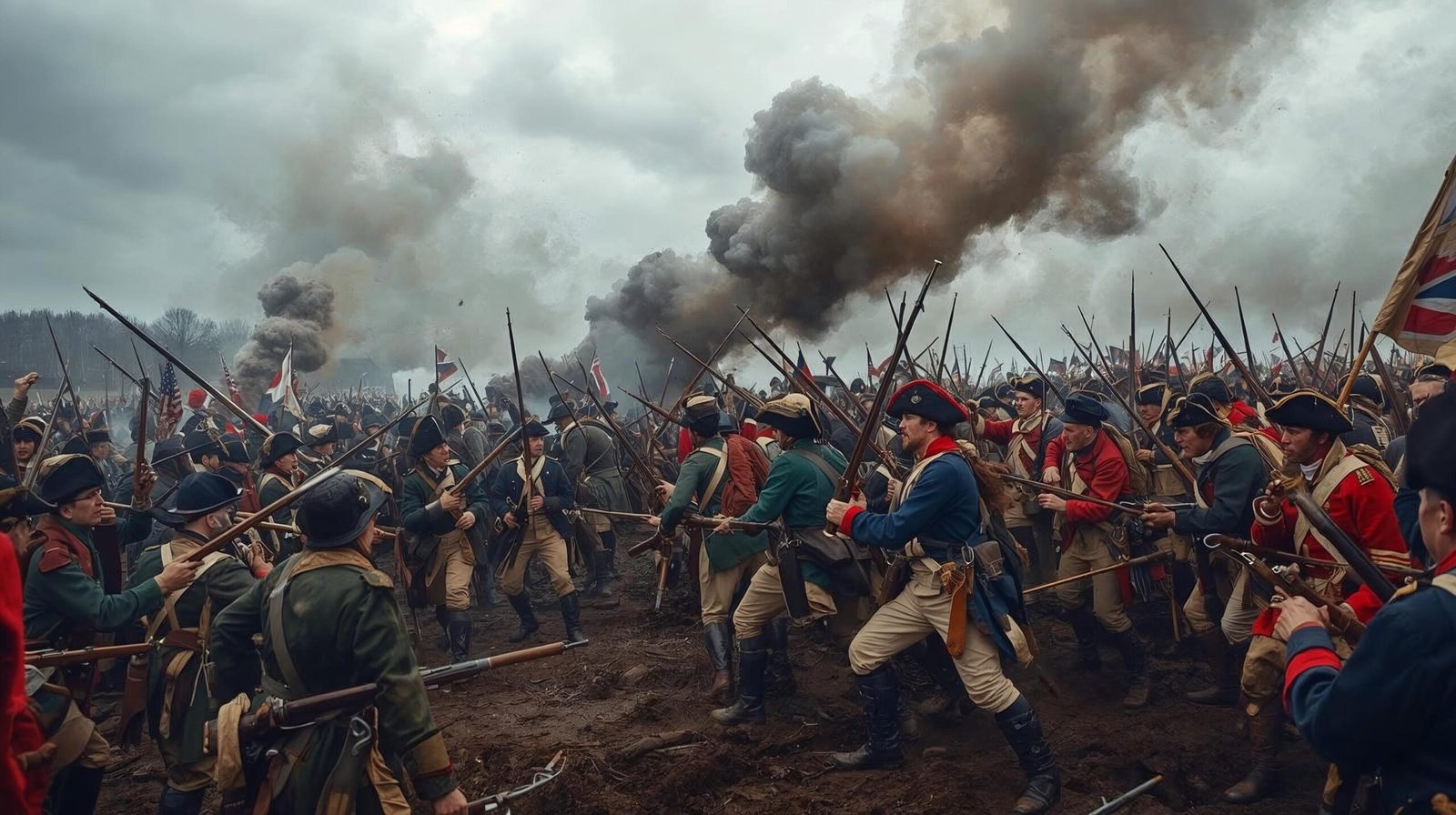
To understand the full significance of the year, one must place it within the broader context of eighteenth-century geopolitics. The American colonies, though prosperous in trade and agriculture, were tethered tightly to British mercantilist policies. Tensions had been escalating for over a decade, with disputes over taxation, representation, and the limits of colonial autonomy. The Stamp Act, the Boston Tea Party, and the Coercive Acts had already sown seeds of defiance.
By the dawn of 1776, rebellion was no longer a whisper in taverns or pamphlets; it was a living reality. The declaration of independence, which would later immortalize Jefferson’s prose, was preceded by months of uncertainty. To appreciate the events chronicled in this year is to understand the fragility of liberty itself. Few revolutions survive their infancy, and fewer still succeed against such overwhelming odds.
David McCullough as Historian and Storyteller
The author’s contribution to American letters extends far beyond a single volume. With works such as Truman and John Adams, he established himself as a master chronicler of leadership and human struggle. His method combines exhaustive archival research with a narrative style that is both accessible and deeply moving.
Rather than portraying figures as distant monuments, he presents them as flesh-and-blood individuals wrestling with uncertainty. In doing so, McCullough transforms history from mere fact into lived experience. His ability to bridge scholarship and storytelling has inspired countless readers to rediscover the past with renewed wonder.
A Portrait of George Washington
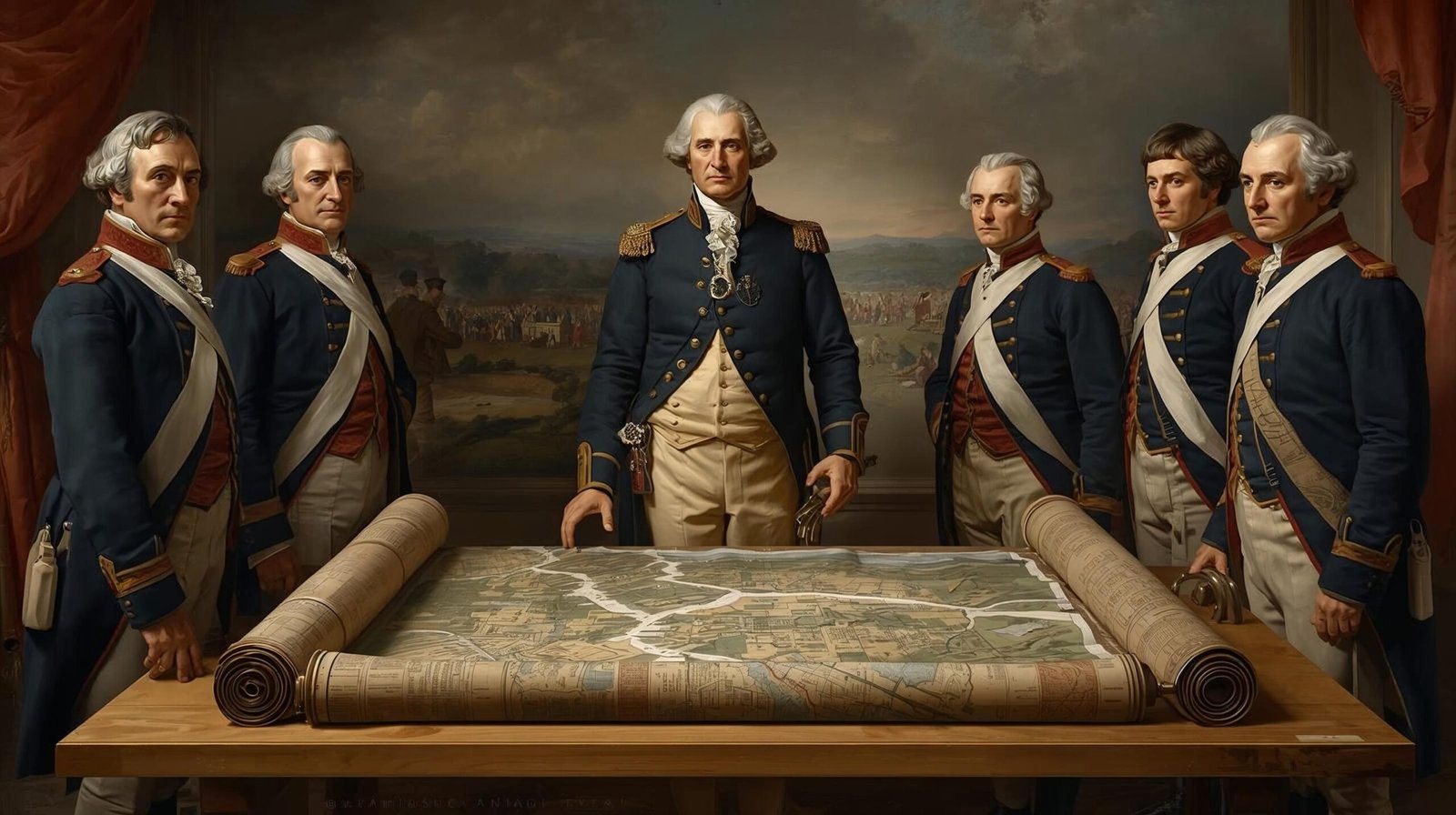
Central to the year’s events is Washington, whose leadership defined the revolution’s trajectory. The commander-in-chief was not without flaws; his early indecision and strategic blunders nearly cost the rebellion its life. Yet his persistence, personal integrity, and unyielding sense of duty ultimately earned him respect.
What emerges is not the image of an untouchable hero but of a man carrying burdens heavier than any soldier under his command. The courage to continue, even when defeat seemed certain, is what distinguished him. His example illustrates the profound truth that leadership is not perfection but steadfastness.
The British Perspective
Equally important is the British side of the story. Commanders such as General William Howe entered the conflict with confidence, commanding well-trained troops and abundant resources. Yet overconfidence, logistical challenges, and misjudgments about colonial resolve weakened their advantage.
The British crown believed the rebellion to be the work of a vocal minority and underestimated the resilience of colonial militias. By misreading the political and social fabric of America, they failed to crush the uprising swiftly. Their strategic errors underscore the danger of underestimating one’s adversary.
The Common Soldier’s Struggle
While generals and statesmen occupy the spotlight, the common soldier bore the true weight of sacrifice. Farmers, artisans, and young men from villages left behind their families and livelihoods to march into uncertainty. Many lacked shoes, endured hunger, and faced bitter winters with inadequate supplies. Disease spread through encampments, morale faltered, and desertions were frequent.
Yet within these hardships lay the unyielding determination that sustained the revolution. The testimony of diaries and letters from ordinary men reveals a courage as profound as that of celebrated leaders. Their experiences remind us that liberty is always secured by the toil of the many, not the few.
The Role of Providence and Chance
History often hinges on events beyond human control. The unexpected fog that shrouded the retreat from Long Island, shielding the army from destruction, is a case in point. Weather, terrain, and timing altered outcomes as significantly as any general’s orders.
Such episodes caution us against assuming that human planning alone governs destiny. They remind us of the unpredictable nature of struggle, where survival may depend upon forces unseen and uncontrollable.
Parallels to Modern Times
Though separated by centuries, the lessons of 1776 continue to resonate in the modern age. Leaders today face challenges not on battlefields but in economies, societies, and global crises. The qualities that sustained the revolution—resilience, adaptability, and unity—remain equally vital.
In moments of political polarization, the reminder that unity amidst diversity is the foundation of progress becomes particularly poignant. Similarly, the recognition that ordinary citizens are the backbone of any nation speaks directly to democratic societies around the world.
The Spirit of Sacrifice
Freedom, as demonstrated in 1776, is never cheaply purchased. Families endured loss, farms lay untended, and communities bore heavy burdens. The principle that liberty demands sacrifice remains timeless. Whether in struggles for civil rights, independence movements across continents, or the defense of democratic values, the willingness to sacrifice defines the measure of a people’s commitment.
The Endurance of Hope
Perhaps the most striking lesson of the revolutionary year is the endurance of hope. Hope persisted even in moments of retreat, in freezing camps, and in the shadow of defeat. It was hope that carried men across icy rivers to surprise the enemy at Trenton, reviving the cause when it seemed lost.
Hope is not a passive sentiment but an active force. It sustains action when reason dictates surrender. This truth transcends history, offering inspiration to every individual and community facing seemingly insurmountable obstacles.
McCullough’s Narrative Technique
One cannot overlook the artistry with which the story is told. McCullough employs a narrative rhythm that mirrors the pace of events—deliberate in moments of preparation, urgent in times of battle, and reflective in aftermaths. His prose elevates historical fact into literary art, ensuring the work remains not only informative but also deeply moving.
The ability to humanize historical figures without diminishing their significance is rare. In balancing admiration with honesty, McCullough crafts a portrait that resonates with authenticity.

Comparisons with Other Works
While numerous histories exist on the American Revolution, few match the balance of scholarship and accessibility found here. Some works focus heavily on military tactics, others on political theory, and still others on cultural context. McCullough’s contribution lies in weaving these threads into a coherent whole, making the narrative both comprehensive and compelling.
It is this holistic approach that ensures the book’s enduring appeal among scholars and casual readers alike.
Lessons for Personal Growth
Beyond its historical merit, the year’s events provide lessons for personal development. The persistence of Washington teaches us the importance of resilience in personal failures. The sacrifices of ordinary soldiers remind us that meaningful achievements demand endurance. The unity forged amidst difference illustrates the necessity of cooperation in every field of endeavor.
In this sense, the book is not merely about a nation’s struggle but about the universal journey of individuals striving for purpose and freedom.
The Timeless Appeal of Historical Memory
Nations, like individuals, draw strength from memory. To revisit 1776 is to renew appreciation for the values that underpin liberty. Historical memory anchors identity, cautions against complacency, and inspires future generations.
By preserving the struggles and triumphs of this year in vivid narrative, McCullough contributes not only to scholarship but also to cultural inheritance. His work ensures that the lessons of the past remain alive in the conscience of the present.
Reflections on Leadership and Legacy
The enduring fascination with Washington and his contemporaries lies not in their perfection but in their perseverance. Their ability to rise above doubt, endure hardship, and remain committed to vision is the essence of legacy. Leadership is not the absence of failure but the courage to continue despite it.
This truth applies to every generation, reminding us that the pursuit of noble causes will always demand courage and sacrifice.
Why This Story Still Resonates Today
The events of 1776 are not confined to dusty pages of history. They echo whenever individuals resist oppression, whenever societies demand justice, and whenever nations strive to align themselves with higher ideals.
In this sense, the year stands not only as a chapter in American history but as a universal symbol of human endurance. It reminds us that liberty is fragile, that unity is essential, and that the cost of freedom is perpetual vigilance.

FAQs on 1776 by David McCullough
Q1. What is the main theme of 1776 by David McCullough?
The main theme is resilience and leadership during America’s fight for independence in its most vulnerable year.
Q2. Is 1776 by David McCullough historically accurate?
Yes, the book is widely praised for its meticulous research and balanced portrayal of both American and British perspectives.
Q3. What makes 1776 by David McCullough different from other history books?
It blends rigorous scholarship with vivid storytelling, making history both accurate and engaging.
Q4. Who should read 1776 by David McCullough?
Students, leaders, history enthusiasts, and anyone seeking inspiration from human perseverance should read it.
Q5. Does 1776 by David McCullough only focus on George Washington?
While Washington is central, the book also covers soldiers, Congress, and the larger struggle for unity.
Conclusion
1776 by David McCullough is not merely a book about battles fought two and a half centuries ago. It is a timeless reflection on the endurance of the human spirit. McCullough compels us to see beyond victories and defeats to the deeper lessons of leadership, unity, and sacrifice.
For those who wish to understand the foundations of liberty, or who seek inspiration in times of trial, 1776 by David McCullough stands as an indispensable guide. It is both history and mirror—a reminder that resilience, vision, and hope can reshape destinies.
For more insightful book reviews and historical reflections, visit shubhanshuinsights.com.
As we revisit these moments, it becomes clear that the struggles and triumphs of the past are not relics but living lessons. They challenge us to act with courage, persevere through adversity, and cherish liberty. The spirit of endurance, sacrifice, and hope remains timeless, guiding each generation toward a future shaped by resilience, vision, and unwavering commitment.